
Introduction: A New Era of Work Has Already Begun
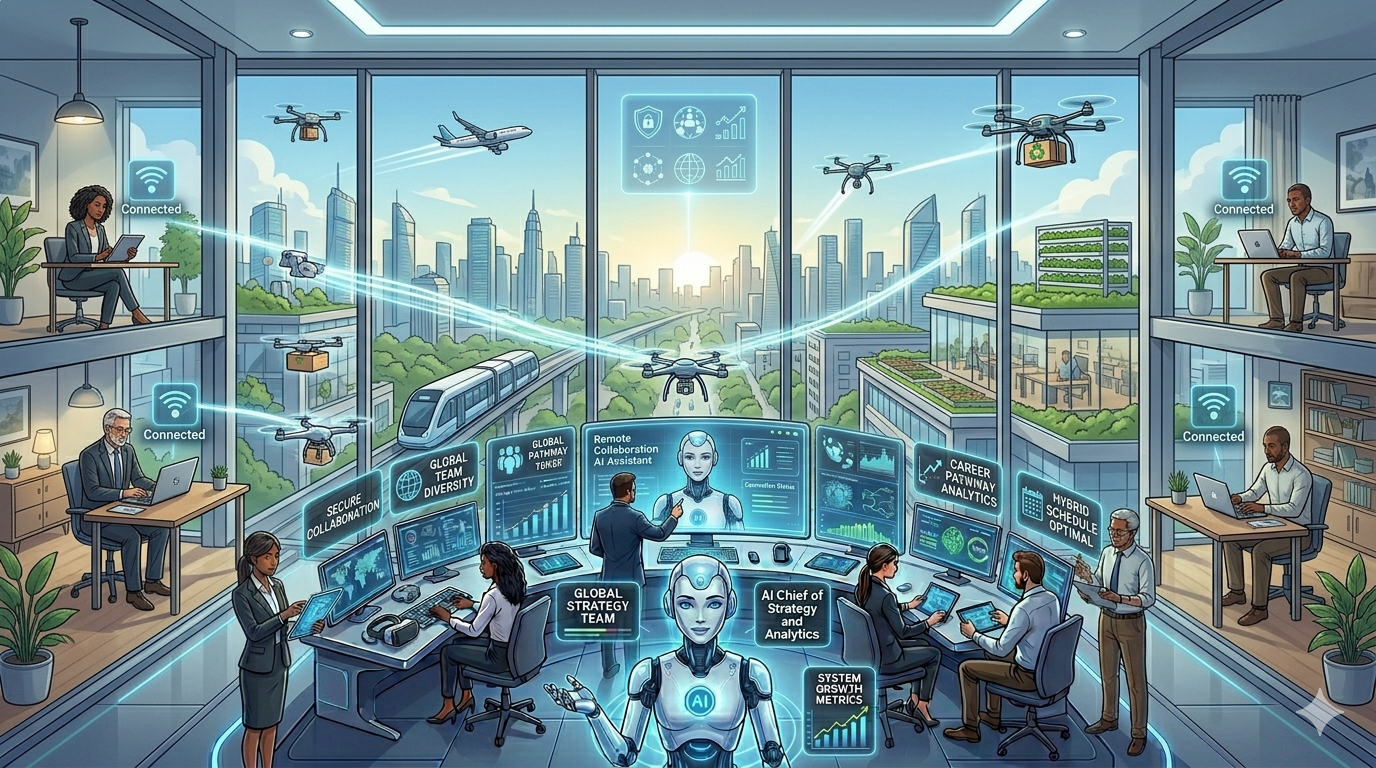
The world of work is undergoing one of the most significant transformations in modern history. What once required physical presence in an office is now increasingly managed through digital platforms, automation tools, and AI-driven workflows. By 2026, remote work is no longer a temporary trend or emergency solution—it has become a structured, permanent model for millions of professionals across the globe.
Companies are no longer asking “Can this job be remote?” Instead, they are asking “Why should this job require a physical office at all?”
This shift is being driven by three major forces:
- Artificial Intelligence integration in daily workflows
- The rise of global talent marketplaces
- A strong preference for flexibility among younger professionals
For job seekers, especially in competitive markets, this change represents both an opportunity and a challenge. Platforms like KingfisherJobs are becoming central hubs where employers and candidates meet in this new digital-first ecosystem.
1. The Evolution of Remote Work: From Emergency to Standard Practice
Remote work initially gained global attention during the COVID-19 pandemic. At that time, it was a necessity rather than a choice. However, businesses quickly realized that productivity did not decline—in many cases, it improved.
By 2026, remote work has evolved into three dominant models:
Fully Remote Organizations
Companies operate without physical offices. Teams are distributed across multiple countries, communicating through cloud platforms, project management tools, and AI assistants.
Hybrid Work Systems
Employees split their time between home and office. Typically, high-collaboration tasks are handled in person, while independent tasks are completed remotely.
Flexible Freelance Ecosystems
Organizations hire talent per project instead of full-time contracts. This has created a global gig economy where professionals can work for multiple clients simultaneously.
This evolution has fundamentally reshaped traditional employment structures.
2. Artificial Intelligence as the Core Driver of Remote Work
Artificial Intelligence is not just supporting remote work—it is actively redefining it.
AI in Recruitment
Recruitment systems now use AI algorithms to:
- Screen resumes automatically
- Match candidates with job roles based on skill compatibility
- Predict employee success rates
- Reduce hiring bias through structured data analysis
AI in Daily Operations
Remote teams rely heavily on AI tools for:
- Automated meeting summaries
- Task prioritization systems
- Smart scheduling assistants
- Real-time translation for global teams
AI in Performance Tracking
Instead of manual supervision, companies now use productivity analytics systems that measure output, not hours worked.
This shift means employees are evaluated on results rather than physical presence or working hours.
3. The Globalization of Talent: Borders Are No Longer Barriers
One of the most important changes in the job market is the removal of geographic limitations.
A company in New York can now hire:
- A developer from Pakistan
- A designer from Brazil
- A marketer from Germany
- A customer support agent from the Philippines
This global access to talent has created a highly competitive environment.
Advantages for Employers
- Lower hiring costs
- Access to specialized skills worldwide
- 24/7 operational cycles due to time zone differences
Advantages for Job Seekers
- More job opportunities
- Higher earning potential
- Ability to work for international companies without relocating
Platforms like KingfisherJobs play a critical role in connecting these global opportunities with qualified candidates.
4. The Rise of Skill-Based Hiring Over Degree-Based Hiring
Traditional hiring focused heavily on academic qualifications. In 2026, this model is rapidly disappearing.
Companies now prioritize:
Practical Skills
- Coding ability
- Communication skills
- Digital marketing expertise
- Data analysis capabilities
Real-World Experience
- Freelance portfolios
- Project-based work
- Internship experience
- Open-source contributions
Problem-Solving Ability
Employers increasingly test candidates with scenario-based assessments rather than relying solely on resumes.
This shift is especially beneficial for self-taught professionals and freelancers.
5. Hybrid Work Culture: The New Corporate Standard
Hybrid work is now considered the most balanced and sustainable model.
Why Hybrid Work Succeeds
- Maintains human collaboration
- Reduces operational costs
- Improves employee satisfaction
- Supports mental well-being
Common Hybrid Structure
- 2–3 days office work
- 2–3 days remote work
Impact on Office Design
Modern offices are no longer permanent desks but collaboration hubs designed for:
- Meetings
- Brainstorming sessions
- Training workshops
This means companies are reducing office space and investing more in digital infrastructure.
6. New Career Categories Emerging in 2026
The shift to remote and AI-driven work has created entirely new job categories.
AI-Related Roles
- AI Prompt Engineer
- Machine Learning Analyst
- AI Workflow Designer
Remote Operations Roles
- Remote Team Manager
- Digital Project Coordinator
- Virtual HR Specialist
Content & Digital Economy Roles
- SEO Strategist
- Content Automation Specialist
- Social Media Growth Manager
Cybersecurity Roles
- Remote Security Analyst
- Data Protection Officer
- Cloud Security Engineer
These roles did not exist at scale a decade ago, but now they dominate hiring trends.
7. Challenges of the Remote Work Revolution
Despite its advantages, remote work introduces several challenges.
1. Digital Burnout
Constant connectivity can lead to mental fatigue.
2. Communication Gaps
Misunderstandings can occur without face-to-face interaction.
3. Security Risks
Remote systems increase exposure to cyber threats.
4. Skill Saturation
As more people enter the global job market, competition increases significantly.
Organizations are actively developing solutions to manage these issues through structured workflows and AI moderation tools.
8. Skills Required to Succeed in the Future Job Market
To remain competitive in 2026 and beyond, professionals must develop a hybrid skill set.
Technical Skills
- Basic AI literacy
- Data interpretation
- Digital tools proficiency
- Automation understanding
Soft Skills
- Adaptability
- Communication clarity
- Time management
- Problem-solving mindset
Continuous Learning
The most important skill is the ability to continuously learn and upgrade capabilities as industries evolve.
9. How Job Platforms Are Transforming Hiring
Modern job platforms are no longer simple job boards. They are becoming intelligent ecosystems.
For example, platforms like KingfisherJobs now integrate:
- AI job matching systems
- Employer verification processes
- Candidate profiling tools
- Skill-based filtering systems
This reduces hiring time and improves job accuracy between employers and candidates.
10. The Future Outlook: What Comes After Remote Work?
The next phase of evolution is already emerging:
Metaverse Workspaces
Virtual offices where employees interact using avatars.
AI-Managed Teams
AI systems that assign tasks, monitor progress, and optimize workflows.
Outcome-Based Employment
Employees are paid based on results instead of hours worked.
Hyper-Flexible Careers
Professionals will work across multiple companies simultaneously in project-based cycles.
The future of work is not just remote—it is decentralized, automated, and highly personalized.
Conclusion: Adaptation Is the New Career Strategy
The global job market is changing faster than ever before. Remote work, AI integration, and skill-based hiring are no longer future concepts—they are current realities shaping careers today.
For job seekers, success will depend on one key factor: adaptability. Those who learn new tools, develop digital skills, and embrace global opportunities will thrive in this new environment.
Platforms like KingfisherJobs are becoming essential bridges between talent and opportunity in this evolving ecosystem.
The future of work is not about location—it is about capability.