

Introduction
The global job market has changed dramatically in the last few years.
What used to work—sending CVs to multiple companies and waiting—no longer delivers consistent results. In 2026, hiring is faster, more competitive, and heavily driven by digital systems, automation, and skill-based evaluation.
At the same time, opportunities have also expanded. Remote work, global hiring platforms, and digital recruitment tools have made it possible for candidates to apply for jobs across borders and industries.
However, there is one major challenge:
More opportunities exist, but competition is also significantly higher.
This means job seekers must adopt structured, strategic, and modern job search methods to stand out.
This article explains exactly how to improve your chances of getting hired faster in today’s job market.
The Reality of Job Searching in 2026
Job searching is no longer a simple application process. It is a multi-step evaluation system where candidates are filtered before they even speak to a recruiter.
Most companies now use:
- Applicant Tracking Systems (ATS)
- AI-based CV screening tools
- Skill-based assessments
- Behavioral screening interviews
This means your application must pass multiple layers before reaching a human recruiter.
Key reality shift:
- Earlier: Human-reviewed applications
- Now: Machine-filtered + skill-based selection
Understanding this shift is the first step toward improving your job search results.
Why Most Job Seekers Fail
Despite high demand in many industries, most candidates fail to secure interviews.
The main reasons include:
1. Weak CV Structure
Many CVs are not optimized for ATS systems and are rejected automatically.
2. Lack of Targeting
Candidates apply to too many unrelated roles instead of focusing on relevant opportunities.
3. No Proof of Skills
Employers prefer candidates who show real-world ability through projects or experience.
4. Poor Online Presence
Recruiters now check LinkedIn, portfolios, and digital profiles before shortlisting.
5. Random Job Applications
Mass applications without strategy reduce effectiveness significantly.
The Modern Job Search Framework
To succeed in 2026, job seekers must follow a structured approach.
The modern framework consists of five stages:
- Skill Positioning
- Profile Optimization
- Job Targeting
- Application Strategy
- Interview Preparation
Each stage plays a critical role in securing employment faster.
Stage 1: Skill Positioning (Most Important Step)
Before applying for jobs, you must clearly define your skill identity.
Employers do not hire “general candidates.” They hire specialists.
Example:
Instead of saying:
- “I am a marketing student”
Say:
- “I specialize in SEO content writing and organic traffic growth”
Why this matters:
Specialization increases:
- Visibility
- Interview chances
- Salary potential
Action Step:
Choose one core skill area:
- Digital marketing
- Software development
- Data analysis
- Customer support
- Design
Then build your identity around it.
Stage 2: Profile Optimization
Your digital profile is your first impression.
Recruiters often check:
- LinkedIn profile
- Portfolio website
- Freelance platforms
- GitHub (for technical roles)
Optimizing LinkedIn
A strong LinkedIn profile should include:
- Professional headline (keyword-rich)
- Clear summary
- Skills section
- Experience details
- Project highlights
Common mistake:
Using vague titles like:
- “Student looking for opportunities”
Better alternative:
- “Entry-Level Data Analyst | Excel | Power BI | SQL”
Stage 3: Smart Job Targeting
Applying randomly reduces success rate.
Instead, use targeted job search strategies.
Focus on:
- Industry relevance
- Skill match
- Salary level
- Company type
Where to apply:
- Official company websites
- Professional job platforms
- Industry-specific portals
- Remote job boards
Key insight:
According to recent job market analysis, remote and hybrid roles now make up a significant portion of global hiring, especially in digital industries like IT, marketing, and customer service .
Stage 4: Application Strategy (How to Stand Out)
A strong application is not about quantity—it is about quality.
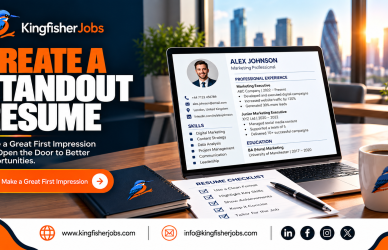
1. Customize Your CV
Every job requires a slightly different CV version.
Highlight:
- Relevant skills
- Matching experience
- Keywords from job description
2. Write a Targeted Cover Letter
Avoid generic templates.
Instead:
- Address company needs
- Show problem-solving ability
- Keep it concise
3. Use Keywords Strategically
Many companies use ATS systems that filter based on keywords.
Example:
If job requires “project management,” include:
- Project planning
- Task coordination
- Agile workflow
Stage 5: Interview Preparation
Getting an interview is only half the journey.
You must now convert opportunity into selection.
Common interview areas:
1. Technical Skills
- Role-specific knowledge
- Problem-solving tasks
2. Behavioral Questions
- Teamwork
- Conflict handling
- Time management
3. Scenario-Based Questions
- “How would you handle this situation?”
Preparation strategy:
- Research company
- Practice common questions
- Prepare real examples
The Role of Remote Work in Job Searching
Remote work has significantly changed job opportunities.
In 2026:
- Many companies hire globally
- Skills matter more than location
- Digital communication is essential
Remote work is now a permanent part of hiring systems rather than a temporary trend .
Advantages for job seekers:
- Access to international jobs
- Higher flexibility
- More opportunities in digital industries
Challenges:
- High competition
- Strong communication requirements
- Performance-based evaluation
High-Demand Skills in 2026
To improve hiring chances, focus on in-demand skills:
1. Digital Skills
- SEO
- Social media marketing
- Content creation
2. Technical Skills
- Programming (Python, JavaScript)
- Data analysis
- AI tools
3. Business Skills
- Project management
- Communication
- Sales and negotiation
Companies are actively hiring professionals with these skills across remote and hybrid roles .
Common Mistakes to Avoid
1. Applying Without Strategy
Random applications waste time and reduce motivation.
2. Ignoring Personal Branding
No LinkedIn or portfolio means lower credibility.
3. Weak CV Formatting
Poor structure leads to automatic rejection.
4. Not Following Up
Many candidates lose opportunities by not following up after applying.
How to Build a Strong Job Search System
Instead of treating job search as random activity, build a system:
Daily Routine:
- Apply to 5–10 targeted jobs
- Improve one skill daily
- Update profile weekly
- Network with professionals
Weekly Routine:
- Review applications
- Adjust CV based on responses
- Practice interview questions
Consistency is more important than intensity.
The Future of Job Searching
The future of recruitment is becoming:
- AI-driven
- Skill-based
- Remote-first
- Data-oriented
Job seekers who adapt early will have a significant advantage.
Companies now prefer candidates who can demonstrate:
- Practical skills
- Digital adaptability
- Independent working ability
Final Advice for Job Seekers
Success in today’s job market depends on preparation, not luck.
To improve your chances:
- Focus on one strong skill
- Build a professional profile
- Apply strategically
- Prepare for interviews properly
- Stay consistent
The job market is competitive—but structured candidates always outperform random applicants.
Conclusion
Getting hired faster in 2026 is not about applying more—it is about applying smarter.
The candidates who succeed are those who understand how modern recruitment systems work and position themselves accordingly.
Opportunities exist across industries and borders, but only structured job seekers can fully take advantage of them.
If you treat your job search like a system—not a random process—you will dramatically increase your chances of success.