

Your resume is often the first introduction a potential employer has to you. Before an interview, a conversation or an opportunity to explain what you can bring to a role, your resume has to communicate your professional value clearly and quickly.
That is why learning how to create a standout resume is such an important part of a successful job search. A strong resume is not simply a record of everywhere you have worked. It is a focused professional document that shows employers what you can do, what you have achieved and why your experience is relevant to the position they need to fill.
A clean format, relevant skills, clear achievements and carefully tailored content can make your application easier to understand and more compelling. The objective is not to make your resume look unusual for the sake of attracting attention. It is to make the right information stand out.
What Makes a Resume Stand Out?
A standout resume gives the reader a clear picture of your professional background without making them work to find the important information. It should be easy to scan, relevant to the vacancy and focused on evidence rather than vague statements.
In practical terms, an effective resume usually combines several qualities:
- A clean and professional layout.
- Clear contact and professional information.
- Experience presented in a logical order.
- Skills that are relevant to the target role.
- Achievements that demonstrate your contribution.
- Concise, easy-to-read descriptions.
- Content tailored to the specific job opportunity.
These elements work together. Excellent experience can lose impact if it is presented poorly, while an attractive design cannot compensate for weak or irrelevant content.
Why Your Resume Creates an Important First Impression
Recruitment decisions involve comparing candidates against the needs of a particular role. Your resume helps an employer or recruiter understand whether your background deserves further consideration.
A confusing resume can hide valuable experience. A well-structured one makes your strongest qualifications easier to recognise.
Think of your resume as a professional introduction. It should answer several important questions:
- What type of professional are you?
- What relevant experience do you have?
- Which skills can you bring to the position?
- What have you accomplished in previous roles?
- How does your background relate to this vacancy?
If those answers are easy to identify, the reader can evaluate your suitability more efficiently.
1. Use a Clean and Professional Resume Format
The first step in creating a standout resume is making it easy to read. A complicated design with excessive graphics, inconsistent formatting or too many competing elements can distract from the information that matters.
Use a clear hierarchy for your name, contact information, professional summary, experience, skills and education. Maintain consistent heading styles, spacing and formatting throughout the document.
Whitespace is useful too. Separating sections clearly helps readers distinguish between different parts of your professional history without facing a dense wall of text.
Keep Formatting Consistent
If one job title is bold, format the others in the same way. If dates appear in a particular position, keep them there throughout the resume. Use consistent bullet styles and spacing.
These details may seem small, but together they create a more polished professional document.
2. Start With a Strong Professional Summary
A professional summary can give employers immediate context about your experience and career direction. It should be brief and specific rather than a collection of generic qualities.
Instead of simply describing yourself as hardworking, motivated or passionate, focus on information that helps position you professionally. Your summary might reference your field, level or type of experience, important areas of expertise and the value you can bring to an organisation.
The summary should also reflect the type of opportunity you are pursuing. A resume aimed at a marketing position, for example, should introduce the candidate differently from one intended for an operations, finance or technology role.
3. Highlight the Skills That Matter
A skills section can help employers quickly identify your capabilities, but it should be selective. Filling a resume with every skill you have ever used can weaken the impact of the ones most relevant to the vacancy.
Review the role carefully and identify the capabilities that genuinely match your experience. Depending on your profession, these could include technical knowledge, software proficiency, project management, data analysis, communication, leadership, content strategy or other specialist skills.
Only include skills you can reasonably support through your experience. If a skill becomes a discussion point during an interview, you should be prepared to explain how you have applied it.
4. Show Achievements, Not Just Responsibilities
One of the most important ways to improve a resume is to move beyond lists of routine duties.
Responsibilities explain what your job involved. Achievements demonstrate what you contributed.
For example, simply stating that you “managed marketing campaigns” gives the reader basic information about your duties. Explaining what you improved, delivered, created or helped achieve gives that experience greater meaning.
Where appropriate and accurate, think about outcomes such as:
- Projects successfully completed.
- Processes improved.
- Teams supported or managed.
- Problems resolved.
- Campaigns or initiatives delivered.
- Responsibilities expanded over time.
- Relevant measurable results you can genuinely verify.
Never invent figures simply to make an achievement sound stronger. Specific evidence is valuable only when it is truthful.
5. Keep Your Resume Concise
A resume needs enough information to demonstrate your suitability without becoming unnecessarily difficult to read. More content does not automatically make a candidate appear more experienced.
Prioritise information according to relevance. Recent and directly related experience usually deserves more detail, while older or less relevant positions may require less explanation.
Review every sentence and ask whether it helps an employer understand your suitability for the target role. If it does not add meaningful information, consider shortening or removing it.
Use Clear Bullet Points
Bullet points can make professional experience easier to scan. Each point should communicate one clear responsibility, achievement or contribution rather than combining several unrelated ideas into a long paragraph.
Starting with direct action-focused language can also make descriptions more concise and easier to understand.
6. Tailor Your Resume for the Job
Sending exactly the same resume for every vacancy is convenient, but it may not present your experience in the most relevant way.
Different employers prioritise different capabilities. Even similar job titles can involve different responsibilities, industries and expectations. Tailoring your resume allows you to emphasise the parts of your background that are most closely connected to each opportunity.
Before submitting an application, review the job description and identify:
- The main responsibilities of the position.
- The essential skills requested.
- The type of experience the employer values.
- Relevant professional terminology.
- Any qualifications or specialist knowledge required.
Then review your resume to make sure your genuinely relevant experience is visible.
Tailoring does not mean copying the vacancy word for word or claiming experience you do not have. It means presenting your real background in a way that makes its relevance easier to understand.
7. Use Relevant Keywords Naturally
Job descriptions can provide useful clues about the terminology associated with a role. If an employer repeatedly refers to a particular skill, platform, qualification or area of responsibility that you genuinely possess, your resume should normally make that connection clear.
Use relevant terms naturally within your skills, summary and experience sections where appropriate. Avoid forcing large numbers of keywords into the document simply to make it appear optimised.
Your resume still needs to read naturally to the people evaluating your application.
8. Make Your Work Experience Easy to Understand
Your employment history is usually one of the most important sections of your resume. Present it logically so readers can understand your career progression.
For each relevant position, include essential information such as your job title, employer and employment period, followed by concise points explaining your responsibilities and achievements.
Avoid assuming that an employer will understand internal terminology from another company. Translate organisation-specific language into clear professional terms that make sense outside your previous workplace.
9. Present Your Education Clearly
Your education section should provide relevant information without overwhelming the rest of the resume. Include appropriate qualifications and the institutions where you studied, along with other details that genuinely strengthen the application.
The prominence of education will depend on your career stage. Someone beginning their career may need to give education more attention, while an experienced professional may place greater emphasis on recent employment and achievements.
10. Check Your Contact Details Carefully
A strong resume cannot help you secure the next stage of the recruitment process if an employer cannot contact you.
Check that your phone number and email address are current and accurate. If you include a professional networking profile or portfolio, make sure the information is up to date and suitable for employers to review.
Small errors in this section can have disproportionate consequences, so verify every detail before submitting an application.
Common Resume Mistakes to Avoid
Knowing what to remove can be just as important as knowing what to include. Before sending your resume, look for common problems that may reduce its effectiveness.
Using One Generic Resume for Everything
A generic resume can make relevant experience harder to spot. Adjust the emphasis according to the requirements of each opportunity.
Listing Duties Without Showing Contribution
A list of routine responsibilities tells employers what your position involved but may reveal little about your effectiveness. Include meaningful achievements and outcomes where possible.
Adding Too Much Information
Trying to document every task from every previous role can make the most relevant information disappear among less important details.
Using Vague Claims
Statements such as “excellent team player” or “results-driven professional” have limited impact without supporting evidence. Wherever possible, demonstrate qualities through your experience rather than simply declaring them.
Poor Formatting
Inconsistent fonts, irregular spacing and crowded sections can make a resume difficult to navigate. Keep the design clean and professional.
Spelling and Grammar Errors
Proofreading matters. Read the resume carefully and check names, dates, headings, punctuation and contact details before submitting it.
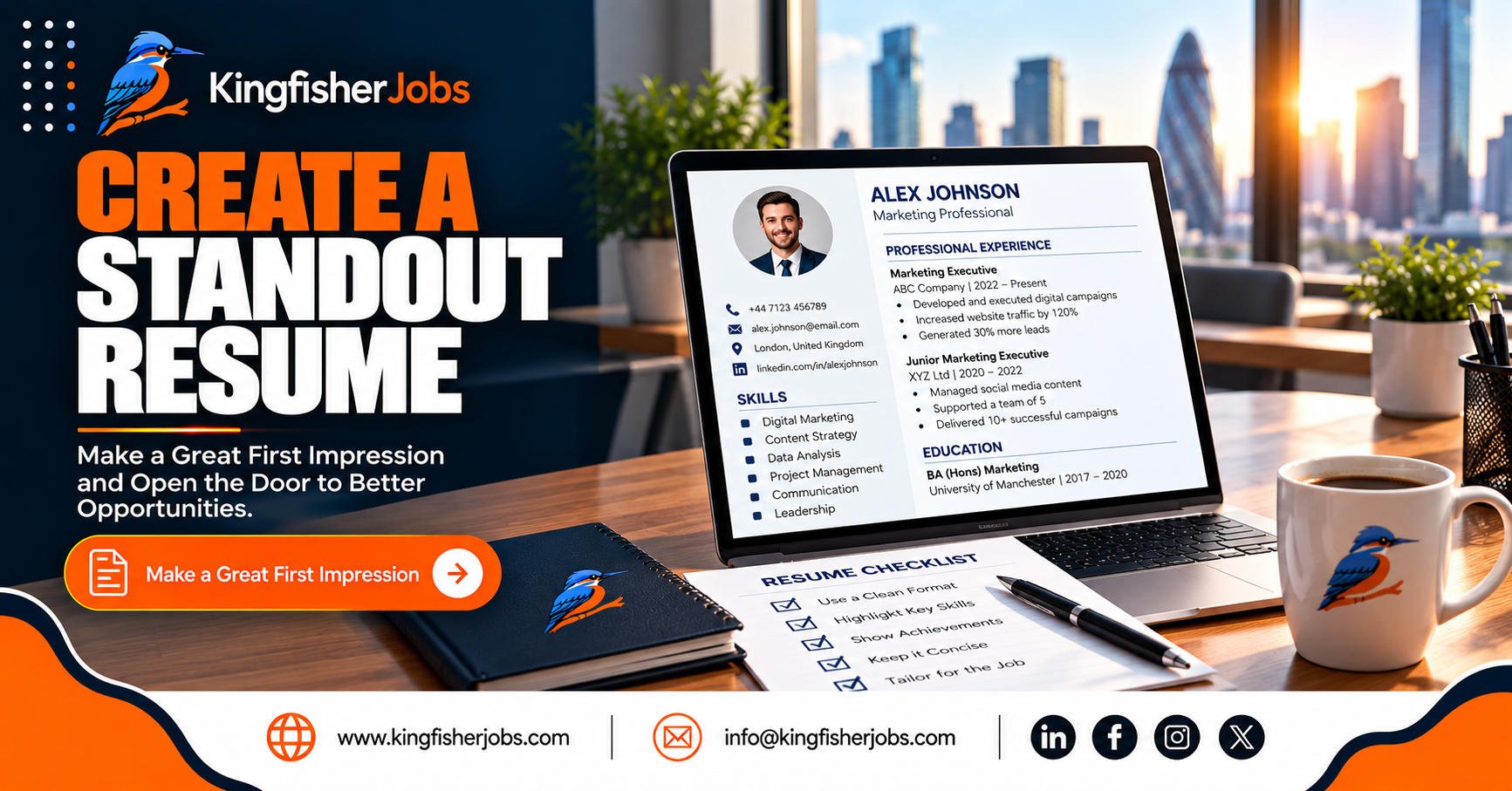
A Practical Resume Checklist
Before applying for a role, complete a final review. A simple checklist can prevent avoidable mistakes and help ensure your strongest information is visible.
- Use a clean format: Keep the document professional and easy to navigate.
- Highlight key skills: Prioritise capabilities relevant to the vacancy.
- Show achievements: Demonstrate your contribution rather than listing duties alone.
- Keep it concise: Remove repetition and information that does not support the application.
- Tailor it for the job: Adjust the emphasis to reflect the opportunity.
- Check contact information: Make sure employers can reach you.
- Proofread carefully: Correct spelling, grammar and formatting errors.
How to Make a Great First Impression
A great resume does not need unnecessary decoration or exaggerated claims. It needs clarity.
Employers should be able to understand who you are professionally, what you have done, what you are good at and why those capabilities could be valuable in the position they are recruiting for.
Focus on relevance rather than volume. Make important achievements visible. Use a professional structure. Tailor your information carefully and remove anything that distracts from your strongest qualifications.
Those improvements can turn a basic employment history into a much stronger representation of your professional value.
Your Resume Should Open the Door to the Next Opportunity
The purpose of a resume is not to tell every detail of your professional life. Its job is to present enough relevant evidence to help move your application forward.
That means your resume should be written with the next step in mind. Rather than asking, “Have I included everything?”, ask, “Have I made the most relevant reasons to consider me clear?”
This change in perspective can make resume writing much more focused. Every section should contribute to the same objective: helping an employer understand why you may be worth speaking to.
Conclusion: Create a Resume That Represents Your Value
A standout resume combines strong content with clear presentation. Use a clean format, highlight relevant skills, show genuine achievements, keep your writing concise and tailor the document for the position you want.
Most importantly, make it easy for employers to recognise the value you could bring. Your experience may be impressive, but your resume needs to communicate that experience effectively before it can create opportunities.
If you are ready to take the next step in your career, KingfisherJobs can help connect job seekers with opportunities where their experience, skills and ambitions can move forward.