

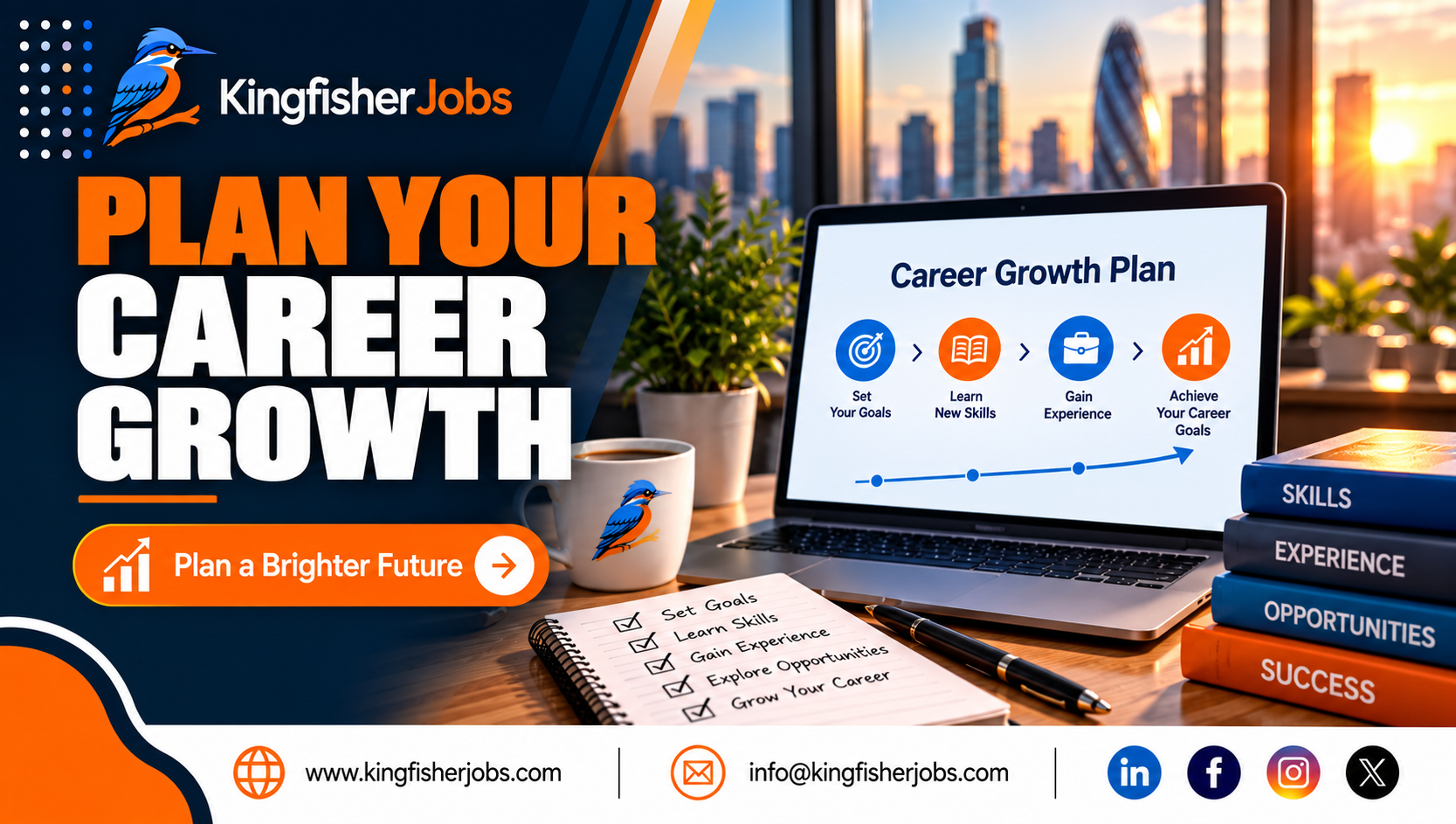
Career growth rarely happens by accident. Whether you are starting your first job, considering a career change, or aiming for a more senior position, having a clear career growth plan can help you make better decisions and move towards your professional goals with purpose.
A strong career plan combines clear goals, continuous learning, practical experience and the confidence to explore new opportunities. Here is how you can build a realistic plan for long-term career development.
What Is a Career Growth Plan?
A career growth plan is a structured roadmap that defines where you want your career to go and the steps required to get there. Instead of simply waiting for the next opportunity, you identify your objectives, assess your current skills and take deliberate action to improve your professional position.
Your plan does not need to predict your entire career. It should provide enough direction to help you decide which skills to develop, which opportunities to pursue and what progress looks like for you.
1. Set Clear Career Goals
Start by deciding what you want to achieve. Your goals could include securing a new role, earning a promotion, moving into a different industry, increasing your responsibilities or developing expertise in a particular field.
Try to make each goal specific and measurable. Instead of saying, “I want a better job,” define the type of position, industry, responsibilities and skills you want to develop. Clear goals make it easier to identify the actions required to reach them.
2. Identify the Skills You Need
Once you know where you want to go, compare your current abilities with the requirements of your target roles. Review relevant job descriptions and look for skills that appear repeatedly.
These may include technical abilities, industry knowledge or transferable skills such as communication, leadership, problem-solving, teamwork, organisation and project management.
Identifying your skills gap gives you a focused learning plan rather than trying to improve everything at once.
3. Keep Learning New Skills
Continuous learning is increasingly important in a changing job market. Technology, workplace expectations and industry requirements continue to evolve, so professionals who regularly update their knowledge can be better prepared for new opportunities.
You can develop your skills through professional courses, certifications, workshops, online learning, mentoring and practical projects. Even small improvements made consistently can contribute significantly to long-term career development.
4. Build Practical Experience
Knowledge becomes more valuable when you can demonstrate how you have applied it. Look for opportunities to gain practical experience through your current role, freelance projects, volunteering, internships or additional responsibilities.
Keep a record of projects you have completed and results you have achieved. Whenever possible, quantify your impact. Examples might include improving a process, increasing sales, reducing costs, completing projects ahead of schedule or helping a team achieve an important objective.
5. Explore New Career Opportunities
You do not necessarily need to be actively job hunting to understand what opportunities are available. Regularly exploring vacancies can help you identify emerging roles, salary expectations, in-demand skills and changing employer requirements.
This information can also help you adjust your career development plan before you are ready to make your next move.
6. Strengthen Your Professional Profile
Your CV and professional profiles should accurately reflect your latest skills, responsibilities and achievements. Update them regularly rather than waiting until you urgently need to apply for a position.
Focus on achievements instead of listing only responsibilities. Employers want to understand the value you can bring to their organisation, so use clear examples that demonstrate your capabilities and results.
7. Build Your Professional Network
Professional relationships can introduce you to industry knowledge, career advice and opportunities you may not discover through traditional job searches.
Stay connected with colleagues, recruiters and professionals within your industry. Participate in relevant discussions, attend networking events and maintain a professional presence online. Effective networking should focus on building genuine, mutually valuable relationships rather than simply asking people for jobs.
8. Review Your Career Plan Regularly
Your priorities can change as you gain experience, develop new interests and learn more about your industry. Review your career plan every few months and ask yourself whether your current actions are still moving you towards the future you want.
Adjusting your plan is not a failure. A flexible career strategy allows you to respond to new opportunities while maintaining a clear sense of direction.
Turn Your Career Goals Into Action
Successful career development is built through consistent action. Set meaningful goals, learn relevant skills, gain experience, explore opportunities and regularly evaluate your progress.
If you are ready to take the next step in your professional journey, KingfisherJobs can help you explore opportunities that align with your experience, ambitions and future career goals.