


A productive working day is not necessarily the one filled with the most meetings, emails or completed tasks. It is the day when your time and energy are directed towards work that genuinely matters.
Many professionals begin their mornings with clear intentions, only to find themselves distracted by unexpected requests, constant notifications and competing priorities. By the end of the day, they may feel exhausted without having made meaningful progress on their most important responsibilities.
The solution is not always to work longer hours. Often, it is to develop better working habits.
Working smarter, not harder means managing your time, attention and energy more effectively while maintaining the quality of your work.
Small improvements in how you plan, prioritise, communicate and review your activities can make a significant difference to your working experience.
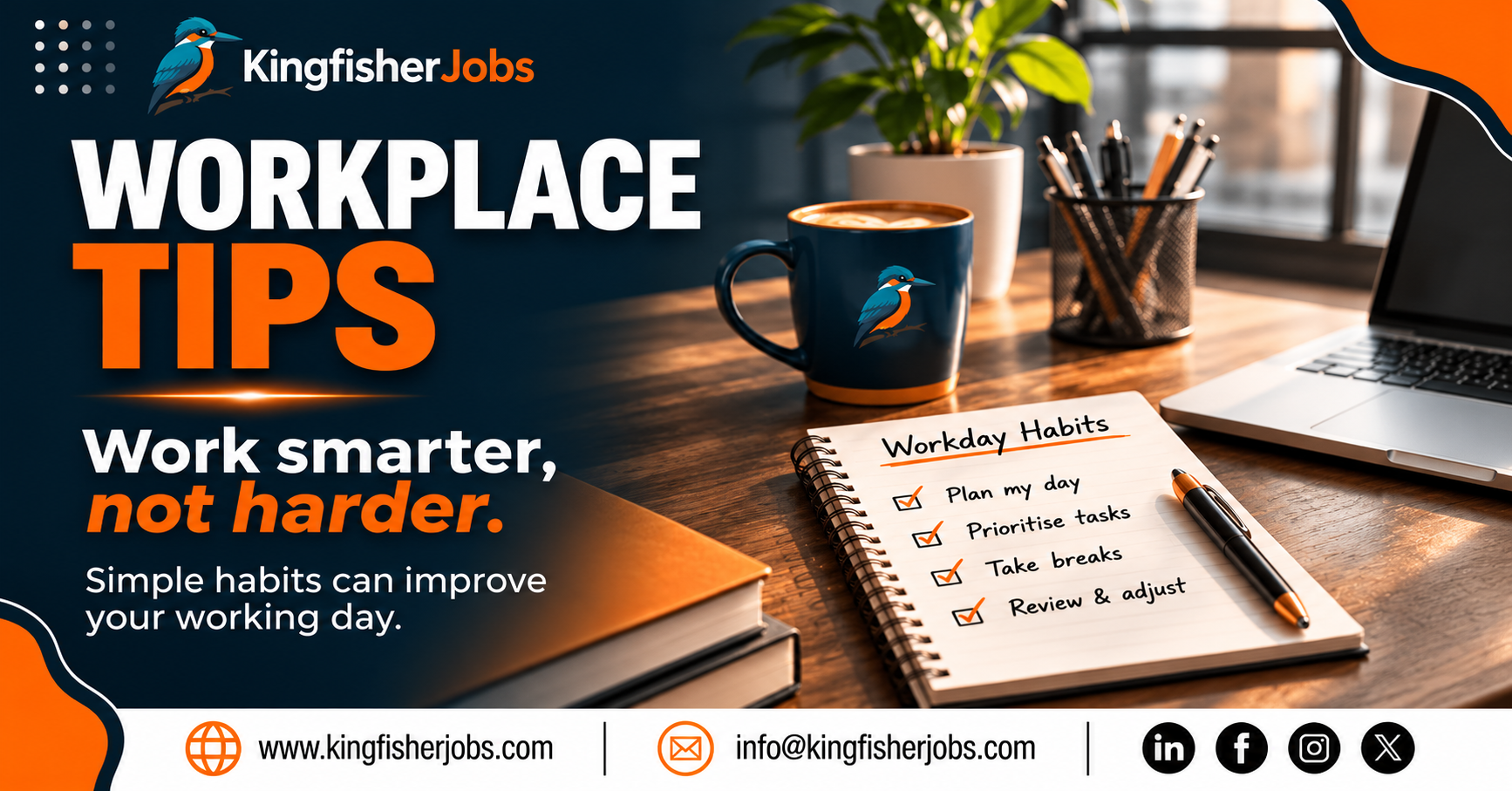
At Kingfisher Jobs, the message behind our workplace tips campaign is simple: simple habits can improve your working day.
Whether you are starting your first job, developing your career or managing a demanding workload, these practical workplace productivity tips can help you build a more organised, focused and sustainable approach to work.
What Does Working Smarter, Not Harder Actually Mean?
Working smarter means choosing methods that help you achieve meaningful results without wasting unnecessary time or effort.
It does not mean avoiding difficult responsibilities or expecting every task to become easy.
Instead, it involves understanding which activities deserve your attention, selecting efficient ways to complete them and recognising when adjustments are needed.
For example, an employee who spends several hours responding to low-priority emails may appear busy but make little progress on an important project.
Another employee who sets aside uninterrupted time for that project, organises communications and delegates suitable tasks may achieve better results in fewer hours.
The difference is not necessarily effort. It is how that effort is directed.
The Difference Between Being Busy and Being Productive
Being busy often involves constant activity.
Being productive involves making progress towards worthwhile outcomes.
A busy working day might include:
- Attending unnecessary meetings.
- Responding immediately to every notification.
- Switching repeatedly between unrelated tasks.
- Completing minor activities while delaying important work.
- Working late because the day lacked structure.
A productive working day is more likely to involve:
- Establishing clear priorities.
- Completing important tasks with focused attention.
- Communicating effectively with colleagues.
- Taking appropriate breaks.
- Reviewing progress and adjusting plans.
Understanding this distinction is the foundation of better workplace productivity.
1. Start Your Day With a Clear Plan
One of the simplest ways to improve productivity is to begin the working day with a realistic plan.
Without a plan, it is easy to spend valuable time deciding what to do next or reacting to whichever request arrives first.
Identify Your Main Priorities
Before starting work, review your responsibilities and identify the most important outcomes for the day.
Ask yourself:
- What must be completed today?
- Which tasks contribute most directly to my objectives?
- Are there any approaching deadlines?
- Which responsibilities depend on other people?
- What could prevent me from completing my work?
These questions help establish direction.
Use a Daily Task List
A written task list reduces the need to remember every responsibility.
However, avoid creating an unrealistic list containing more work than you can reasonably complete.
Separate essential tasks from activities that can be postponed.
Choose Three Key Outcomes
A useful approach is to identify three main outcomes you want to achieve.
For example:
- Complete a project report.
- Prepare for an important client meeting.
- Review and submit a pending proposal.
Additional tasks can be completed when time allows.
Allow Time for Unexpected Work
Not every working day follows the original plan.
Leave some flexibility for urgent requests, operational problems and unexpected responsibilities.
A good daily plan provides direction without becoming so rigid that it cannot accommodate change.
2. Prioritise Tasks Based on Importance
Not all tasks deserve equal attention.
Some activities contribute directly to important objectives, while others have limited impact.
Learning to distinguish between them is one of the most valuable workplace productivity skills.
Understand Urgency and Importance
Urgent tasks require attention within a short timeframe.
Important tasks contribute meaningfully to your responsibilities, objectives or professional development.
A task can be urgent without being particularly important.
Similarly, an important project may not have an immediate deadline but still deserve regular attention.
Use a Simple Priority Framework
Organise your tasks into four categories.
Important and urgent: Address these promptly.
Important but not urgent: Schedule dedicated time to complete them.
Urgent but less important: Consider whether they can be simplified, delegated or handled efficiently.
Neither urgent nor important: Reduce, postpone or eliminate these activities where appropriate.
This approach helps prevent minor interruptions from dominating the working day.
Complete High-Value Work During Your Most Focused Hours
Pay attention to when you naturally concentrate best.
Some professionals work most effectively early in the morning, while others perform better later in the day.
Where your schedule allows, reserve these periods for demanding tasks.
Avoid Constantly Changing Priorities
Frequent changes can create confusion and reduce momentum.
When new work arrives, assess its importance before abandoning your current task.
3. Reduce Distractions and Improve Focus
Modern workplaces contain numerous sources of distraction.
Emails, instant messages, meetings, mobile notifications and surrounding conversations can interrupt concentration.
Although some interruptions are unavoidable, others can be managed.
Create Dedicated Focus Periods
Set aside specific periods for work that requires concentration.
During these periods, reduce unnecessary notifications and avoid switching between unrelated activities.
Organise Your Workspace
A comfortable and organised workspace can make it easier to locate materials and concentrate on responsibilities.
Keep frequently used resources accessible and remove unnecessary clutter.
Manage Digital Notifications
Consider disabling non-essential notifications during focused work.
You can review messages at appropriate intervals while remaining available for genuinely urgent matters.
Communicate Your Availability
When working on a demanding task, let colleagues know when you will be available for non-urgent discussions.
This can help establish reasonable expectations.
Recognise the Cost of Task Switching
Moving repeatedly between different activities requires mental adjustment.
Grouping similar tasks together can reduce unnecessary switching and improve workflow.
The objective is not to eliminate communication but to create a healthier balance between collaboration and concentration.
4. Take Regular Breaks to Maintain Performance
Working continuously without breaks may appear productive, but sustained concentration can become difficult over time.
Short, appropriate breaks can help employees manage fatigue and return to tasks with renewed attention.
Why Breaks Matter
Breaks provide opportunities to:
- Rest your eyes after screen-based work.
- Change your physical position.
- Reduce mental fatigue.
- Move away from repetitive activities.
- Return to demanding work with a clearer perspective.
Try Structured Work Intervals
Some professionals find it useful to work in focused intervals followed by short breaks.
For example, you might concentrate on a task for 25 minutes before taking a five-minute break.
Others prefer longer work periods.
There is no single schedule suitable for every role.
Choose an approach that fits your responsibilities and working environment.
Move During the Day
Where possible, stand, stretch or walk briefly between tasks.
Employees whose roles involve prolonged sitting may benefit from changing position regularly.
Respect Your Lunch Break
Taking time away from work during lunch can provide an opportunity to rest and recharge.
Break arrangements should also reflect workplace policies and applicable employment requirements.
Rest is not the opposite of productivity. Appropriate recovery is part of maintaining sustainable performance.
5. Manage Your Time More Effectively
Time management is not about filling every available minute with activity.
It is about allocating time intentionally.
Use Time Blocking
Time blocking involves reserving periods in your calendar for specific activities.
For example:
- 9:00–10:30: Priority project work.
- 10:30–11:00: Emails and messages.
- 11:00–12:00: Team collaboration.
- 13:00–14:30: Research or reporting.
- 14:30–15:00: Administrative tasks.
- 15:00–16:00: Follow-ups and outstanding work.
This is an illustrative schedule rather than a rigid template.
Adjust it according to your working hours and responsibilities.
Estimate Task Duration Realistically
Tasks often take longer than expected.
Consider previous experience when estimating how much time an activity requires.
Set Reasonable Deadlines
Clear deadlines can help maintain momentum.
However, unrealistic deadlines may increase pressure and reduce work quality.
Group Similar Activities
Where appropriate, handle similar responsibilities together.
For example, reviewing routine emails in designated periods may be more efficient than checking them continuously.
Review Your Schedule
If important tasks are regularly delayed, examine how your time is being allocated.
You may need to adjust priorities, reduce unnecessary meetings or discuss workload expectations with your manager.
6. Communicate Clearly With Colleagues
Productivity is not only an individual responsibility.
In most workplaces, successful outcomes depend on communication and cooperation.
Poor communication can lead to duplicated work, misunderstandings and missed deadlines.
Make Requests Specific
When asking colleagues for assistance, explain what is needed, why it matters and when it is required.
Confirm Responsibilities
Ensure that everyone involved understands their role.
Share Relevant Updates
Keep colleagues informed about progress, delays and important changes.
Choose Appropriate Communication Channels
Not every issue requires a meeting.
Some updates can be handled through a short message or email.
More complex discussions may benefit from direct conversation.
Ask Questions Early
If instructions are unclear, seek clarification before investing significant time in the wrong approach.
Effective communication helps teams coordinate their work and avoid unnecessary delays.
7. Learn to Manage Your Workload
A manageable workload is essential for maintaining consistent performance.
When responsibilities become excessive, employees may struggle to prioritise tasks and maintain quality.
Recognise Your Capacity
Be realistic about how much work you can complete within the available time.
Discuss Competing Priorities
If several important tasks have similar deadlines, ask your manager which should take precedence.
Avoid Automatically Accepting Every Request
Before agreeing to additional work, consider your existing commitments.
Where appropriate, explain when you can realistically complete the task.
Delegate When Appropriate
Employees with suitable authority may be able to delegate responsibilities to colleagues with the necessary skills and capacity.
Delegation should include clear expectations and adequate support.
Raise Concerns Constructively
If workload pressure becomes persistent, discuss the situation with your manager.
A productive workplace should support reasonable expectations and clear communication about capacity.
Working smarter includes recognising when a workload needs to be reorganised rather than simply extending working hours.
8. Use Technology to Simplify Routine Tasks
Digital tools can support productivity when they solve genuine workplace problems.
However, using more applications does not automatically improve performance.
Task Management Tools
Digital task lists can help organise responsibilities, deadlines and project progress.
Calendar Applications
Calendars can support time blocking, meeting coordination and deadline management.
Collaboration Platforms
Shared workspaces can make it easier for teams to access relevant documents and communicate updates.
Automation
Some repetitive administrative activities may be suitable for automation.
For example, automated reminders can reduce the need to manually track recurring deadlines.
Document Templates
Reusable templates can save time when preparing similar reports, emails or project documents.
Before introducing a new tool, consider whether it improves an existing process.
Also follow your organisation’s data protection, confidentiality and technology policies.
The most useful technology is the technology that makes work simpler, clearer or more reliable.
9. Build Healthy Workplace Habits
Productivity is influenced by everyday routines.
Small habits can shape how effectively employees manage responsibilities over time.
Arrive Prepared
Begin the day with the information and materials needed for your main responsibilities.
Keep Your Workspace Organised
Develop a simple routine for maintaining an orderly working environment.
Maintain Professional Communication
Respond appropriately, communicate respectfully and keep colleagues informed.
Take Ownership of Responsibilities
Understand what is expected and follow through on agreed commitments.
Continue Learning
Look for opportunities to improve your knowledge and professional skills.
Maintain Appropriate Boundaries
Avoid allowing work responsibilities to consistently interfere with necessary rest and personal time.
Healthy working habits support both professional performance and longer-term career development.
10. Review Your Progress and Adjust Your Approach
One of the most valuable productivity habits is taking time to reflect on what is working.
Without regular review, ineffective routines can continue unnoticed.
Conduct a Short Daily Review
At the end of your working day, consider:
- Which important tasks did I complete?
- What caused delays?
- Did I spend time on the right priorities?
- What should I carry forward?
- What could I improve tomorrow?
This review does not need to take long.
Even a few minutes can help you prepare for the following day.
Review Your Weekly Progress
A weekly review provides a broader perspective.
Look for recurring distractions, workload problems or opportunities to improve your methods.
Make Small Adjustments
Avoid changing every aspect of your routine at once.
Choose one or two improvements and assess whether they make a meaningful difference.
Recognise Achievements
Acknowledging completed work can help maintain motivation and provide a clearer sense of progress.
Productivity improvement is an ongoing process rather than a one-time exercise.
Workplace Productivity Tips for New Employees
Starting a new role can involve learning unfamiliar systems, understanding expectations and building relationships.
Developing good working habits early can make this transition easier.
Understand Your Responsibilities
Ask questions about your role, priorities and performance expectations.
Take Useful Notes
Record important instructions, processes and information.
Learn From Experienced Colleagues
Observe how others organise their work and approach common challenges.
Ask for Feedback
Constructive feedback can help identify strengths and areas for development.
Build a Consistent Routine
Establish practical habits for planning, communicating and reviewing your work.
Be Patient With the Learning Process
New responsibilities often require time and practice.
Focus on developing competence rather than expecting immediate perfection.
These habits can support confidence and professional development.
Workplace Productivity Tips for Remote and Hybrid Workers
Remote and hybrid working arrangements can provide flexibility, but they also require effective self-management.
Establish a Dedicated Working Area
Where possible, choose a suitable space for work-related activities.
Maintain a Consistent Routine
Regular starting times, planned breaks and clear finishing arrangements can provide structure.
Communicate Availability
Keep colleagues informed about when you are working and how they can contact you.
Separate Work and Personal Activities
Establish boundaries that support concentration and recovery.
Participate in Team Communication
Remain engaged with colleagues through appropriate meetings and shared workspaces.
Avoid Unnecessary Digital Meetings
Consider whether a meeting is needed or whether the information can be communicated more efficiently.
Effective remote productivity depends on clear expectations, appropriate tools and healthy working practices.
Common Productivity Mistakes to Avoid
Even motivated professionals can develop habits that reduce effectiveness.
Recognising these mistakes is the first step towards improving them.
Multitasking Too Frequently
Switching between demanding tasks can make it harder to maintain concentration.
Starting Without Priorities
Without clear direction, minor activities may consume valuable time.
Skipping Breaks
Working continuously can contribute to fatigue.
Overloading the Daily Task List
Unrealistic plans may create frustration and make progress difficult to evaluate.
Attending Unnecessary Meetings
Meetings without clear objectives can interrupt important work.
Ignoring Feedback
Feedback may reveal opportunities to improve working methods.
Failing to Review Progress
Without reflection, inefficient habits may continue.
Confusing Long Hours With Strong Performance
The number of hours worked does not always reflect the quality or value of the results achieved.
Avoiding these habits can help create a more focused and manageable working day.
How Better Workplace Habits Support Career Growth
Good workplace habits can contribute to professional development.
Employees who manage responsibilities effectively are often better prepared to handle increasingly complex work.
Building Reliability
Consistently meeting reasonable commitments can strengthen professional trust.
Improving Decision-Making
Clear priorities help employees make more informed choices about their responsibilities.
Developing Independence
Strong organisational skills can support greater confidence when managing tasks.
Strengthening Teamwork
Effective communication and coordination contribute to better collaboration.
Creating Learning Opportunities
Managing time efficiently may create more opportunities for training and skill development.
Supporting Long-Term Performance
Sustainable working habits can help professionals maintain consistent performance without relying on excessive working hours.
Career growth depends on many factors, including skills, experience, opportunities and workplace conditions.
Nevertheless, productive habits can provide a useful foundation.
A Simple Daily Workplace Productivity Checklist
You do not need a complicated system to improve your working day.
Start with a straightforward checklist.
Before Work
- Review your schedule.
- Identify your three most important priorities.
- Prepare the materials needed for your tasks.
- Allow time for unexpected responsibilities.
During Work
- Focus on one demanding task at a time where practical.
- Reduce unnecessary distractions.
- Communicate clearly with colleagues.
- Take appropriate breaks.
- Review priorities when circumstances change.
At the End of the Day
- Check completed tasks.
- Identify outstanding responsibilities.
- Prepare priorities for tomorrow.
- Reflect on what worked well.
- Finish work in accordance with your agreed schedule.
Repeating these simple actions can help establish a more organised and manageable routine.
Kingfisher Jobs: Work Smarter, Not Harder
At Kingfisher Jobs, we recognise the importance of practical workplace habits in professional development.
Our Workplace Tips campaign highlights a straightforward message:
Work smarter, not harder. Simple habits can improve your working day.
Four principles form the foundation of this approach.
Plan Your Day
Begin with clear objectives and a realistic understanding of your responsibilities.
Prioritise Tasks
Direct your attention towards work that matters most.
Take Breaks
Allow appropriate time to rest and maintain concentration.
Review and Adjust
Reflect on your progress and make improvements when necessary.
These habits are relevant across different roles, industries and career stages.
Whether you are exploring employment opportunities or developing within your current position, learning to manage your working day effectively is a valuable professional skill.
Conclusion: Small Workplace Habits Can Make a Meaningful Difference
Improving workplace productivity does not always require major changes.
Often, the most useful improvements come from simple, consistent habits.
Planning your day, prioritising important tasks, reducing distractions, taking regular breaks and reviewing progress can help you work with greater clarity and purpose.
Equally important is recognising that productivity should be sustainable.
Working smarter means finding practical ways to deliver quality results while managing your time and energy responsibly.
As you develop your career, these habits can support stronger organisation, better communication and greater confidence in your responsibilities.
Kingfisher Jobs encourages professionals to approach every working day with a simple principle: Work smarter, not harder.
Take the Next Step in Your Career
Looking for your next professional opportunity or exploring ways to develop your career?
Visit Kingfisher Jobs to explore the platform and discover more about employment opportunities and career development.
Website: https://www.kingfisherjobs.com
Email: info@kingfisherjobs.com
Plan your day. Prioritise what matters. Build better workplace habits.