

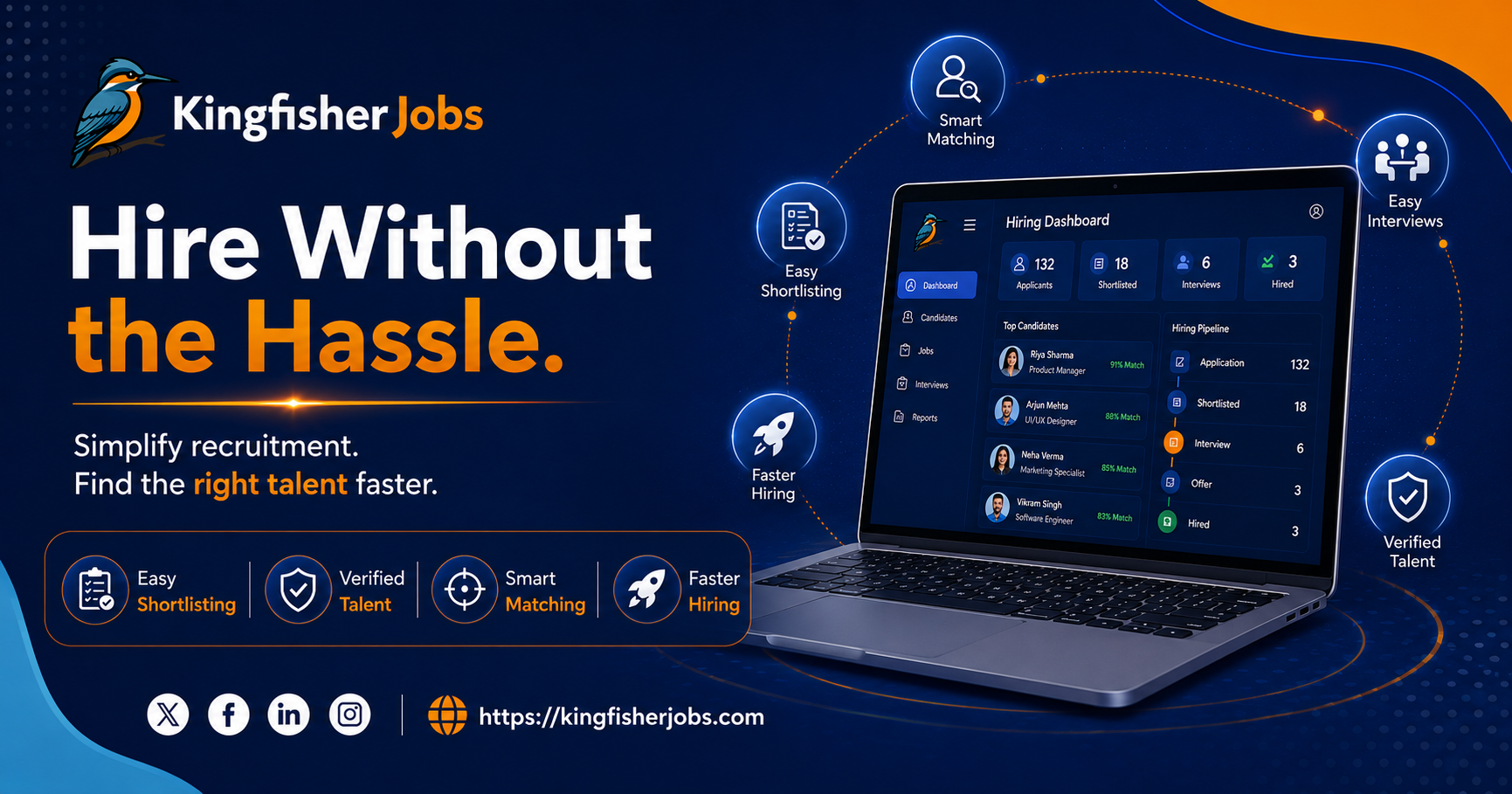
Hire Without the Hassle: A Smarter Recruitment Blueprint for Building Better Teams Faster
Hiring the right person should help a business grow, but for many employers, recruitment has become slow, stressful, and difficult to manage.
Companies often spend too much time sorting through applications, chasing candidates, reviewing unsuitable profiles, and trying to coordinate interviews. Instead of focusing on business growth, managers and HR teams get stuck in a lengthy hiring process.
This is why modern businesses need a smarter approach. The goal is simple: hire without the hassle.
A better recruitment process helps employers find suitable candidates faster, reduce unnecessary delays, and make confident hiring decisions. Platforms like KingfisherJobs make this easier by connecting employers with relevant talent, simplifying shortlisting, and supporting a smoother hiring journey.
1. Understanding the Modern Hiring Challenge
Recruitment has changed. Employers are no longer just looking for someone who can do the job. They want candidates who are skilled, reliable, adaptable, and aligned with the company’s goals.
At the same time, job seekers are also more selective. They want clear job descriptions, fast responses, and trustworthy opportunities.
This creates a challenge for businesses. They must attract the right people while also managing the hiring process efficiently.
1.1 Too Many Applications, Not Enough Quality
Many employers receive applications, but not all applicants are suitable.
Common problems include:
- Candidates applying without relevant experience
- Incomplete profiles
- Poor communication
- Lack of role-specific skills
- Time wasted reviewing unsuitable applications
This makes shortlisting difficult and slows down the hiring process.
1.2 Slow Recruitment Creates Business Delays
When a role stays open for too long, it affects the entire team.
Delays can lead to:
- Increased workload for existing employees
- Missed business opportunities
- Reduced productivity
- Higher recruitment pressure
- Poor candidate experience
A faster and more organized hiring system helps reduce these risks.
2. What Does “Hire Without the Hassle” Really Mean?
Hiring without the hassle does not mean rushing the process. It means making recruitment simpler, clearer, and more effective.
A hassle-free hiring process focuses on:
- Better candidate matching
- Faster shortlisting
- Clear communication
- Verified opportunities
- Organized interview planning
- Confident final decisions
The aim is to remove unnecessary complexity while improving hiring quality.
2.1 Smarter Search
Employers need a system that helps them find relevant candidates quickly.
A smart hiring platform allows businesses to search based on:
- Job role
- Skills
- Experience level
- Location
- Industry
- Candidate suitability
This helps employers focus on people who are more likely to match the role.
2.2 Easier Shortlisting
Shortlisting should not feel overwhelming. With a more structured process, employers can compare candidates based on important factors such as experience, qualifications, skills, career background, role fit, and communication quality.
This makes it easier to move the best candidates forward.
2.3 Faster Hiring Decisions
A delayed hiring decision can cause strong candidates to lose interest. To avoid this, employers should have clear hiring criteria, a simple screening process, timely communication, organized interview steps, and quick final feedback.
This helps businesses secure the right talent before competitors do.
3. Why Traditional Hiring Methods Often Create Hassle
Many companies still rely on outdated recruitment methods. These methods may work sometimes, but they often create extra effort and confusion.
3.1 Manual Candidate Sorting
Reviewing every application manually takes time. Without a clear system, employers may miss strong candidates, spend time on poor matches, delay interviews, lose track of applications, and make inconsistent decisions.
A structured hiring platform helps reduce this problem.
3.2 Unclear Job Descriptions
A weak job description attracts the wrong candidates.
A strong job post should clearly explain:
- Job title
- Main responsibilities
- Required skills
- Experience level
- Work location
- Salary or benefits if available
- Application instructions
The clearer the job post, the better the candidate quality.
3.3 Poor Communication
Candidates value timely updates. If employers take too long to respond, candidates may move on to other opportunities.
Good communication helps build trust and improves the overall recruitment experience.
4. The Role of Smart Matching in Better Hiring
Smart matching is one of the most important parts of modern recruitment. Instead of simply collecting applications, employers need to identify candidates who are most relevant to the role.
4.1 Matching Skills to Job Requirements
A good hiring process compares candidate skills with job needs.
For example, if a company is hiring a marketing executive, it should look for candidates with:
- Campaign management experience
- Content or digital marketing knowledge
- Communication skills
- Analytics understanding
- Industry awareness
This helps improve the quality of shortlisting.
4.2 Matching Experience to Business Needs
Experience level matters. Some roles require entry-level energy, while others need senior-level decision-making.
A better hiring process helps employers identify whether a candidate is suitable for junior roles, mid-level roles, senior roles, management positions, or specialist positions.
This improves role alignment and reduces hiring mistakes.
5. Verified Talent: Why Trust Matters in Recruitment
Hiring is not only about finding people. It is about finding people you can trust.
Verified talent helps employers feel more confident during recruitment.
5.1 Reducing Risk
A poor hire can cost time, money, and team energy.
Employers should look for candidates with:
- Clear work history
- Relevant experience
- Professional communication
- Accurate profile details
- Strong role alignment
This reduces the risk of making the wrong hiring decision.
5.2 Improving Employer Confidence
When candidates are better organized and easier to evaluate, employers can make decisions with more confidence.
This creates a smoother hiring process from application to interview.
6. Building a Hassle-Free Hiring Process
A better recruitment system does not happen by accident. Employers need a clear process.
Step 1: Define the Role Clearly
Before posting a job, employers should understand exactly what they need.
Key questions include:
- What problem will this role solve?
- What skills are required?
- What experience level is needed?
- Is this a full-time, part-time, remote, or hybrid role?
- What qualities matter most?
Clear planning leads to better applications.
Step 2: Write a Strong Job Post
A strong job post attracts stronger candidates.
It should include:
- A clear job title
- Main responsibilities
- Required skills
- Preferred experience
- Company overview
- Benefits or growth opportunities
- Easy application instructions
The job post should be simple, direct, and professional.
Step 3: Use Smart Shortlisting
Instead of reviewing candidates randomly, employers should shortlist based on clear criteria.
Useful shortlisting factors include:
- Role relevance
- Skills match
- Experience quality
- Communication ability
- Career stability
- Availability
This keeps the hiring process organized.
Step 4: Interview with Purpose
Interviews should not only confirm skills. They should also check attitude, communication, and long-term fit.
Employers can ask questions about previous work experience, problem-solving ability, teamwork, career goals, role expectations, availability, and commitment.
This helps identify the right candidate more effectively.
Step 5: Make Timely Decisions
Once the right candidate is identified, employers should act quickly. A slow decision can lead to losing good talent.
Fast but thoughtful hiring helps businesses stay competitive.
7. Benefits of Hiring Through KingfisherJobs
KingfisherJobs supports employers by making recruitment simpler and more focused.
7.1 Better Candidate Discovery
Employers can connect with candidates who are actively looking for opportunities. This improves the chance of finding relevant talent faster.
7.2 Faster Shortlisting
A structured platform helps employers manage applications more efficiently. This reduces time spent sorting through unsuitable candidates.
7.3 Improved Hiring Confidence
When candidate information is clearer and easier to review, employers can make better hiring decisions.
7.4 Stronger Team Building
Good hiring is not only about filling a vacancy. It is about building a stronger team.
KingfisherJobs helps employers move toward better talent decisions.
8. Common Hiring Mistakes Employers Should Avoid
Even experienced employers can make mistakes during recruitment.
8.1 Hiring Too Quickly Without Clear Criteria
Speed matters, but hiring without a clear plan can lead to poor decisions. Employers should always define what they need before selecting candidates.
8.2 Ignoring Candidate Experience
Candidates remember how they are treated. A poor hiring experience can damage the employer’s reputation.
8.3 Overlooking Soft Skills
Technical skills are important, but soft skills also matter.
Employers should consider communication, reliability, teamwork, adaptability, and professional attitude.
These qualities often determine long-term success.
8.4 Delaying Feedback
If candidates do not receive updates, they may lose interest. Timely communication keeps the process professional.
9. How KingfisherJobs Helps Employers Save Time
Time is one of the biggest challenges in recruitment. KingfisherJobs helps reduce time waste by making the process more organized.
Employers can benefit from:
- Easier job posting
- Better candidate visibility
- Clearer shortlisting
- Faster hiring flow
- More focused recruitment decisions
This helps businesses spend less time managing applications and more time selecting the right talent.
10. The Future of Recruitment: Simpler, Smarter, Faster
Recruitment will continue to become more digital and more competitive.
Employers who use smarter hiring systems will have an advantage.
The future of recruitment will focus on:
- Better candidate matching
- Faster hiring processes
- Stronger employer branding
- Clear communication
- Data-driven decisions
- Improved candidate experience
Businesses that adapt now will find it easier to attract and retain quality talent.
Conclusion: Hiring Should Be Simple, Strategic, and Stress-Free
Hiring does not need to be complicated.
With the right process and the right platform, employers can reduce hiring stress, shortlist better candidates, and build stronger teams faster.
The message is clear: Hire without the hassle.
KingfisherJobs helps employers simplify recruitment, connect with relevant talent, and make smarter hiring decisions with confidence.
Whether a company is hiring for one position or building an entire team, a more organized hiring process can save time, improve results, and support long-term business growth.