


A strong employer brand is more than a polished careers page or an attractive job advert. It is the reputation an organisation builds through its culture, employee experience, leadership, opportunities and sense of purpose.
For employers competing for talented people, that reputation matters. Candidates increasingly want to understand what it is actually like to work for an organisation before deciding whether an opportunity is right for them. At the same time, existing employees want meaningful work, opportunities to develop and a workplace where they feel engaged.
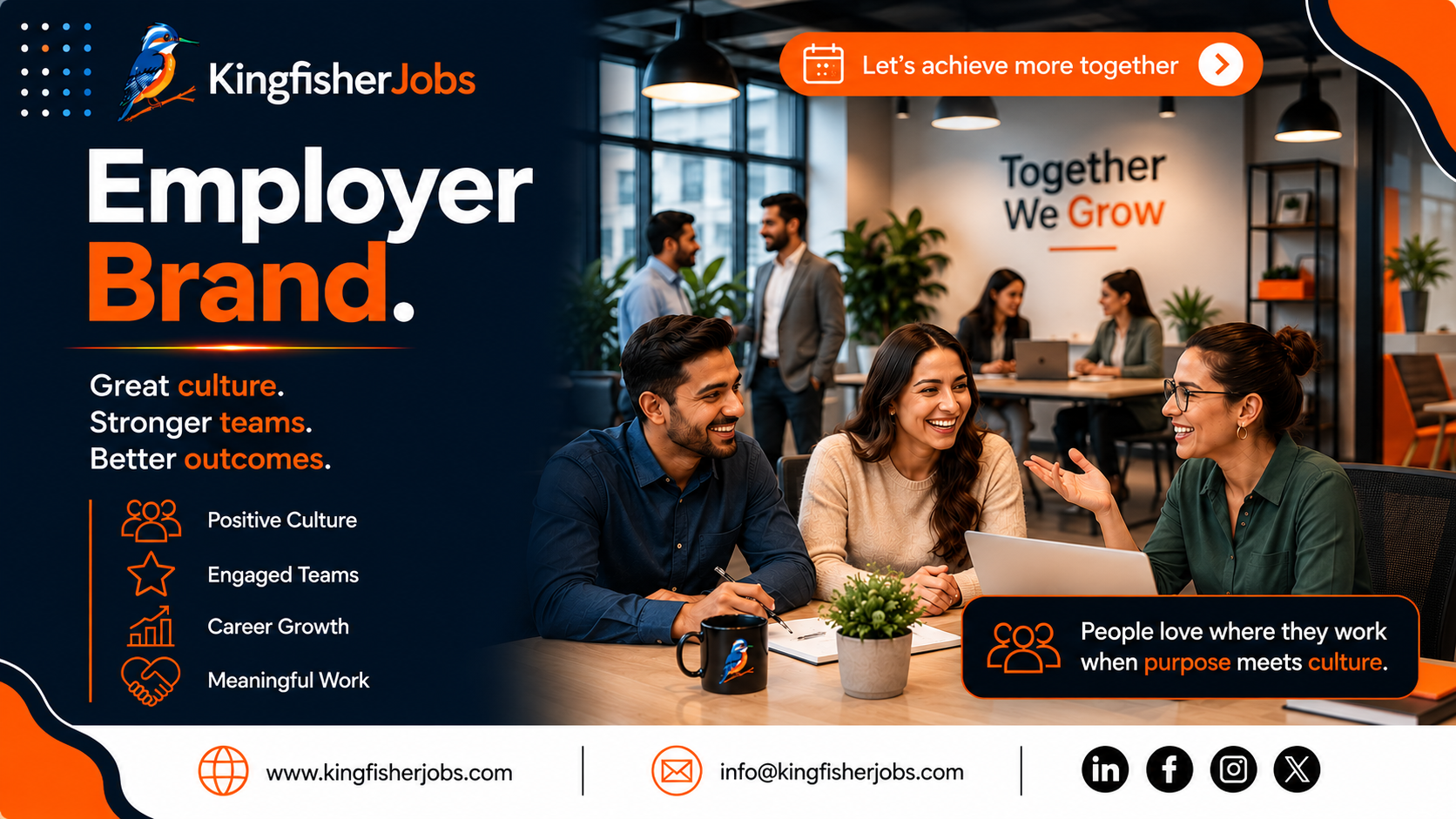
The message behind “Employer Brand. Great culture. Stronger teams. Better outcomes.” is simple: when purpose and culture work together, organisations can create an environment where people are more likely to contribute, develop and build meaningful careers.
For KingfisherJobs, recruitment is not simply about filling vacancies. It is about creating stronger connections between employers and people by understanding what both sides are looking for.
What Is Employer Branding?
Employer branding is the way an organisation is perceived as a place to work. It includes the expectations candidates develop before joining and the experiences employees have once they become part of the business.
Every employer already has an employer brand, whether it has been deliberately developed or not.
It can be influenced by:
- Workplace culture
- Leadership and management
- Career development opportunities
- Employee communication
- Recruitment experiences
- Company values and purpose
- Recognition and progression
- Employee advocacy
- The way candidates are treated during recruitment
A strong employer brand therefore needs to reflect the genuine employee experience. Attractive messaging may generate attention, but long-term credibility depends on whether the reality matches the promise.
Why Employer Brand Matters in Recruitment
Recruitment works in both directions. Employers assess candidates, but candidates also assess employers.
Before applying for a position, a candidate may research the company, explore its website and social channels, read employee feedback and consider whether its culture appears compatible with their priorities.
A clear employer brand can help candidates answer important questions such as:
- What does this organisation stand for?
- What kind of workplace culture does it have?
- How does it support its people?
- Will I have opportunities to develop?
- Does the role offer meaningful work?
- Can I see myself building a future here?
When employers communicate these areas clearly, candidates can make better-informed career decisions.
Great Culture Starts With the Employee Experience
Culture is not simply a statement displayed on a wall. It is created through everyday experiences.
It can be seen in how colleagues communicate, how managers lead, how decisions are made and how employees are supported when challenges arise.
A positive workplace culture may include:
- Respectful communication
- Clear expectations
- Supportive leadership
- Recognition for good work
- Opportunities to contribute ideas
- Constructive feedback
- Collaboration between colleagues
- Opportunities for professional development
These experiences collectively shape how employees describe an organisation to other people, making culture an important part of employer reputation.
Purpose and Culture Need to Work Together
People love where they work when purpose meets culture.
Purpose explains why the organisation exists and what it is trying to achieve. Culture influences how people work together to achieve it.
When these elements are aligned, employees can more easily understand how their individual work contributes to something larger.
For example, leadership may communicate ambitious business objectives, but employees also need clarity about how their responsibilities contribute to those objectives.
That connection can be strengthened through:
- Clear organisational goals
- Consistent leadership communication
- Meaningful individual objectives
- Regular feedback
- Recognition of contribution
- Opportunities for employees to develop
Purpose becomes more meaningful when employees can see it reflected in their everyday experience.
Positive Culture Can Help Create Stronger Teams
Strong teams are not created simply by recruiting individually talented people. They also require an environment in which those people can work effectively together.
A positive culture can encourage:
- Open communication
- Collaboration
- Shared accountability
- Knowledge sharing
- Constructive problem-solving
- Mutual respect
When expectations are clear and colleagues understand how their work connects, teams can concentrate more effectively on shared objectives.
Employee Engagement Is Part of Employer Branding
Employer branding is sometimes treated primarily as an external marketing activity. In reality, existing employees are central to it.
Employees experience the organisation every day. Their opinions and experiences can influence how the company is perceived by potential candidates.
Engaged employees are more likely to understand organisational priorities, participate actively in their teams and communicate positively about their experiences when those experiences are genuinely positive.
Employers can support engagement by creating opportunities for employees to:
- Understand business objectives
- Contribute ideas
- Receive useful feedback
- Develop professionally
- Take ownership of meaningful responsibilities
- Recognise the impact of their work
This means employer branding should begin internally before it is promoted externally.
Career Growth Strengthens the Employee Proposition
Career development is another important component of the employer experience.
People may join organisations for many different reasons, but employees often want to understand what opportunities could exist beyond their immediate position.
Career growth does not always mean a promotion. It can also involve:
- Developing new skills
- Taking on additional responsibilities
- Participating in new projects
- Learning from experienced colleagues
- Moving into different areas of the organisation
- Building leadership capabilities
Employers that communicate development opportunities clearly can give candidates and employees a stronger understanding of what a longer-term career within the organisation might look like.
Meaningful Work Makes Employer Branding More Authentic
Compensation and benefits matter, but they are not the only factors people consider when evaluating work.
Many candidates also want to understand whether a role offers responsibility, challenge, development and a sense that their contribution matters.
Employers can communicate meaningful work by explaining:
- Why the position exists
- What the employee will be responsible for
- How the role contributes to team objectives
- What problems the person will help solve
- What development opportunities may exist
This creates a more useful picture than simply publishing a long list of duties.
The Candidate Experience Is Part of Your Employer Brand
Employer branding begins before someone becomes an employee.
Every interaction during recruitment contributes to the candidate’s perception of the organisation.
This includes:
- The job advertisement
- The application process
- Initial communication
- Interview scheduling
- The interview itself
- Feedback and follow-up
- The offer process
- Onboarding
A professional and respectful candidate experience can communicate important qualities about an employer before the successful candidate has completed their first day.
Write Job Advertisements That Reflect the Real Opportunity
A job advertisement is often one of the first employer-brand touchpoints a candidate encounters.
It should therefore do more than describe tasks.
A useful job advert can explain:
- The purpose of the role
- The key responsibilities
- The skills and experience required
- The team environment
- Relevant development opportunities
- What the organisation can genuinely offer
Clear, realistic communication helps candidates decide whether the position aligns with their experience and career goals.
Authenticity Matters More Than Perfection
Employer branding should not attempt to present an organisation as perfect.
No workplace is perfect, and candidates can often recognise messaging that feels overly polished or disconnected from reality.
A more sustainable approach is to communicate genuine strengths while being clear about expectations.
Authenticity helps create alignment between:
Employer Promise → Candidate Expectation → Employee Experience.
When these three areas are consistent, the employer brand becomes more credible.
Leadership Has a Major Influence on Workplace Culture
Employees often experience organisational culture through their managers and leaders.
Leadership behaviour can influence communication, trust, recognition, collaboration and development.
Employers seeking to strengthen their culture should therefore consider whether managers have the support and skills required to lead people effectively.
Important leadership behaviours can include:
- Setting clear expectations
- Listening to employees
- Providing constructive feedback
- Recognising good performance
- Addressing problems appropriately
- Supporting development
- Communicating organisational priorities
Employer branding and leadership development are therefore closely connected.
Employer Brand and Recruitment Should Work Together
Recruitment becomes more effective when employer branding and hiring strategy support each other.
The employer brand explains what the organisation offers as a workplace. Recruitment then communicates that proposition to suitable candidates while assessing whether there is an appropriate match.
| Employer Brand Element | Recruitment Application |
|---|---|
| Culture | Show candidates how teams work and what the workplace environment is genuinely like. |
| Purpose | Explain how the role contributes to wider organisational objectives. |
| Career Growth | Communicate realistic opportunities for learning and development. |
| Employee Experience | Make the recruitment process professional, clear and respectful. |
| Meaningful Work | Explain the real responsibilities and impact associated with the position. |
How to Strengthen Your Employer Brand
1. Understand Your Current Reputation
Before creating new employer-brand messaging, understand how employees and candidates currently experience the organisation.
2. Define What Makes Your Workplace Distinctive
Identify the genuine characteristics of your culture, working environment, opportunities and employee experience.
3. Connect Culture With Purpose
Help employees understand why their work matters and how individual contributions support wider objectives.
4. Improve the Candidate Journey
Review the recruitment process from application through interview, offer and onboarding.
5. Invest in Career Development
Create realistic opportunities for employees to strengthen skills, gain experience and progress professionally.
6. Communicate Consistently
Ensure job adverts, careers content, interviews and internal communications present a consistent and authentic picture of the organisation.
7. Listen and Improve
Employer branding should evolve. Employee and candidate feedback can help identify areas where the experience can be strengthened.
Employer Branding Is a Long-Term Investment
A strong employer brand cannot be created through a single recruitment campaign.
It develops through repeated experiences and interactions.
How a manager communicates with a team member matters. How a candidate is treated after an interview matters. How development opportunities are discussed matters. How the organisation responds to feedback matters.
Over time, these experiences create a reputation.
That is why sustainable employer branding requires cooperation between leadership, recruitment, HR, managers and employees.
How KingfisherJobs Can Support Employers
KingfisherJobs understands that successful recruitment is about more than matching a CV to a vacancy.
Employers need people who can contribute to their teams, while candidates need opportunities that align with their skills, ambitions and career goals.
A recruitment approach that considers both sides can help create stronger connections between organisations and potential employees.
For employers, that means communicating opportunities clearly and presenting an authentic picture of the role and workplace. For candidates, it means understanding not only what a job requires, but also where that opportunity could take their career.
Frequently Asked Questions About Employer Branding
What is an employer brand?
An employer brand is the reputation and perception an organisation has as a place to work. It is influenced by culture, leadership, career opportunities, recruitment experiences and the everyday experiences of employees.
Why is employer branding important for recruitment?
Employer branding helps candidates understand what an organisation offers beyond the job description. Clear and authentic information about culture, purpose and development can help people evaluate whether an opportunity is appropriate for them.
What is an employee value proposition?
An employee value proposition describes the overall experience and value an organisation offers employees in exchange for their skills and contribution. It can include culture, development, rewards, working environment and meaningful work.
How does workplace culture affect employer branding?
Workplace culture shapes employees’ everyday experiences. Because employees and former employees can influence how others perceive an organisation, culture is an important foundation of employer reputation.
Can recruitment affect employer brand?
Yes. Job advertisements, communication, interviews, feedback and onboarding all influence how candidates perceive an employer, regardless of whether they ultimately join the organisation.
How can employers improve candidate experience?
Employers can provide clear job information, maintain professional communication, make interview expectations transparent, respect candidates’ time and provide appropriate updates throughout the recruitment process.
Why does career development matter to employer branding?
Development opportunities help employees understand how they may continue building their skills and careers within an organisation. Communicating genuine opportunities can therefore strengthen the overall employee proposition.
Should employer branding focus only on attracting new candidates?
No. Existing employees are fundamental to employer branding. The internal employee experience should support the external promises made to candidates.
Great Culture. Stronger Teams. Better Outcomes.
Employer branding begins with people.
A compelling message can attract attention, but the strongest employer brands are built through genuine experiences: positive culture, engaged teams, career development, meaningful work and leadership that connects people with purpose.
When the experience inside an organisation supports the message presented outside it, employer branding becomes more authentic and sustainable.
Build a positive culture. Engage your people. Create meaningful opportunities. Build stronger teams.
Build Stronger Teams With KingfisherJobs
Looking to connect your organisation with people who can contribute to its future? Speak with KingfisherJobs about your recruitment requirements and start building stronger connections between opportunity, people and culture.
Website: www.kingfisherjobs.com
Email: info@kingfisherjobs.com
Let’s achieve more together.