
The job market is constantly changing. New technologies, evolving business needs and changing employer expectations mean that professionals can no longer rely only on the skills they gained at the beginning of their careers.
Continuous learning has become an important part of career development. Whether you are searching for a new job, planning a career change or hoping to progress in your current role, developing relevant skills can help you become more confident, adaptable and prepared for new opportunities.
At KingfisherJobs, we believe that investing in your skills today can help create brighter career opportunities tomorrow.
Why Learning New Skills Matters
Employers are looking for candidates who can contribute effectively while adapting to changing workplace requirements. Qualifications and previous experience remain important, but practical and transferable skills can make a significant difference.
Learning new skills can help you:
- Build in-demand capabilities
- Strengthen your CV
- Increase professional confidence
- Adapt to changing job requirements
- Explore different career paths
- Prepare for greater responsibilities
- Demonstrate commitment to professional development
The goal is not to learn everything. It is to identify the skills that are most relevant to the career you want and develop them consistently.
Build In-Demand Skills
A good starting point is understanding which skills employers value in your chosen field.
Different industries require different technical abilities, but many employers also value transferable skills such as communication, problem-solving, teamwork, organisation and adaptability.
Depending on your career goals, useful areas for development could include:
Digital Marketing
Digital marketing knowledge can be useful across many modern organisations. Skills in content creation, social media, search marketing, email marketing and digital analytics can open opportunities in marketing and related roles.
Data Analysis
Businesses increasingly rely on data to understand performance and make informed decisions. Learning how to organise, interpret and communicate data can therefore be valuable across multiple sectors.
Communication Skills
Strong communication remains important in almost every profession. Being able to explain ideas clearly, listen effectively and communicate appropriately with colleagues and customers can strengthen your performance in many roles.
Career and Professional Skills
Time management, leadership, presentation skills, teamwork and problem-solving can all contribute to professional development. These abilities are particularly valuable because they can transfer between different jobs and industries.
Upskilling Can Strengthen Your CV
Your CV should show employers what you can offer now, not simply what you have done in the past.
Adding relevant skills, courses, certifications or practical projects can demonstrate that you are actively developing professionally.
However, avoid creating a long list of skills without evidence. Where possible, connect your skills to practical achievements.
Instead of simply writing:
Data Analysis
you could demonstrate how you have used that ability in a previous role or project.
Evidence makes skills more meaningful to employers.
Learning Can Boost Your Confidence
Developing new abilities can also improve professional confidence.
Job searching can sometimes feel challenging, particularly when job descriptions contain unfamiliar requirements. Building knowledge in relevant areas can make those requirements feel more manageable.
Confidence should come from preparation rather than simply telling yourself to feel confident.
When you understand your subject, practise your skills and know how to explain your experience, you are better prepared to communicate your value during applications and interviews.
Stay Ahead in Your Career
Professional development should not begin only when you need another job.
Regular learning can help you stay prepared for future changes in your industry. New tools, processes and ways of working can emerge quickly, and professionals who remain curious are often better positioned to adapt.
Consider reviewing your skills periodically and asking:
What skills are becoming more important in my industry?
Which abilities appear frequently in the jobs I want?
Where are the gaps between my current skills and my target role?
What can I realistically learn or improve next?
These questions can give your development a clearer direction.
Identify Your Skills Gap
Before enrolling in multiple courses, understand what you actually need to learn.
Start by reviewing job advertisements for roles that interest you. Look for recurring requirements across several vacancies.
You may notice that employers repeatedly request a particular software package, technical capability, qualification or transferable skill.
Compare those requirements with your existing experience.
Your skills gap is the space between what you currently offer and what employers commonly expect for your target position.
Once you identify that gap, your learning becomes much more focused.
Create a Practical Learning Plan
Professional development does not need to become overwhelming. A simple learning plan can make progress easier to manage.
Choose one or two priority skills and define what you want to achieve. Then break the goal into smaller activities.
For example, if you want to develop data analysis skills, your plan might include learning fundamental concepts, practising with realistic datasets and completing a small project that demonstrates what you have learned.
Consistency matters more than trying to master everything immediately.
Even a few focused hours each week can contribute to meaningful progress over time.
Learn by Doing
Watching tutorials and reading books can build knowledge, but practical application helps turn knowledge into capability.
Try to use new skills in realistic situations.
If you are learning digital marketing, create a sample campaign.
If you are developing writing skills, build a small portfolio.
If you are learning data analysis, complete a project using a sample dataset.
If you are developing presentation skills, practise delivering presentations.
Projects also give you something tangible to discuss with potential employers.
Develop Technical and Soft Skills Together
Candidates sometimes focus entirely on technical skills while overlooking interpersonal abilities.
Most workplaces require both.
A technically capable employee may still need to collaborate with colleagues, communicate with customers, organise priorities and explain information clearly.
Similarly, excellent communication alone may not be enough for a role requiring specialist technical knowledge.
A balanced development plan considers both areas.
Technical skills help demonstrate what you can do.
Soft skills influence how effectively you can apply those abilities in a workplace.
Turn Learning Into Evidence
Completing a course is useful, but employers are ultimately interested in what you can do with the knowledge.
Look for opportunities to turn learning into evidence through:
- Personal projects
- Professional certifications
- Freelance or voluntary experience
- Workplace projects
- Portfolios
- Case studies
- Measurable achievements
This evidence can strengthen your CV, LinkedIn profile and interview answers.
Update Your CV as Your Skills Grow
Do not wait until you urgently need a job before updating your CV.
As you complete courses, projects or certifications, review your CV and add relevant achievements.
Your skills section should reflect your current capabilities, while your work experience should demonstrate how you have applied those skills wherever possible.
You can also tailor your CV for individual vacancies by prioritising the experience and skills most relevant to each position.
Use New Skills During Interviews
New skills can also strengthen interview conversations.
Employers may ask what you have done recently to develop professionally or how you keep your knowledge current.
Instead of giving a general response, explain what you learned, why you chose that skill and how you applied it.
For example, you might discuss a course you completed, a project you created and what the experience taught you.
This demonstrates initiative as well as knowledge.
Don’t Chase Every Trend
Continuous learning does not mean following every new trend.
Trying to learn too many unrelated skills can leave you with surface-level knowledge and no clear professional direction.
Focus on skills that connect with your career objectives.
Ask whether a skill will help you perform your target role, address a recurring employer requirement or support your longer-term development.
If the answer is unclear, it may not deserve priority yet.
Make Learning a Career Habit
The most valuable approach to professional development is often consistency.
Instead of viewing learning as something you do once, make it part of your career routine.
You could dedicate regular time each week to reading industry information, practising a skill, completing a course or working on a project.
Small improvements accumulate.
Over months and years, this approach can help you build a broader and more relevant professional skill set.
From New Skills to New Opportunities
Learning alone cannot guarantee a particular job or promotion. However, developing relevant skills can help you become better prepared when opportunities appear.
The process can be simple:
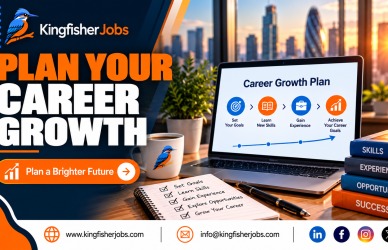
Identify your goal → understand the skills required → learn → practise → demonstrate your ability → apply for relevant opportunities.
Each stage moves you closer to becoming a stronger candidate.
How KingfisherJobs Can Support Your Career Journey
At KingfisherJobs, the focus is on helping candidates move forward in their careers.
Developing relevant skills is one important part of that journey. Combining those skills with a strong CV, thoughtful applications, effective interview preparation and a clear understanding of your career goals can put you in a stronger position when pursuing new opportunities.
The important thing is to keep moving forward.
Conclusion: Start Learning Today
Your next career opportunity may require a skill you have not developed yet. That does not have to be a barrier—it can become your next development goal.
Identify the skills relevant to where you want to go. Build them consistently. Practise them in realistic situations and make sure employers can see the progress you have made.
Build in-demand skills. Boost your confidence. Stay ahead in your career.
Start learning today and prepare yourself for the opportunities ahe