


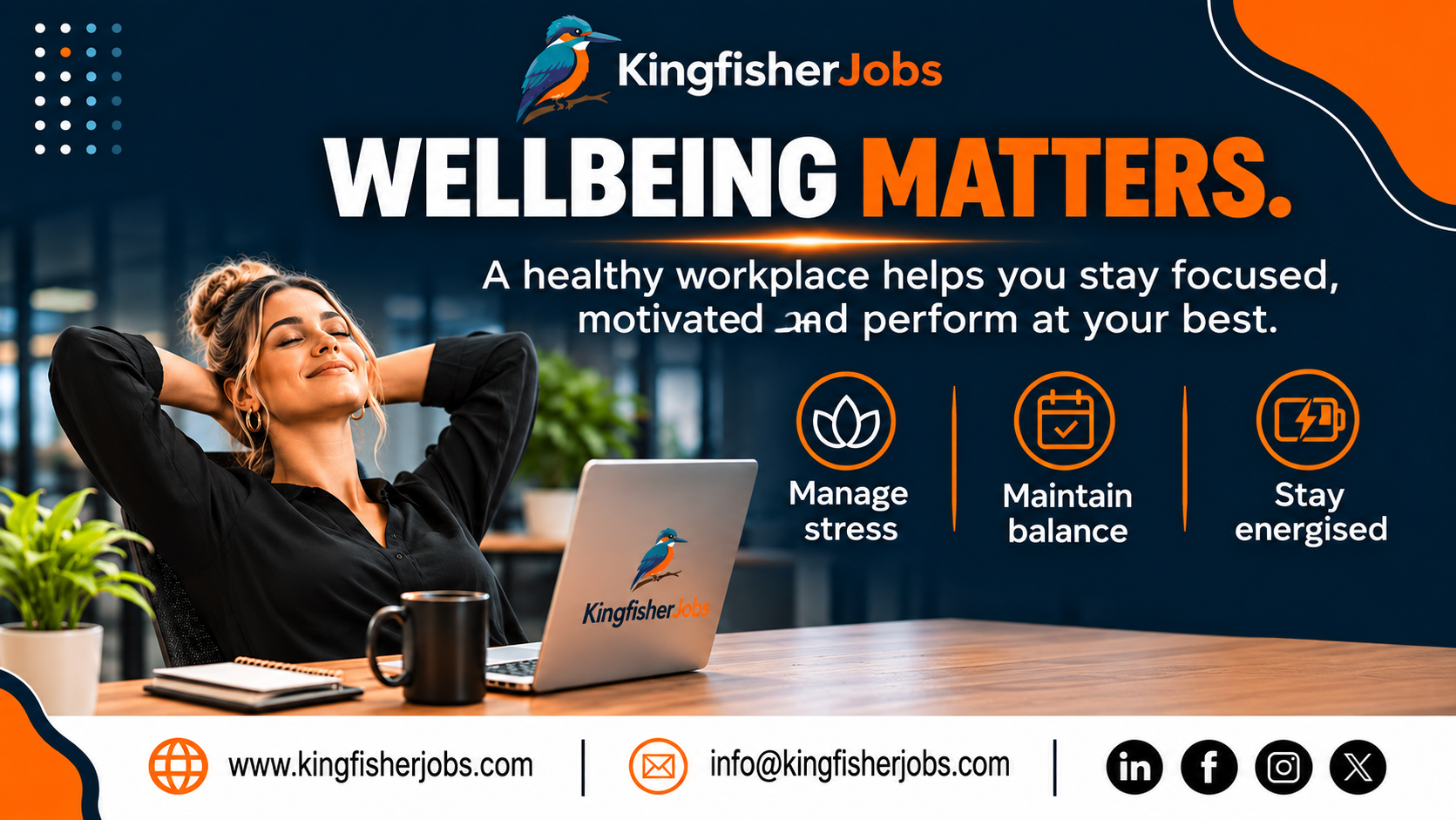
Success in the workplace is often measured through productivity, performance, and professional achievements. However, one essential factor is sometimes overlooked: employee wellbeing.
A healthy workplace is not simply one where employees meet deadlines and achieve targets. It is an environment where individuals feel supported, motivated, and equipped to perform at their best without compromising their physical or mental health.
At Kingfisher Jobs, we believe that professional success and personal wellbeing should go hand in hand. Whether you are starting your career, exploring new opportunities, or managing an established professional journey, prioritising your wellbeing is essential for long-term growth.
Why Workplace Wellbeing Matters
Workplace wellbeing refers to the physical, mental, emotional, and social factors that influence an individual’s experience at work.
It encompasses everything from manageable workloads and supportive leadership to healthy workplace relationships, adequate rest, and opportunities for professional development.
When employees feel supported, they are often better positioned to remain focused, motivated, and engaged in their responsibilities.
Conversely, consistently demanding working conditions, poor communication, and limited opportunities for recovery can contribute to stress, exhaustion, and reduced job satisfaction.
Creating a healthier workplace therefore benefits both employees and organisations.
1. Manage Workplace Stress Effectively
Stress is a common part of professional life. Deadlines, demanding responsibilities, unexpected challenges, and changing expectations can create pressure throughout the working day.
While occasional pressure may encourage focus and problem-solving, prolonged or excessive stress can negatively affect concentration, motivation, and overall wellbeing.
Learning to recognise and manage workplace stress is an important professional skill.
Practical Ways to Manage Stress at Work
- Prioritise your responsibilities: Identify urgent tasks and organise your workload according to importance and deadlines.
- Take regular breaks: Short periods away from your workstation can help reduce mental fatigue and restore concentration.
- Communicate openly: Discuss unrealistic deadlines, excessive workloads, or unclear expectations with your manager when appropriate.
- Practise relaxation techniques: Deep breathing, stretching, and brief moments of mindfulness may help you manage everyday tension.
- Recognise your limits: Understand when additional support or adjustments may be necessary.
Managing stress is not about eliminating every challenge. It is about developing healthier ways to respond to workplace demands.
2. Maintain a Healthy Work-Life Balance
Maintaining balance between professional responsibilities and personal life is essential for sustainable career development.
In an increasingly connected world, the boundaries between work and personal time can become blurred, particularly for remote workers and professionals with demanding schedules.
Responding to messages after working hours, skipping breaks, and consistently prioritising work over rest may gradually contribute to exhaustion.
Healthy work-life balance allows individuals to meet their professional responsibilities while making sufficient time for personal interests, relationships, and recovery.
How to Create Better Work-Life Balance
- Establish clear boundaries between working hours and personal time.
- Plan your daily schedule to accommodate both professional and personal responsibilities.
- Use annual leave and rest periods when available.
- Avoid unnecessary work-related communication outside agreed working hours.
- Make time for activities that support your physical, emotional, and social wellbeing.
Employers also play an important role by setting realistic expectations, respecting personal boundaries, and encouraging healthy working practices.
A balanced professional life supports long-term performance rather than short-term productivity at the expense of wellbeing.
3. Stay Energised Throughout the Working Day
Maintaining consistent energy levels can influence concentration, motivation, and the ability to complete daily responsibilities effectively.
However, staying energised requires more than relying on caffeine or pushing through fatigue.
Healthy routines, adequate rest, and regular movement can help employees maintain their physical and mental energy.
Simple Habits That Support Workplace Energy
- Get sufficient sleep: Consistent, restorative sleep supports concentration, memory, and overall health.
- Stay hydrated: Drinking enough water throughout the day supports normal physical and cognitive functioning.
- Eat balanced meals: Regular, nutritious meals provide the body with the energy needed for daily activities.
- Move regularly: Stretching, walking, and changing positions can help reduce discomfort associated with prolonged sitting.
- Take meaningful breaks: Allowing time for recovery can help prevent mental fatigue during demanding workdays.
Small adjustments to everyday routines can make a meaningful difference in how employees experience their working day.
4. Build Positive Workplace Relationships
Workplace wellbeing is also influenced by the quality of professional relationships.
Supportive colleagues, respectful communication, and constructive leadership can contribute to a more positive working environment.
When employees feel comfortable sharing ideas, asking questions, and seeking assistance, collaboration becomes easier and workplace challenges may be addressed more effectively.
Positive workplace relationships can be strengthened through:
- Respectful and professional communication.
- Constructive feedback and recognition.
- Teamwork and shared responsibility.
- Inclusive workplace practices.
- Open discussions about challenges and expectations.
A healthy workplace culture encourages employees to feel valued as individuals rather than viewing them solely through their productivity.
5. Recognise the Warning Signs of Burnout
Burnout is an occupational phenomenon associated with chronic workplace stress that has not been successfully managed.
It may involve persistent exhaustion, increased mental distance or negativity towards work, and reduced professional effectiveness.
Although occasional tiredness is normal, ongoing exhaustion and disengagement should not automatically be dismissed as unavoidable parts of professional life.
Common Signs That May Indicate a Need for Support
- Feeling consistently exhausted despite taking time to rest.
- Experiencing declining motivation or enthusiasm for work.
- Finding it increasingly difficult to concentrate.
- Feeling emotionally disconnected from professional responsibilities.
- Becoming unusually frustrated or overwhelmed by routine tasks.
These experiences can have several causes and do not automatically indicate burnout. However, persistent symptoms deserve attention.
Employees experiencing ongoing difficulties should consider discussing workplace pressures with an appropriate manager, human resources representative, or qualified healthcare professional.
Employers should also recognise their responsibility to address organisational factors that contribute to excessive workplace stress.
6. Choose Career Opportunities That Support Your Wellbeing
When searching for employment, salary, job titles, and career progression are important considerations. However, workplace culture and employee wellbeing should also influence career decisions.
A role that offers attractive compensation but consistently undermines personal wellbeing may not provide the long-term professional satisfaction you are seeking.
Job seekers should consider how potential employers approach employee support, workload management, communication, and professional development.
Questions to Ask When Evaluating a Workplace
- What does the organisation do to support employee wellbeing?
- How are workloads and deadlines managed?
- Does the company encourage a healthy work-life balance?
- What opportunities exist for professional growth and development?
- How does management support employees experiencing workplace challenges?
These questions can provide valuable insight into whether a workplace aligns with your professional goals and personal priorities.
Remember that career success is not only about securing employment. It is also about finding an environment where you can develop, contribute, and thrive.
7. Employers Have a Responsibility to Promote Wellbeing
Although individuals can adopt healthy routines, workplace wellbeing should not rest entirely on employees.
Organisations have an important responsibility to create working conditions that support physical and psychological health.
Employers can promote healthier workplaces by:
- Establishing realistic workloads and performance expectations.
- Encouraging respectful and transparent communication.
- Providing appropriate resources and employee support.
- Promoting reasonable working hours and adequate rest.
- Addressing workplace bullying, discrimination, and harmful behaviour.
- Creating opportunities for employee feedback and professional development.
When wellbeing becomes part of organisational culture rather than an occasional initiative, businesses can create more supportive and sustainable working environments.
Wellbeing and Career Success Go Hand in Hand
A fulfilling career should provide opportunities for professional achievement without requiring individuals to consistently sacrifice their health and personal wellbeing.
Managing stress, maintaining balance, and supporting healthy energy levels are important foundations for sustainable professional performance.
At Kingfisher Jobs, we believe that finding the right career opportunity involves more than matching skills to job descriptions. It also means recognising the importance of workplace environments where individuals can grow, contribute, and maintain a healthy quality of life.
Your wellbeing matters. Your career matters. You deserve the opportunity to thrive in both.
Take the Next Step in Your Career With Kingfisher Jobs
Looking for career opportunities that align with your professional goals?
Explore Kingfisher Jobs and take the next step towards building a rewarding professional future.
Website: www.kingfisherjobs.com
Email: info@kingfisherjobs.com
Kingfisher Jobs – Connecting Talent With Opportunity.