

Introduction
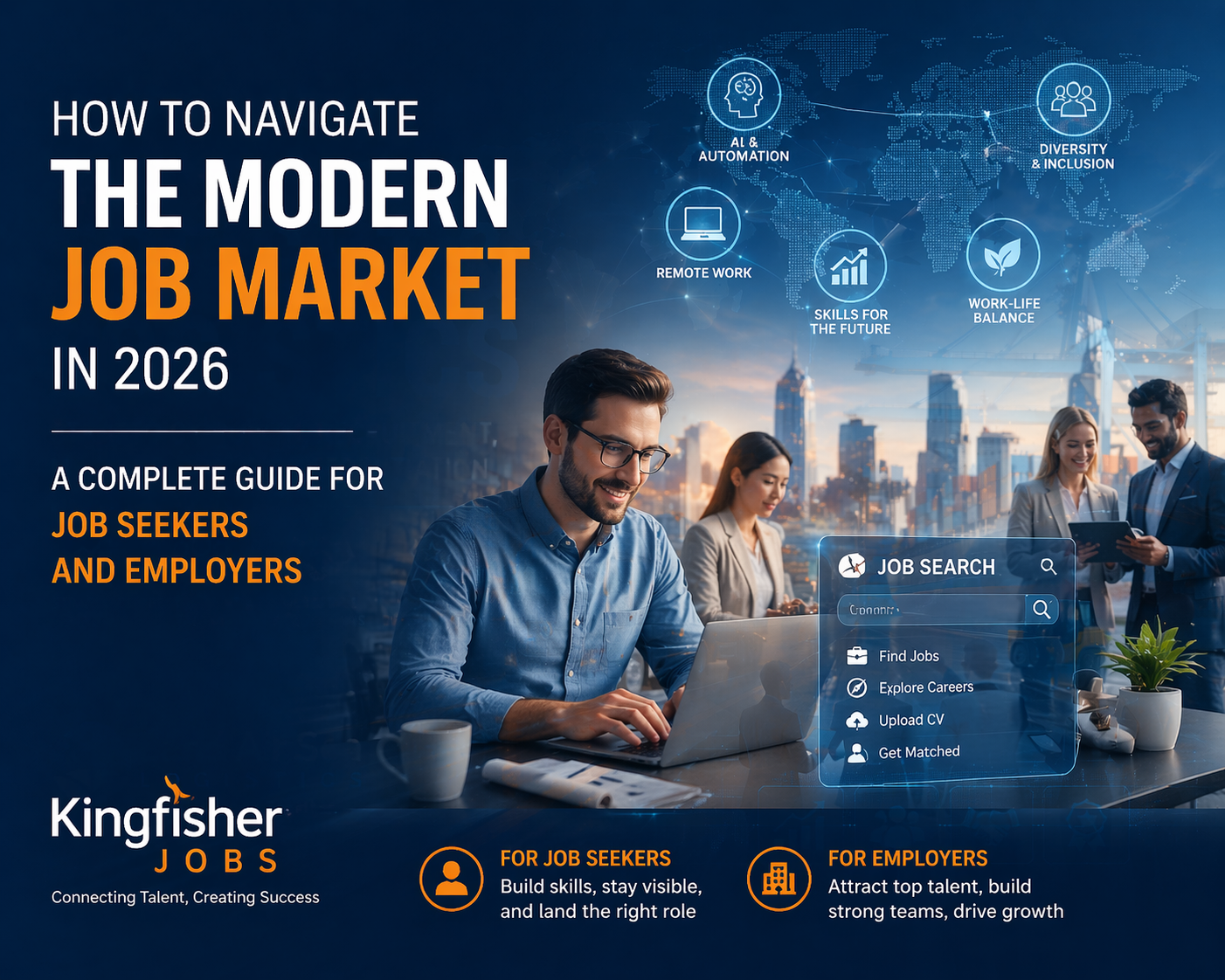
The global employment landscape has evolved dramatically over the past decade — and 2026 is no exception. With economic shifts, digital transformation of hiring processes, hybrid work models, shifting employer expectations, and unprecedented competition for top talent, both job seekers and hiring organisations must adopt strategic approaches to succeed. Through insights backed by real market trends and practical recommendations, this definitive guide will help professionals and employers navigate the modern job market with purpose and clarity.
Whether you’re a recent graduate entering your first role, a mid‑career professional seeking advanced opportunities, or an employer struggling to attract and retain quality talent, this article provides actionable guidance that aligns with the mission of KingfisherJobs — to connect talent with opportunity worldwide.
Section 1 — The Modern Job Market: What Has Changed by 2026?
1.1 The Shift from Transactional Hiring to Strategic Talent Management
In the past, hiring often focused on filling vacancies quickly — today, organisations increasingly view talent as a strategic business asset, not a cost centre. This shift means that employers place higher value on:
- Skills alignment and cultural fit over proximity of hire
- Workforce agility and long‑term potential
- Employee experience and retention strategies
Instead of reactive requisitions, modern recruitment integrates workforce planning, predictive skills forecasting, and competency frameworks that align with business objectives.
This paradigm shift places pressure on traditional recruitment methods and elevates platforms like KingfisherJobs, which streamline access to verified job opportunities while emphasising meaningful job matches.
1.2 Technology as the Backbone of Hiring
Emerging technologies are reshaping how jobs are advertised, reviewed, and secured. AI‑driven tools, talent analytics, applicant tracking systems, and job matching algorithms are now standard features in professional hiring technology stacks.
From the candidate side:
- AI‑based job recommendations save time
- Automated alerts notify professionals instantly
- Advanced filters help narrow searches intelligently
For employers:
- Talent pipelines become searchable and scalable
- Pre‑screening filters reduce hiring cycle times
- Analytics help refine sourcing strategies
Platforms that integrate these capabilities — especially those that combine scale with quality — are reshaping competitive advantage.
1.3 Remote Work and Geographic Fluidity
The rise of remote and hybrid work models has added a new dimension to job search behaviour. Talent is no longer constrained by location in many sectors. Organisations can tap into global talent pools for specialized skills, while job seekers benefit from expanded access to positions that match their preferences — regardless of geography.
KingfisherJobs supports this trend by providing filters and search capabilities that connect global candidates with employers looking beyond local talent pools.
Section 2 — For Job Seekers: How to Position Yourself for Success
2.1 Understand What Employers Really Want
Today’s employers evaluate candidates on a blend of technical proficiency, adaptability, and soft skills such as communication, critical thinking, and teamwork. Artificial intelligence and digital tools are becoming contenders in assessing candidate suitability, but human judgment remains crucial in interpreting core values and motivation.
To stand out:
- Tailor your resume and profile for specific roles
- Highlight measurable achievements
- Showcase professional growth and learning initiatives
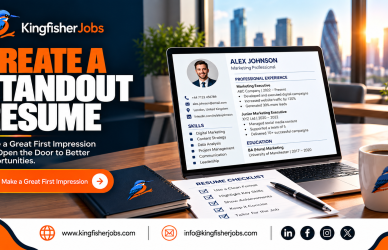
2.2 Crafting a Resume That Gets Noticed
Your resume is your first impression. In an era of automated hiring tools, clear structure and keyword relevance are essential. Some best practices include:
- Start with a concise professional summary — articulate your experience and value clearly.
- Use metrics to demonstrate impact (“Improved process efficiency by 25%”).
- Match keywords from job descriptions to your qualifications.
- Keep formatting simple — many applicant tracking systems (ATS) prefer plain text and avoid complex layouts.
A well‑crafted resume increases your visibility and ensures you pass both automated and manual screening stages.
2.3 Mastering the Online Job Search
Effective online job searching combines smart strategy with regular action:
- Set custom job alerts for your skill set and interests
- Use filters for industry, role, and experience level
- Keep your profile up to date
- Save and track jobs you’re interested in
KingfisherJobs allows candidates to take advantage of these features to ensure they never miss relevant opportunities.
2.4 Upskilling for Future‑Ready Careers
Employers increasingly value continuous learning. Upskilling demonstrates initiative, flexibility, and a desire to grow — traits highly valued across industries, including IT, healthcare, finance, and supply chain sectors.
Consider:
- Online certifications (LinkedIn Learning, Coursera, industry‑specific credentials)
- Targeted training based on job trends
- Soft skills related to leadership, communication, and project management
Being proactive about learning enhances your employability and positions you as a high‑impact candidate.
2.5 Acing the Interview
Interviews today are multidimensional — often involving behavioral, technical, and situational assessments.
Tips to excel:
- Research the company and role deeply
- Prepare responses that highlight real examples
- Ask insightful questions about culture, expectations, and success metrics
- Follow up with a concise, professional message post‑interview
A confident and informed candidate makes a lasting impression.
Section 3 — For Employers: Attracting and Hiring Top Talent
3.1 Building a Compelling Employer Brand
Top talent seeks organisations where their skills are valued and where they can grow. Employer branding isn’t just marketing — it’s a reflection of internal culture, growth pathways, leadership support, and employee experience.
Strategies include:
- Publish employee testimonials and success stories
- Share career progression paths
- Highlight work‑life balance and benefits
- Communicate mission and values consistently
A strong employer brand accelerates recruitment and enhances retention.
3.2 Crafting Job Postings That Drive Better Applications
A strong job posting does more than list duties — it communicates expectations clearly and demonstrates respect for the candidate’s time and ambition.
Best practices:
- Use a clear title that reflects the role accurately
- Include key responsibilities and deliverables
- State required skills and experience, but differentiate between must‑haves and nice‑to‑haves
- Provide salary range or benefits, when possible
- Include career development opportunities
Well‑written job postings attract qualified candidates and reduce unfit applications.
3.3 Efficient Hiring Was Never Optional
Hiring speed and quality are competitive differentiators in 2026. Delays in sourcing, screening, and interviewing can lead top candidates to accept other offers.
Modern recruiting tactics:
- Use smart filters and AI support to shortlist candidates
- Communicate proactively with applicants
- Streamline hiring stages to reduce candidate drop‑off
KingfisherJobs supports efficient hiring by enabling employers to access targeted talent quickly through robust search and application management tools.
Section 4 — Career Trends and Job Market Insights for 2026
4.1 Skills in High Demand
In 2026, certain skills continue to be highly sought across industries:
- Digital literacy
- Data analysis and interpretation
- Cybersecurity
- Project management
- AI and automation tools
- Customer success and relationship management
Professionals who align their learning with these skills are more competitive in the job market.
4.2 Emerging Job Categories
Some roles have grown rapidly in demand due to digital transformation and structural market shifts:
- Remote and hybrid operations coordinators
- Sustainability and ESG analysts
- Healthcare IT specialists
- Data privacy officers
- Cloud infrastructure engineers
Tracking trends like these helps job seekers align themselves with future opportunity clusters.
4.3 Resilience and Career Adaptability
The modern economy values adaptability more than ever. Professionals who can transition between roles, learn new tools, and pivot strategically stay relevant. Employers also prioritise candidates who demonstrate resilience and problem‑solving capabilities.
Section 5 — Building Long‑Term Career Success
5.1 Setting Professional Goals
A clear career roadmap helps professionals make informed decisions:
- Define short‑ and long‑term goals
- Track achievements and learning milestones
- Seek feedback from mentors and peers
- Adjust plans based on market signals
Goal clarity reduces randomness and increases career momentum.
5.2 Networking: A Strategic Advantage
Networking is often underestimated but remains one of the most influential factors in career progression. Whether online or offline, intentional networking expands visibility and opportunities.
Best practices:
- Use professional networks like LinkedIn
- Attend industry events (virtual/in‑person)
- Connect with alumni or professionals in your field
- Share useful insights and achievements
Networking also supports referrals — one of the highest‑quality sources of job opportunities.
5.3 Continuous Feedback and Growth
Treat every interview and role experience as a learning opportunity. Seek constructive feedback, set measurable improvement action items, and refine your career approach continually.
Conclusion — Your Career Journey Starts (and Advances) Here
The job market in 2026 is dynamic, competitive, and full of opportunities — for those who approach their careers strategically, continuously learn, and align themselves with modern hiring practices. Whether you’re a job seeker refining your search or an employer elevating your hiring process, the strategies shared above will empower you to move forward with focus and confidence.
At KingfisherJobs, our mission is simple: to empower professionals with meaningful opportunities and support employers in finding the right talent efficiently and responsibly. With verified job listings, easy‑to‑use tools, and a global community of professionals, you can navigate the modern labour market with clarity and success.