

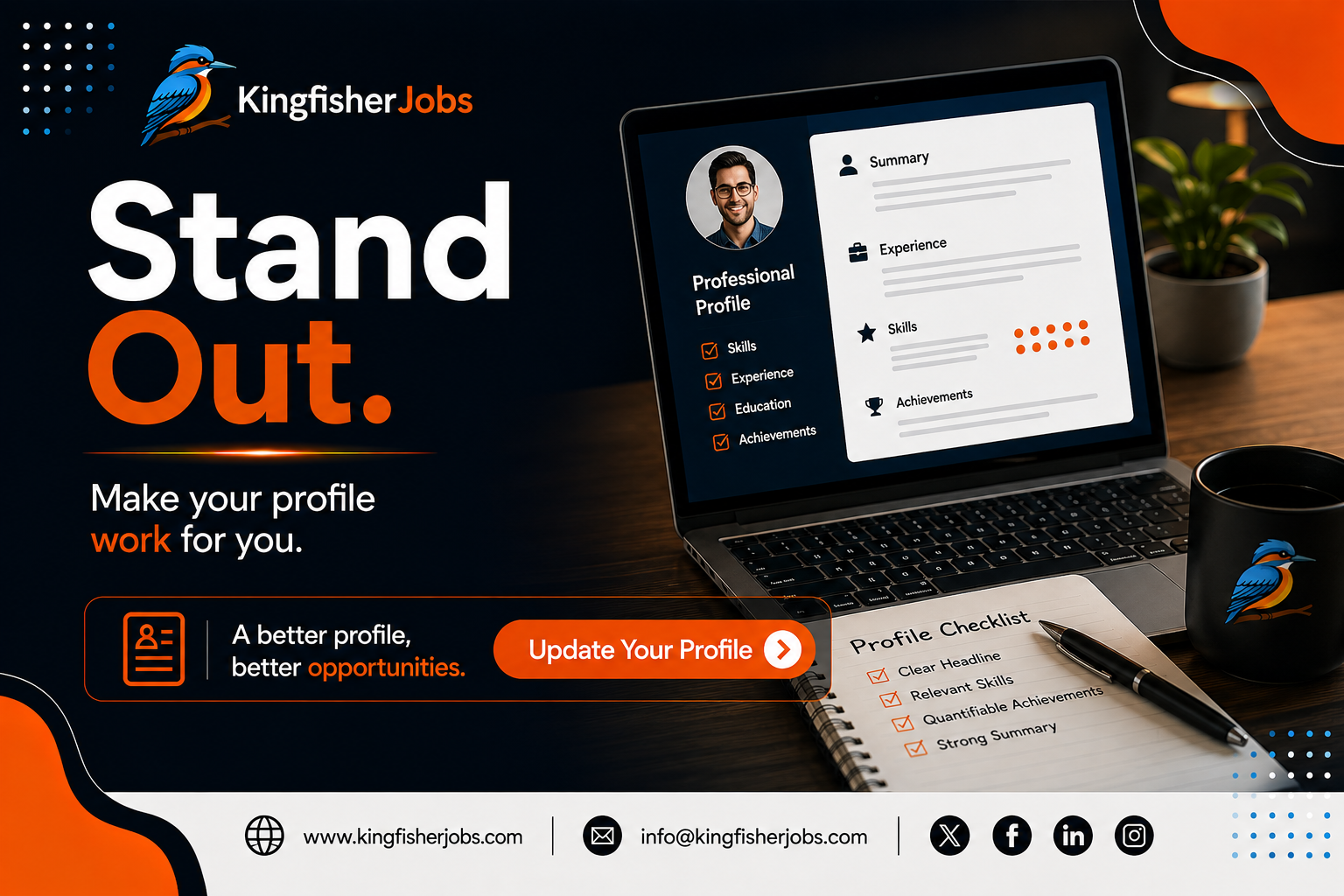
Your professional profile is often one of the first things an employer or recruiter sees. A clear headline, relevant skills, measurable achievements and a strong summary can help you communicate your value quickly and position yourself for better opportunities.
The key idea:
A strong professional profile should not simply describe your career history. It should show employers what you can do, what you have achieved and why you could be valuable to their organisation.
Why Your Professional Profile Matters
In a competitive employment market, qualifications and experience matter — but presentation matters too. Recruiters may review many candidates for a single opportunity, which means your profile needs to communicate the most relevant information efficiently.
Whether you are creating a profile on a job platform, updating your CV or preparing for your next career move, the objective is similar: make it easy for the right employer to understand your professional value.
A well-built profile can highlight your experience, demonstrate relevant skills, showcase achievements and give employers a clearer picture of where you could fit within their organisation.
What Makes a Professional Profile Stand Out?
| Profile Element | Purpose | Best Approach |
|---|---|---|
| Headline | Explains your professional identity | Keep it specific, relevant and easy to understand |
| Summary | Introduces your experience and value | Focus on strengths, experience and career direction |
| Skills | Shows what you can contribute | Prioritise skills relevant to your target roles |
| Experience | Demonstrates practical capability | Explain responsibilities through outcomes and impact |
| Achievements | Provides evidence of performance | Use measurable results wherever appropriate |
1. Start With a Clear Professional Headline
Your headline is valuable profile space. Generic descriptions can make it harder for employers to immediately understand what type of professional you are.
Instead of using a broad headline, consider combining your role, specialism or strongest area of expertise.
Generic: Marketing Professional
More specific: Digital Marketing Specialist | SEO, Paid Media & Lead Generation
Generic: Software Developer
More specific: Full-Stack Developer | React, Node.js & Cloud Applications
The goal is clarity. Someone viewing your profile should quickly understand the type of work you do and where your expertise sits.
2. Write a Strong Professional Summary
Your summary connects the different parts of your professional story. Rather than repeating every detail from your employment history, use it to explain who you are professionally, what you specialise in and what value you can offer.
A useful professional summary can cover:
- Your current professional area or specialisation
- Your level or type of experience
- Your strongest relevant skills
- Industries or environments you understand
- Important achievements or areas of impact
- The type of opportunity you are interested in
Remember:
Your summary should answer a simple employer question: “Why should I keep reading this candidate’s profile?”
3. Highlight Relevant Skills
A long list of unrelated skills does not necessarily create a stronger profile. Relevance is usually more useful than volume.
Think about the positions you want to pursue and identify the skills repeatedly associated with those roles. These might include technical capabilities, industry knowledge, software expertise, leadership abilities or commercial skills.
Technical Skills
- Role-specific software and platforms
- Programming or development technologies
- Data and analytical tools
- Design or engineering applications
- Industry-specific systems
Professional Skills
- Project management
- Communication
- Leadership
- Problem-solving
- Stakeholder management
- Business development
- Team collaboration
Where possible, support important skills with evidence from your experience. Saying that you have leadership skills is useful; showing that you led a team to deliver a successful project is stronger.
4. Turn Responsibilities Into Achievements
One of the most effective ways to improve a professional profile is to move beyond listing what you were responsible for and explain what happened because of your work.
| Responsibility-Focused | Achievement-Focused |
|---|---|
| Managed social media accounts | Developed and managed campaigns that increased qualified engagement |
| Responsible for sales | Developed new accounts and contributed to measurable revenue growth |
| Managed projects | Coordinated cross-functional projects and delivered key milestones within agreed timelines |
| Helped customers | Resolved customer issues and supported improvements in service experience |
Use accurate numbers where you have them. Revenue generated, costs reduced, projects completed, customers supported, efficiency improvements and team size can provide useful context.
5. Make Your Achievements Measurable
Specific achievements give employers evidence rather than claims. Compare these two statements:
Before: Helped improve website performance.
After: Improved key website performance metrics through technical optimisation and content improvements.
When verified figures are available, they can make an achievement even clearer. Useful measurements may include:
- Percentage growth
- Revenue generated
- Costs reduced
- Time saved
- Projects delivered
- Customers acquired or retained
- Team size managed
- Conversion improvements
- Targets achieved
6. Tailor Your Profile to the Opportunities You Want
Your profile should reflect where you want to go, not only where you have been.
Review several vacancies similar to the positions you want. Look for recurring requirements, terminology, responsibilities and skills. Then compare those requirements with your genuine experience.
Where there is a genuine match, make that experience visible. This helps recruiters understand your suitability without having to search through unrelated information.
Questions to Ask Yourself
- What roles am I targeting?
- What skills appear repeatedly in those vacancies?
- Which of those skills can I genuinely demonstrate?
- Are those skills easy to find on my profile?
- What achievements prove my capability?
- Does my headline match my career direction?
7. Keep Your Experience Easy to Scan
Recruiters should not need to read large blocks of text to understand your background. Structure each role so the most useful information can be identified quickly.
A clear experience entry might contain:
- Job title
- Company
- Employment dates
- A short explanation of your role
- Three to five relevant responsibilities or achievements
- Measurable results where available
Prioritise recent and relevant experience. Older positions can usually be described more briefly unless they contain experience particularly important to the role you are targeting.
8. Include Education, Training and Certifications
Qualifications can provide useful evidence of knowledge, particularly for technical, regulated or specialist positions.
Depending on your career, consider including:
- Degrees and formal qualifications
- Professional certifications
- Industry training
- Technical certifications
- Relevant short courses
- Professional development programmes
Keep this section focused. A qualification is most useful when it helps an employer understand your suitability for the opportunities you want.
9. Use Keywords Naturally
Job platforms and recruiters frequently search using job titles, skills, technologies and industry terminology. Using accurate, relevant terminology can therefore make your profile easier to discover and understand.
For example, someone seeking digital marketing opportunities might naturally include relevant terms such as:
- Digital Marketing
- SEO
- Paid Advertising
- Content Marketing
- Email Marketing
- Lead Generation
- Google Analytics
Keywords should always reflect your genuine capabilities. Avoid adding large lists of terms simply to appear in more searches.
10. Show Career Progression
Career progression can tell an important story. Promotions, increased responsibilities, larger projects or movement into specialist roles can demonstrate professional development.
Where relevant, make that progression visible rather than combining everything into one generic description.
Your Profile Should Answer Four Questions
- Who are you professionally?
- What can you do?
- What have you achieved?
- What opportunity are you ready for next?
Common Professional Profile Mistakes
Using a Generic Headline
Headlines such as “Looking for Opportunities” say very little about your expertise. Lead with your professional value instead.
Listing Duties Without Results
Responsibilities explain what your job involved. Achievements help demonstrate how well you performed it.
Adding Every Skill You Have
Too many unrelated skills can weaken your positioning. Prioritise capabilities relevant to the direction you want your career to take.
Leaving the Summary Empty
A strong summary gives context to everything else on your profile and provides an opportunity to communicate your value in your own words.
Using Unclear or Unverified Claims
Keep your profile accurate. Employers may ask you to discuss the achievements, technologies and responsibilities you include during an interview.
Forgetting to Update Your Profile
Your professional experience continues to develop. New projects, certifications, skills and achievements should be reflected as your career progresses.
Professional Profile Checklist
- ☑ Clear and specific professional headline
- ☑ Strong professional summary
- ☑ Relevant skills are easy to find
- ☑ Employment history is current
- ☑ Experience focuses on impact, not only duties
- ☑ Important achievements are included
- ☑ Results are quantified where accurate data exists
- ☑ Education and relevant certifications are listed
- ☑ Relevant industry terminology is used naturally
- ☑ Formatting is clear and easy to scan
- ☑ Spelling and grammar have been checked
- ☑ Contact information is current
- ☑ Profile supports the type of job you want next
Before and After: Building a Stronger Profile
| Weak Profile | Stronger Profile |
|---|---|
| Generic headline | Clear role and specialisation |
| Empty or vague summary | Concise value-focused introduction |
| Long list of duties | Responsibilities supported by outcomes |
| Unrelated skills | Skills aligned with target opportunities |
| Claims without evidence | Relevant, measurable achievements where available |
| Outdated information | Current experience, skills and career direction |
How Often Should You Update Your Profile?
Do not wait until you urgently need a new job. Updating your profile as your career develops makes the process much easier.
Consider reviewing it whenever you:
- Complete an important project
- Earn a new certification
- Develop a valuable new skill
- Receive a promotion
- Take on new responsibilities
- Achieve a measurable result
- Change your career direction
- Begin actively searching for a new role
Keeping notes of achievements throughout the year can also make future profile and CV updates significantly easier.
Frequently Asked Questions
What should I include in my professional profile?
Include a clear headline, concise summary, relevant skills, work experience, achievements, education and any certifications that support your target career direction.
How long should my professional summary be?
It should be long enough to communicate your professional value but concise enough to scan quickly. Prioritise relevant experience, strengths and career direction rather than reproducing your full CV.
Should I include numbers in my achievements?
Yes, when you have accurate figures. Numbers can provide useful context for revenue growth, efficiency improvements, project scale, customer results and other measurable achievements.
Should my profile be the same for every type of job?
Your core experience should remain accurate, but your positioning should reflect the type of opportunities you are pursuing. Highlight the skills and achievements most relevant to your target roles.
What is the biggest professional profile mistake?
One common mistake is making employers work too hard to understand your value. Clear positioning, relevant information and evidence of your capabilities make a profile easier to evaluate.
Final Thoughts: Make Your Profile Work for You
A professional profile is more than an online employment history. It is an opportunity to present your experience, skills and achievements in a way that helps employers understand what you could contribute.
Start with a clear headline. Build a focused summary. Highlight relevant skills. Turn responsibilities into achievements. Keep your information current and align your profile with the opportunities you genuinely want to pursue.
Small improvements can make a meaningful difference. When your experience is presented clearly, the right people have a better chance of recognising its value.
Stand Out. Be Ready for Your Next Opportunity.
Build a stronger professional profile, showcase your skills and achievements, and explore opportunities that can support the next stage of your career with KingfisherJobs.
KingfisherJobs — Better Profile. Better Opportunities.