
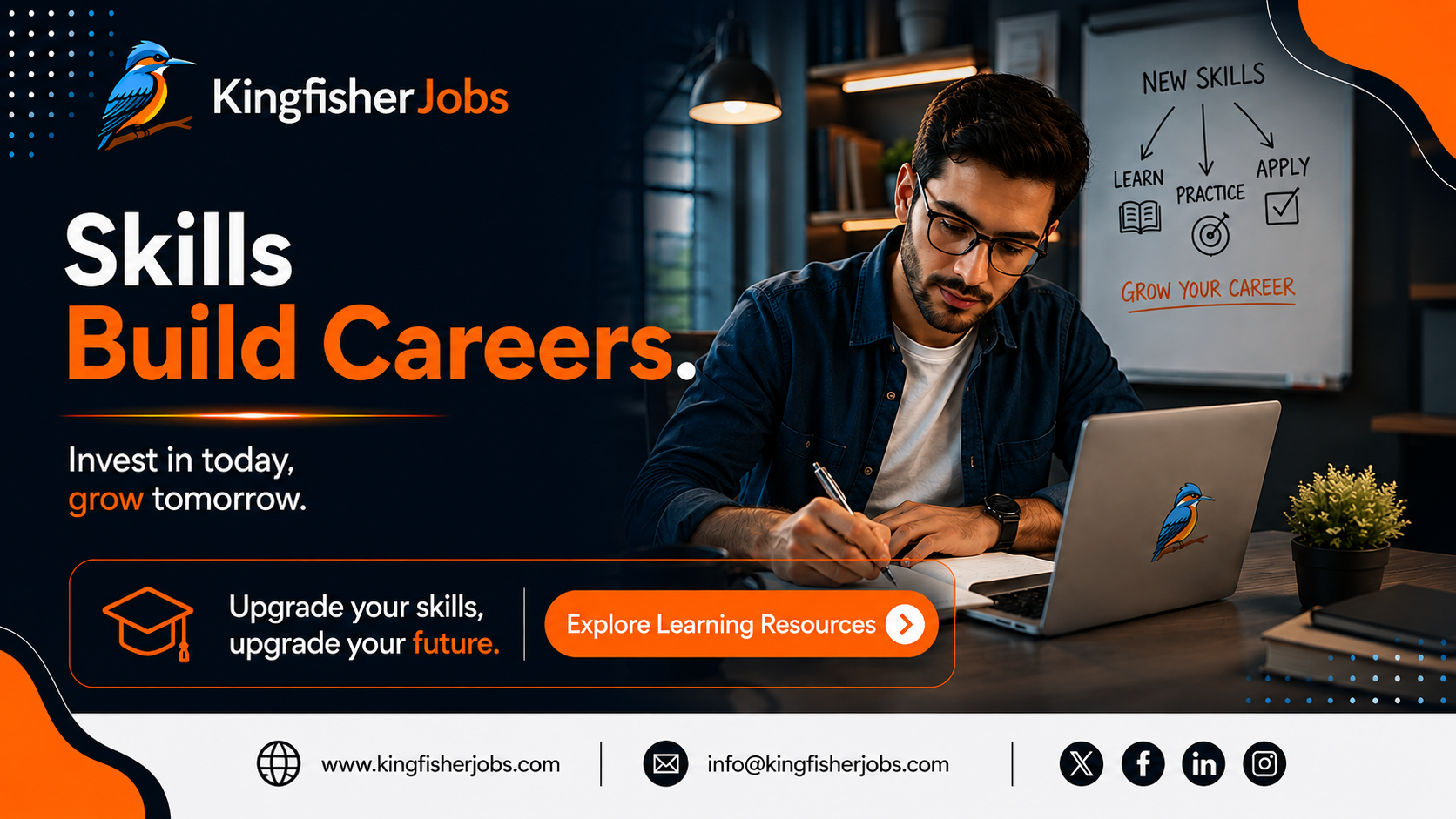
The world of work is constantly evolving. New technologies emerge, industries change, job roles develop, and employers look for professionals who can adapt to new challenges. In this environment, building a successful career is no longer only about the qualifications you already have. It is also about your willingness to keep learning, improving, and developing relevant skills.
At KingfisherJobs, we believe that skills build careers. Every new capability you develop can strengthen your confidence, improve your professional value, and potentially open the door to opportunities that were previously out of reach.
Whether you are starting your career, looking for your next role, returning to work, or planning a professional change, investing in your skills today can help you build a stronger future.
Why Skills Matter More Than Ever
Job descriptions are changing quickly. Employers are increasingly interested in what candidates can actually contribute to a team, solve for a business, and learn as their role develops.
A strong skill set can help demonstrate that you are prepared not only for your current responsibilities, but also for future challenges. Developing relevant skills can help you:
- Improve your confidence when applying for jobs.
- Become more competitive in your chosen field.
- Adapt to changing technology and working practices.
- Prepare for greater responsibilities.
- Explore new career paths and industries.
- Demonstrate initiative and a commitment to professional development.
- Build a stronger and more relevant CV.
Skills are therefore more than items to add to a CV. They are practical tools that can support long-term career development.
Learn. Practice. Apply.
Effective skill development is not simply about consuming information. Real progress happens when learning becomes practical. A useful approach can be summarised in three stages:
1. Learn
Start by understanding the knowledge, tools, techniques, or processes associated with the skill you want to develop. Learning can come from courses, workshops, books, online resources, mentoring, workplace training, or independent research.
2. Practice
Knowledge becomes more valuable when you use it. Practice through personal projects, simulations, volunteering, freelance work, workplace responsibilities, case studies, or structured exercises.
3. Apply
The final step is demonstrating the skill in a meaningful context. Applying what you have learned helps turn theoretical knowledge into practical experience that can be discussed with employers and demonstrated during the recruitment process.
Technical Skills and Soft Skills: You Need Both
A strong professional profile usually combines technical abilities with transferable human skills. Technical knowledge may help you perform specific tasks, while soft skills influence how effectively you communicate, collaborate, solve problems, and work with others.
| Technical / Practical Skills | Transferable / Soft Skills |
|---|---|
| Data analysis | Communication |
| Digital marketing | Problem-solving |
| Web development | Teamwork |
| Project management tools | Leadership |
| CRM and business software | Adaptability |
| SEO and content management | Time management |
| Financial or industry-specific tools | Critical thinking |
The right combination depends on your profession, experience level, and career goals. Instead of trying to learn everything, focus on the skills that genuinely support the direction you want your career to take.
How to Identify the Skills You Need
Before enrolling in another course or learning a new platform, identify where your development will create the greatest value.
Review the Roles You Want
Look at job descriptions for positions you would genuinely like to apply for. Pay attention to skills, tools, responsibilities, and qualifications that appear repeatedly.
Compare Them With Your Current Profile
Create a simple skills gap analysis. Separate your findings into three categories:
- Skills I already have
- Skills I need to improve
- Skills I need to learn
This gives your professional development a clear direction instead of learning randomly.
Build Skills With a Career Goal in Mind
One of the biggest mistakes job seekers can make is collecting courses and certificates without connecting them to a clear career objective.
Instead, start with the destination.
Ask yourself:
- What type of role do I want next?
- Which industries interest me?
- What skills do employers in those industries regularly request?
- Which of those skills am I currently missing?
- Which skill could make the biggest difference to my employability?
Once you know the answers, you can create a much more focused development plan.
Turn Learning Into Evidence
Saying that you have a skill is useful. Demonstrating it is far more powerful.
Whenever possible, turn your learning into evidence. Depending on your profession, this could include:
- A portfolio project.
- A professional case study.
- A website or application you have developed.
- A marketing campaign you planned.
- A report or dashboard you created.
- A process you improved.
- A volunteer project.
- A recognised qualification or certification.
- Measurable results from previous work.
This allows employers to understand how your skills translate into practical value.
How Skills Strengthen Your CV
Your CV should not simply contain a long list of abilities. The strongest CVs connect skills with experience and results.
For example, instead of writing:
“Good communication skills.”
Provide context that demonstrates how those communication skills were used:
“Coordinated communication between customers and internal teams to support efficient project delivery.”
The same principle applies to technical skills. Wherever possible, explain what you did, how you did it, and what the outcome was.
Skills Can Help You Change Careers
Career development does not always mean moving upwards within the same profession. Sometimes it means moving sideways into a different industry or completely changing direction.
This is where transferable skills become particularly valuable.
Someone moving between industries may already possess valuable abilities such as:
- Customer relationship management
- Leadership
- Sales
- Communication
- Project coordination
- Problem-solving
- Organisation
- Negotiation
The challenge is identifying those transferable strengths and presenting them in a way that makes sense for the new role.
Continuous Learning Supports Long-Term Career Growth
Your career can span decades. The tools and working practices used at the beginning of that journey may look very different several years later.
Continuous learning helps professionals remain adaptable.
That does not mean constantly completing formal qualifications. Professional development can happen through many different activities, including:
- Short online courses
- Industry webinars
- Professional events
- Mentoring
- Reading industry publications
- Networking with experienced professionals
- Taking on new responsibilities at work
- Independent projects
- Professional communities
Small, consistent improvements can accumulate into significant professional development over time.
Create Your Personal Skills Development Plan
You do not need to transform your entire professional profile overnight. A simple development plan can make the process manageable.
| Step | Action | Purpose |
|---|---|---|
| 1 | Choose a career goal | Know where you want to go. |
| 2 | Research relevant jobs | Understand employer requirements. |
| 3 | Identify skill gaps | Find your development priorities. |
| 4 | Learn | Build relevant knowledge. |
| 5 | Practice | Turn knowledge into ability. |
| 6 | Create evidence | Show employers what you can do. |
| 7 | Update your CV and profile | Present your improved capabilities. |
| 8 | Explore opportunities | Put your development into action. |
Don’t Wait Until You Need a New Job
Professional development is often most effective when it happens before it becomes urgent.
If you only begin improving your skills after finding a vacancy you want, you may already be competing against candidates who have spent months or years developing those capabilities.
Instead, make career development part of your regular routine. Even a small amount of focused learning each week can help you steadily improve your professional profile.
What Employers Really Want
Different employers naturally have different requirements, but strong candidates often demonstrate a combination of competence, attitude, adaptability, and evidence.
Employers may value professionals who can:
- Understand their responsibilities.
- Communicate effectively.
- Learn new systems and processes.
- Work effectively with colleagues.
- Take responsibility for their work.
- Solve problems rather than simply identify them.
- Adapt when priorities change.
- Continue developing professionally.
Developing your skills therefore supports more than your next application. It can help you become a stronger professional throughout your career.
From Skills to Opportunities
Learning becomes especially valuable when it connects with opportunity.
The journey can look something like this:
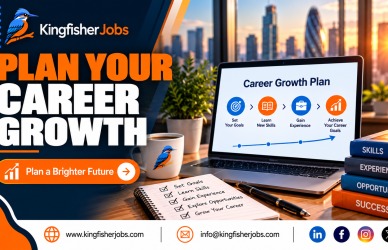
Learn → Practice → Build Evidence → Strengthen Your Profile → Explore Roles → Apply → Grow
Every stage supports the next. You may not see an immediate result from every course, project, or new responsibility, but each relevant improvement can contribute to a stronger professional foundation.
How KingfisherJobs Can Support Your Career Journey
Career growth requires more than finding any available vacancy. It is about identifying opportunities that match your experience, ambitions, skills, and future direction.
KingfisherJobs is focused on connecting people with opportunities while encouraging candidates to continue developing the skills that can support their future.
Whether you are preparing for your first professional role, seeking progression, exploring a new industry, or simply looking for your next opportunity, the right combination of skills and opportunities can move your career forward.
Frequently Asked Questions
Why are skills important for career development?
Skills help you perform your responsibilities effectively, adapt to workplace changes, demonstrate professional value, and prepare for new opportunities. Relevant skills can also strengthen your CV and improve the way you present yourself to employers.
Which skills should I learn for my career?
Start with the roles you want. Review several relevant job descriptions and identify the skills and tools employers repeatedly request. Prioritise the gaps between those requirements and your current abilities.
Are soft skills as important as technical skills?
Both matter. Technical skills help you perform specific tasks, while transferable skills such as communication, teamwork, adaptability, and problem-solving influence how effectively you work with people and respond to challenges.
Can learning new skills help me change careers?
Yes. New technical knowledge combined with existing transferable skills can help you prepare for opportunities in a different profession or industry. The key is demonstrating how your previous experience remains relevant to the new role.
How can I demonstrate a new skill to employers?
Use practical evidence wherever possible. Projects, portfolios, certifications, case studies, measurable achievements, volunteer experience, and real workplace examples can all help demonstrate capability.
Should I add every skill I learn to my CV?
No. Prioritise skills that are relevant to the role. A focused CV that clearly demonstrates important capabilities is generally more useful than a long list of unrelated skills.
Build Your Skills. Build Your Future.
Your career is not defined by a single qualification, job title, or opportunity. It develops through the experience you gain, the relationships you build, the challenges you overcome, and the skills you continue to develop.
Start with one relevant skill. Learn it. Practice it. Apply it. Then build on that progress.
Invest in today, grow tomorrow.
Explore career opportunities and continue building the skills that can help move your professional journey forward with KingfisherJobs.
Ready for Your Next Career Move?
Strengthen your skills, prepare your professional profile, and explore opportunities aligned with your ambitions.
Learn. Practice. Apply. Grow.