
Today’s job market is constantly evolving. New technologies, changing business needs, and emerging industries are reshaping the skills employers look for. For professionals who want to stay competitive, career growth increasingly depends on developing relevant, practical, and in-demand skills.
Whether you are starting your career, considering a new role, or aiming for progression within your current field, continuous learning can help you become more confident, adaptable, and prepared for future opportunities.
Why In-Demand Skills Matter
Qualifications and experience remain important, but employers also want candidates who can solve problems, communicate effectively, adapt to change, and contribute to business goals. Building these capabilities can strengthen your professional profile and give you more options as your career develops.
The goal is not to learn every new skill that appears in the market. Instead, focus on skills that complement your experience, match your career ambitions, and provide genuine value to employers.
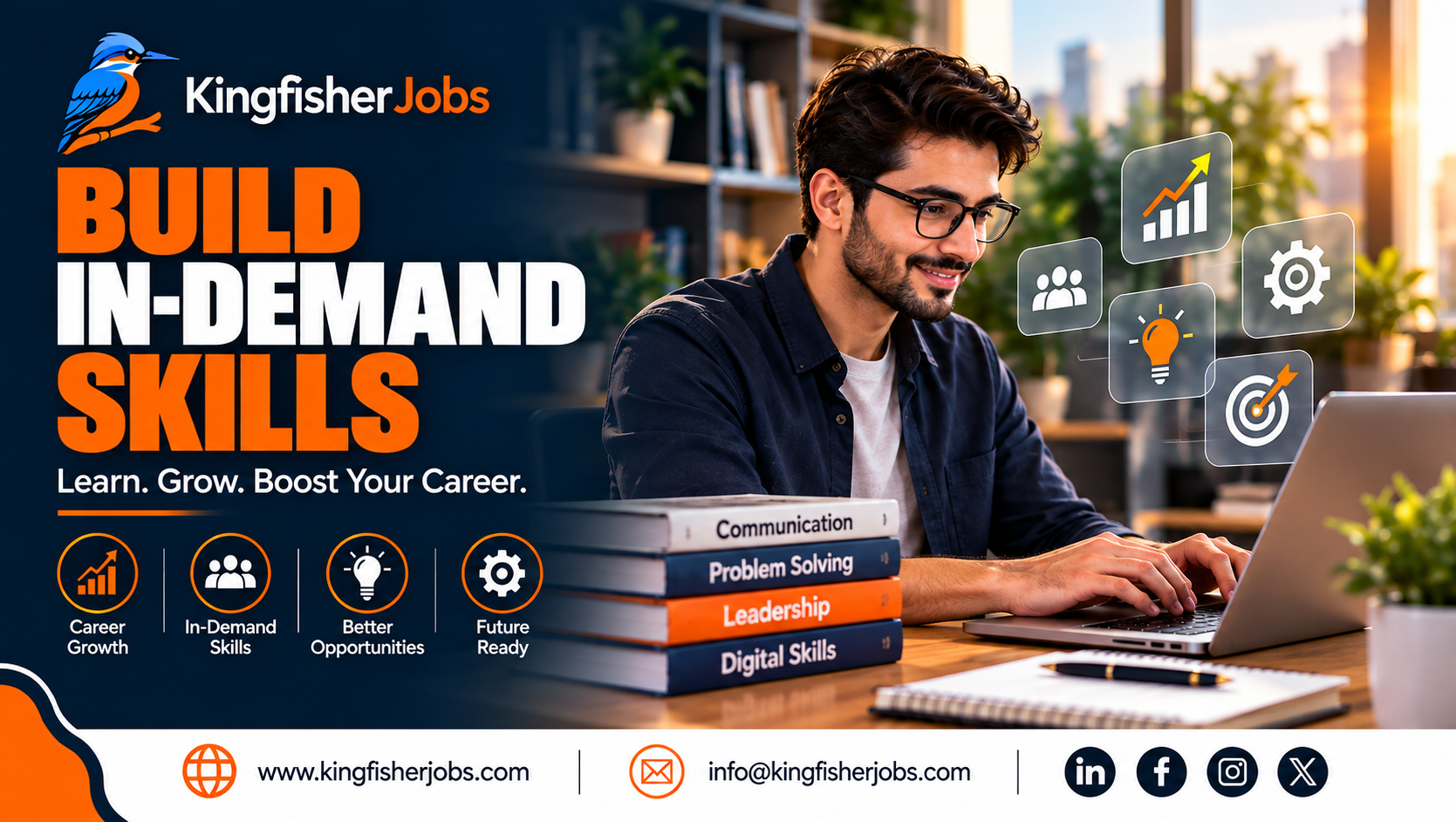
1. Communication Skills
Strong communication is valuable across almost every profession. Being able to explain ideas clearly, listen carefully, write professionally, and collaborate with different people can make a significant difference in the workplace.
Communication skills are particularly important when working across departments, dealing with customers, managing projects, or progressing into leadership positions.
2. Problem-Solving Skills
Employers value people who can identify challenges and work towards practical solutions. Strong problem-solving involves understanding the situation, analysing available information, considering alternatives, and making informed decisions.
You can develop this skill by taking greater ownership of challenges in your current role, reviewing how problems were previously solved, and learning to approach unfamiliar situations methodically.
3. Leadership Skills
Leadership is not limited to management positions. Employees can demonstrate leadership by taking initiative, supporting colleagues, managing responsibilities effectively, and helping a team achieve shared objectives.
If you want to move into a supervisory or management role, developing skills such as delegation, decision-making, coaching, conflict resolution, and team motivation can help prepare you for greater responsibility.
4. Digital Skills
Digital capability is becoming increasingly important across industries. The exact skills required will depend on your profession, but familiarity with workplace technology, digital collaboration platforms, data, automation, and industry-specific software can improve your employability.
It is also worth keeping an eye on how artificial intelligence and other emerging technologies are changing your sector. Understanding how new tools can support your work can help you adapt as roles evolve.
How to Identify the Right Skills to Learn
Before investing time in training, look at the roles you would like to pursue. Review job descriptions and identify skills that appear repeatedly. Compare those requirements with your current capabilities to find meaningful gaps.
You can then prioritise skills according to your career goals. For example, someone seeking a management position may focus on leadership and communication, while someone entering a technology-focused role may prioritise technical and analytical capabilities.
Turn Learning Into Practical Experience
Learning a skill is only the beginning. Employers often want evidence that you can apply what you know in real situations. Look for opportunities to practise new skills through workplace projects, volunteering, freelance assignments, personal projects, or additional responsibilities.
Keep a record of measurable achievements as you develop. Instead of simply stating that you have a particular skill on your CV, demonstrate how you used it and what outcome it helped produce.
Keep Your CV and Professional Profile Updated
As your capabilities grow, make sure your CV reflects them. Highlight relevant skills alongside examples of how you have applied them. Your professional profiles should also remain current so recruiters and employers can quickly understand your experience and strengths.
Tailoring your application to each opportunity can also help. Focus on the skills and achievements most relevant to the particular role rather than relying on the same generic CV for every application.
Build Skills With a Long-Term Career in Mind
Career development is rarely based on one course, qualification, or job move. It is an ongoing process of learning, applying new knowledge, gaining experience, and adapting to changing opportunities.
Small improvements made consistently can build significant professional value over time. By combining communication, problem-solving, leadership, digital capability, and role-specific expertise, you can create a stronger foundation for future career progression.
Find Your Next Opportunity With KingfisherJobs
Developing in-demand skills can help you prepare for the next stage of your career, but finding the right opportunity is equally important. KingfisherJobs connects candidates with career opportunities where their experience, strengths, and developing skills can make an impact.
Explore opportunities, continue learning, and take the next step towards a career built for the future.