

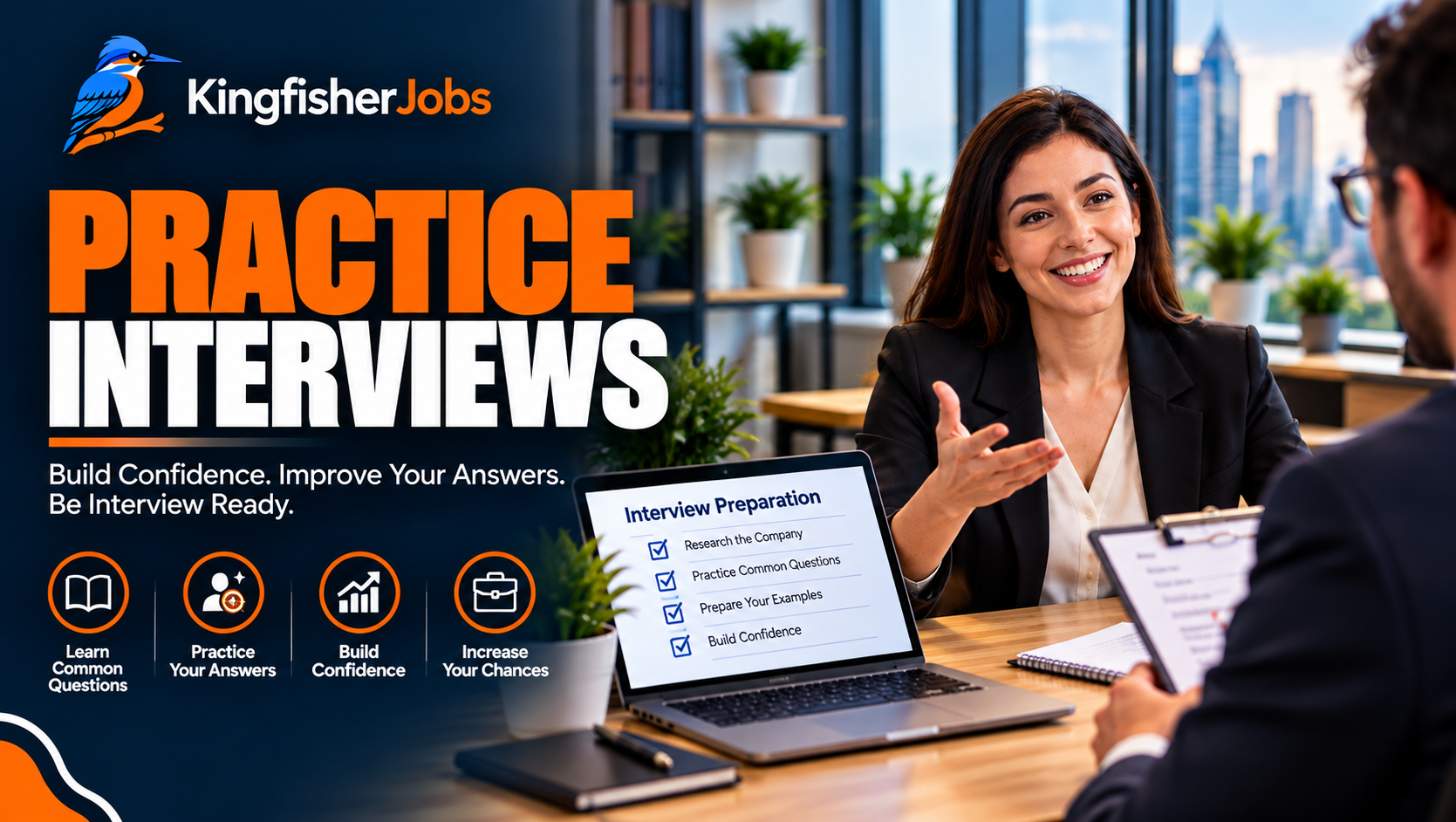
A job interview can be one of the most important stages of your career journey. You may have the right experience and skills, but communicating your value clearly under pressure takes preparation.
Practising interviews before the real conversation can help you organise your thoughts, improve your answers and approach employers with greater confidence. The goal is not to memorise a script—it is to become comfortable explaining why you are the right person for the opportunity.
Why Interview Practice Matters
Interview preparation gives you an opportunity to think through common questions before you are sitting in front of an employer. It can help you identify strong examples from your experience, recognise areas that need improvement and become more comfortable talking about your achievements.
The more familiar the interview process feels, the easier it can be to focus on having a professional and natural conversation.
1. Research the Company Before the Interview
Good preparation starts with understanding the organisation. Explore its website, services, values, recent developments and the requirements listed in the job description.
This research helps you tailor your answers and demonstrate that you have taken a genuine interest in both the company and the position.
2. Practise Common Interview Questions
Although every interview is different, many employers explore similar areas. You may be asked about your experience, strengths, career goals, previous challenges and reasons for applying.
Practise answering questions such as “Tell me about yourself,” “Why are you interested in this role?” and “What can you bring to the company?” Focus on clear, relevant answers rather than trying to memorise every word.
3. Prepare Examples From Your Experience
Strong interview answers are usually supported by real examples. Think about situations where you solved a problem, worked successfully with others, achieved a target, demonstrated leadership or handled a difficult situation.
Where appropriate, structure your examples around the situation, your responsibility, the action you took and the result you achieved. This makes your answers easier for an interviewer to understand.
4. Focus on Achievements, Not Just Responsibilities
Employers already have an idea of what your previous job involved from your CV. During an interview, explain the difference you personally made.
Where possible, support your achievements with evidence. Improvements in performance, successful projects, targets achieved, customers supported or processes improved can all make your experience more meaningful.
5. Practise Speaking Out Loud
Thinking about an answer and actually saying it are very different experiences. Practising aloud helps you recognise answers that are too long, unclear or difficult to explain.
Ask a friend, colleague or mentor to conduct a mock interview, or practise independently. The objective is to become more comfortable expressing your experience clearly and professionally.
6. Improve Your Body Language
Communication during an interview is not limited to your answers. Your posture, eye contact, facial expressions and overall engagement can also influence how confidently you communicate.
Try to maintain natural eye contact, listen carefully and avoid rushing your responses. Professional body language should support the message you are communicating rather than distract from it.
7. Prepare Questions for the Employer
An interview is also your opportunity to learn more about the role and organisation. Preparing thoughtful questions can demonstrate curiosity while helping you decide whether the opportunity is suitable for your career.
You could ask about the team’s priorities, expectations during the first few months, development opportunities or how success is measured within the role.
8. Build Confidence Through Preparation
Confidence does not mean knowing the answer to every possible question. It comes from understanding your experience, knowing what you can offer and being prepared to communicate it effectively.
Regular interview practice can reduce uncertainty and help you respond more naturally when unexpected questions arise.
Be Interview Ready
Successful interviews combine preparation, communication and authenticity. Research the company, practise common questions, prepare relevant examples and understand the strengths you can bring to the position.
Each interview is also valuable experience. Review what went well afterwards, identify anything you would improve and use those lessons to become stronger for your next opportunity.
Take the Next Step With KingfisherJobs
KingfisherJobs helps job seekers explore opportunities and take confident steps towards their career goals. Whether you are preparing for an upcoming interview or searching for your next role, good preparation can help you present your experience more effectively.
Ready for your next opportunity? Explore roles with KingfisherJobs and start preparing today so you can approach your next interview with confidence.