

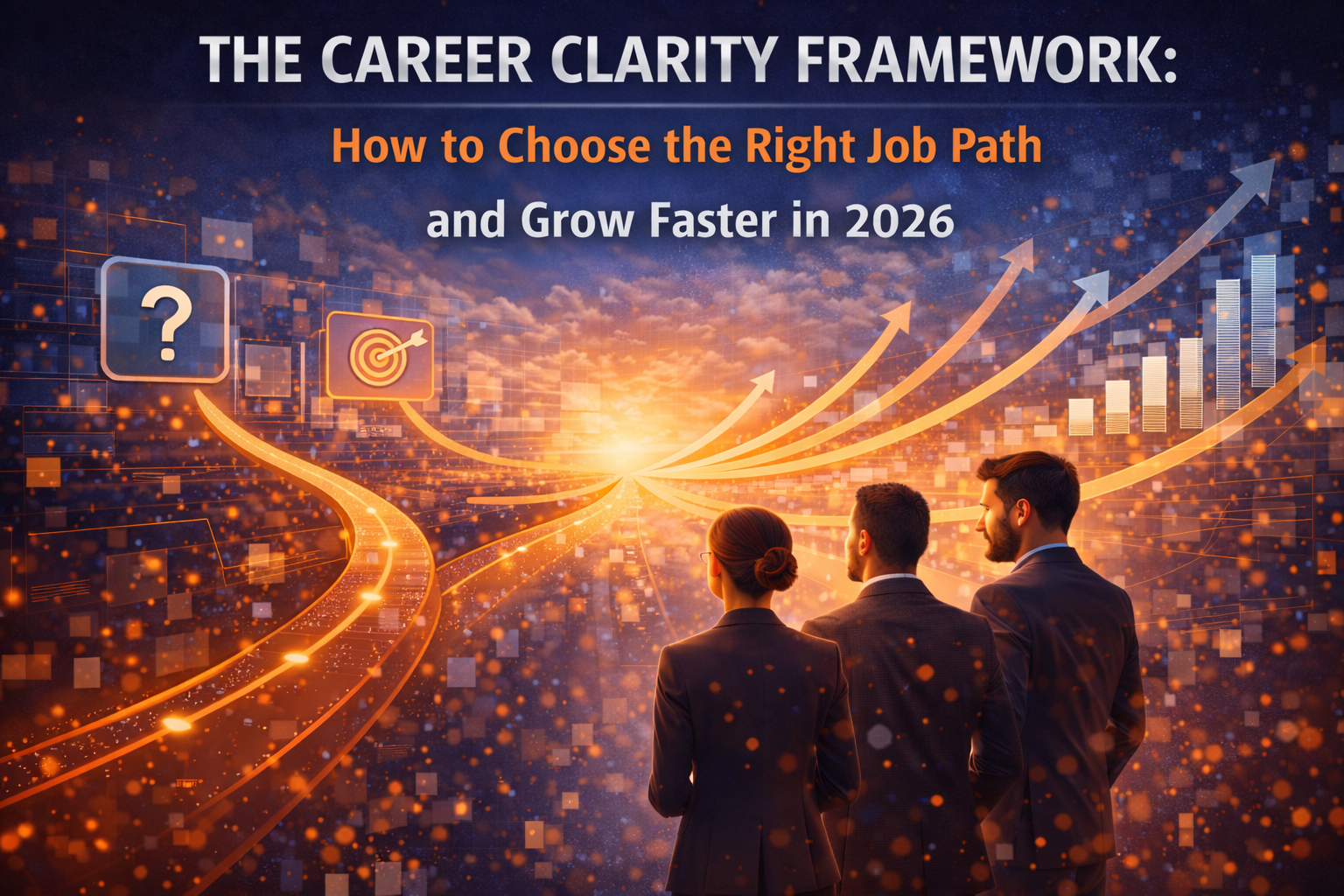
Introduction: The Hardest Part Isn’t Finding a Job — It’s Choosing the Right One
Most people think job searching is the biggest challenge.
It’s not.
The real challenge is:
👉 Knowing which job is right for you
Because in 2026, opportunities are everywhere.
But clarity is rare.
You can:
- Apply to hundreds of jobs
- Get interviews
- Even receive offers
But still feel unsure.
Still feel stuck.
Still feel like something is missing.
That’s because success doesn’t come from getting any job.
It comes from choosing the right direction.
1. Why Most People Feel Lost in Their Careers
Let’s start with a simple truth:
Most professionals don’t have a clear career plan.
They:
- Follow trends
- Take available opportunities
- Accept jobs based on urgency
Instead of:
👉 Making intentional decisions
The Common Situation
- “I just need a job right now”
- “Everyone is going into this field”
- “This sounds like a good opportunity”
The Result
- Lack of satisfaction
- Frequent job switching
- Slow career growth
2. The Shift: From Job Searching to Career Building
There’s a big difference between:
👉 Finding a job
and
👉 Building a career
Job Search Mindset
- Short-term thinking
- Focus on salary only
- Random applications
Career Building Mindset
- Long-term growth
- Skill development
- Strategic decisions
The Key Insight
Every job you take should:
👉 Move your career forward
3. Step 1: Understand Yourself First
Before choosing any career path, start with yourself.
Ask These Questions
- What am I naturally good at?
- What kind of work do I enjoy?
- What environment suits me?
- What skills do I want to build?
Why This Matters
Without self-awareness:
- You follow others
- You make wrong choices
- You feel stuck
With Clarity
You:
- Make confident decisions
- Choose better roles
- Grow faster
4. Step 2: Understand the Market
Once you understand yourself, understand the market.
What You Need to Know
- Which industries are growing
- What skills are in demand
- What roles match your profile
Why It Matters
You need a balance between:
👉 What you want
👉 What the market needs
The Smart Approach
Choose roles that:
- Fit your strengths
- Have long-term demand
- Offer growth opportunities
5. Step 3: Match Skills to Roles (Not Just Titles)
Many job seekers focus on titles.
Big mistake.
The Right Approach
Focus on:
👉 Skills → Roles
Example
Instead of:
“I want to be a manager”
Think:
“I have skills in leadership, communication, and planning”
Why This Works
- You find more opportunities
- You fit better roles
- You grow faster
6. Step 4: Choose the Right Type of Company
Not all companies are the same.
Company Types
- Startups → Fast growth, more responsibility
- Mid-size → Balanced structure
- Large corporations → Stability, defined roles
What You Should Do
Choose based on:
- Your personality
- Your goals
- Your experience level
Example
If you want:
- Fast learning → Startup
- Stability → Corporate
7. Step 5: Build a Career Path (Not Just a CV)
Your CV shows where you’ve been.
Your career path shows where you’re going.
What a Career Path Looks Like
- Clear progression
- Skill development
- Logical growth
Example
Junior → Specialist → Senior → Manager
Why It Matters
Employers value:
- Direction
- Consistency
- Growth mindset
8. Step 6: Use Job Platforms Strategically
Platforms like your website exist to:
👉 Connect the right talent with the right opportunities
But Most People Use Them Wrong
They:
- Apply randomly
- Ignore filters
- Don’t track applications
The Right Way
- Search based on skills
- Filter roles properly
- Apply with intention
Result
Better matches.
Better interviews.
Better outcomes.
9. Step 7: Focus on Skill Growth, Not Just Jobs
Your biggest asset is not your job.
It’s your skills.
Why Skills Matter More
Jobs change.
Skills stay.
What You Should Do
- Learn continuously
- Improve relevant skills
- Stay updated
The Outcome
More opportunities.
Higher value.
Faster growth.
10. Step 8: Make Smarter Decisions (Not Emotional Ones)
Many career decisions are emotional.
Common Emotional Decisions
- Taking the first offer
- Choosing salary over growth
- Following friends
The Better Approach
Ask:
- Will this help me grow?
- Will I learn something valuable?
- Does this align with my goals?
11. Step 9: Stay Consistent and Patient
Career growth takes time.
What Most People Do
- Lose patience
- Switch quickly
- Give up
What You Should Do
- Stay consistent
- Improve continuously
- Trust the process
Reality
Success is not instant.
But it is predictable with the right approach.
12. What Success Looks Like in 2026
The successful professional today is:
- Clear about their goals
- Strategic in their decisions
- Focused on growth
They Don’t:
- Apply randomly
- Follow trends blindly
- Make rushed decisions
They Do:
- Choose carefully
- Learn continuously
- Build long-term careers
Conclusion: Clarity Changes Everything
Most people think success comes from:
👉 More effort
But real success comes from:
👉 Better direction
Final Insight
The difference between:
- Confused professionals
and - Successful careers
Is simple:
👉 Clarity
Because in 2026:
The best careers are not found.
They are built — step by step.
(Perfect CTA for Your Website)
Ready to find the right job for your future — not just your present?
Start your journey today and connect with opportunities that truly match your skills and goals.