

Introduction: Why Today’s Job Market Is a Strategic Arena
The job market of 2026 is unlike anything that preceded it.
A few years ago, getting a job was largely about:
- Submitting lots of resumes
- Having the “right degree”
- Waiting for responses
Today, the hiring landscape is dynamic, digital, and deeply data‑driven — shaped by:
- Remote and hybrid work
- AI‑enabled hiring systems
- Skills‑based recruitment
- Candidate experience expectations
- Rapid employer response timelines
The era of passive job searching and reactive hiring is over.
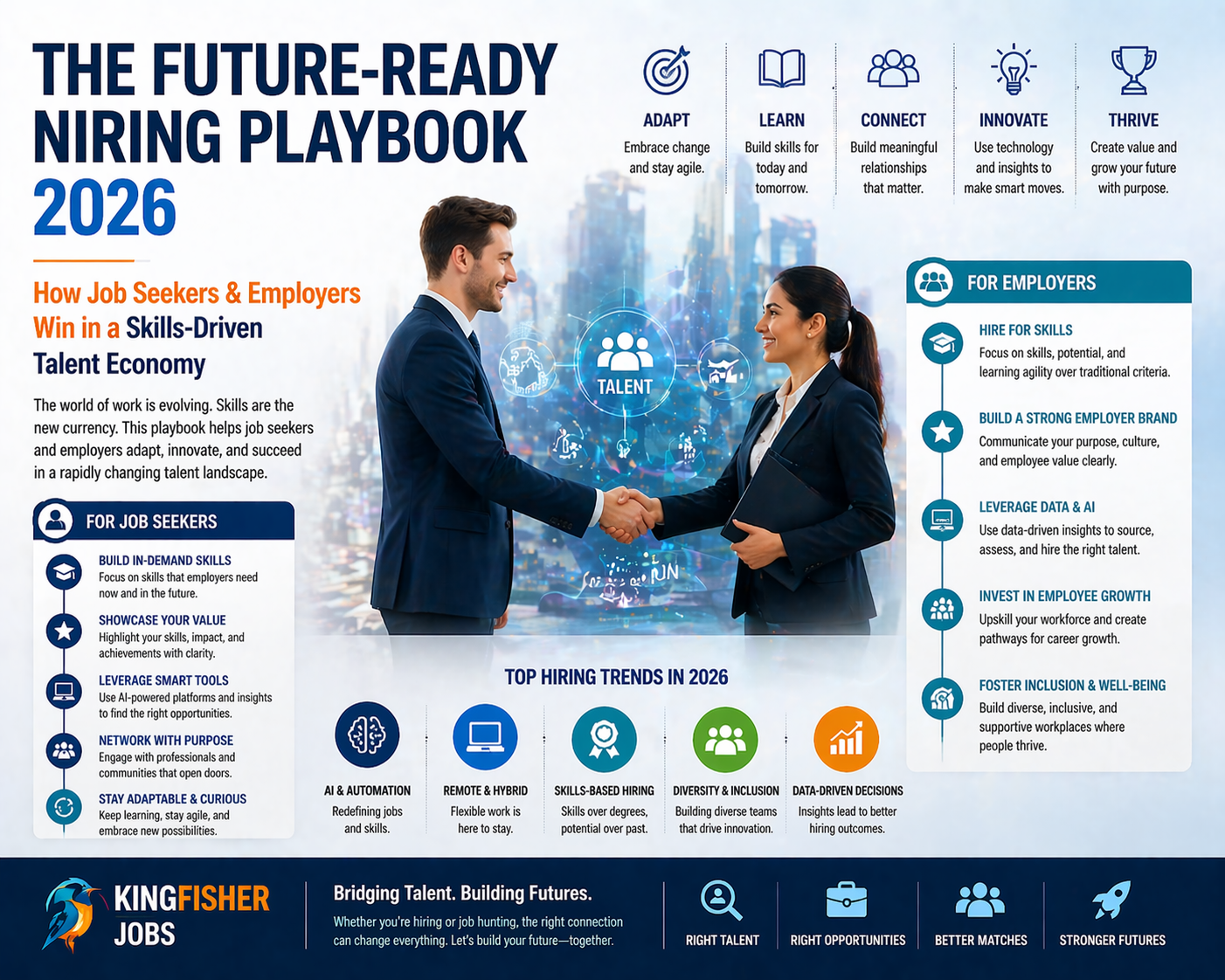
Whether you are a job seeker striving for better opportunities or an employer aiming to attract top talent, the success formula in 2026 is the same:
Strategy + Alignment + Execution.
This playbook provides a complete, step‑by‑step approach to navigating and winning today’s talent economy.
Part I — What Has Changed in the Job Market
1. Skills Matter More Than Degrees
Employers no longer hire based on titles or certificates alone. What matters most is:
- Demonstrated ability
- Up‑to‑date skills
- Problem‑solving track record
Skill assessments, portfolios, and real examples now guide hiring decisions.
2. Digital Platforms Determine Discoverability
Online job platforms are now the first decision filter — not the last.
These systems use algorithms to show:
- Relevant candidates to employers
- Relevant jobs to candidates
- Matching based on skills, preferences, and engagement
Understanding how these algorithms work — and tailoring your presence accordingly — is now a key advantage.
3. Speed and Experience Are Competitive Differentiators
Top candidates receive offers within days.
Top employers close positions within weeks.
Slow hiring processes cost employers talent — and costs candidates opportunities.
Modern hiring demands speed, transparency, and consistent communication.
Part II — The Job Seeker’s Playbook
This section provides a clear roadmap for job seekers to secure opportunities faster and with higher confidence.
Step 1: Define Your Career Direction With Clarity
Clarity is the foundation of strategy.
Ask yourself:
- What roles truly excite me?
- What skills do I excel in?
- What industries align with my long‑term goals?
Write a career direction statement that includes:
- Target job titles
- Top 3 skills you bring
- Types of companies you want to join
- Your ideal work culture
This statement becomes the backbone of your job search strategy — not a wish list.
Step 2: Build a Skills‑Centric Profile
Generic resumes no longer work.
Employers and digital systems scan for skills and impact, not job titles alone.
To build a skills‑centric profile:
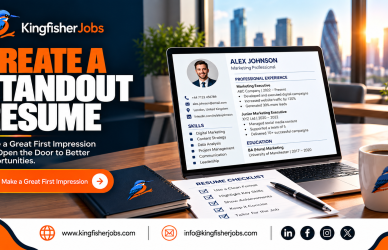
- List your core skills up front
- Include measurable achievements (examples with numbers)
- Use keywords from actual job descriptions
- Highlight tools, software, and platforms you excel in
Example (before):
“Managed customer support team.”
Example (after):
“Led a 10‑member customer support team, improving first‑response time by 35% and increasing customer satisfaction by 22%.”
Data and metrics differentiate you.
Step 3: Target Roles With Precision
Avoid scattershot applications.
Instead:
- Identify priority roles
- Review required skills in detail
- Tailor your resume to each role
- Adjust your pitch to reflect the company’s priorities
A targeted approach increases response rates significantly.
Step 4: Optimize Your Online Presence
Your online profile — especially on job platforms — is your digital first impression.
To increase discoverability:
- Add relevant keywords
- Showcase portfolio pieces
- Link to professional social profiles
- Use clear, readable language
Platforms like KingfisherJobs allow candidates to be discovered by employers — not just applying manually.
Step 5: Write Compelling Applications
A strong application has three parts:
- Introduction — Who you are
- Fit Statement — Why you match the role
- Impact Evidence — What you’ve achieved
Sample structure:
“I am a results‑driven digital marketer with 5 years of experience in SEO and SEM. I saw your posting for a Digital Marketing Specialist and believe my experience in increasing organic traffic by 40% aligns with your team’s growth goals.”
Focus on relevance and impact, not long career histories.
Step 6: Master the Interview
Interview preparedness includes:
- Company research
- Role understanding
- STAR‑based answers (Situation, Task, Action, Result)
- Questions for the interviewer
Top performers prepare examples that highlight solutions and outcomes — not just responsibilities.
Step 7: Evaluate Offers With Strategy
When evaluating offers, consider:
- Total compensation
- Career growth opportunities
- Role fit with long‑term goals
- Work culture and flexibility
- Benefits and learning support
An offer is a negotiation point — not a final decision.
Part III — The Employer’s Playbook
This section gives employers a structured system for hiring faster and smarter.
Step 1: Define Roles With Precision
Vague job descriptions attract low‑fit applicants.
A strong job brief should include:
- Core responsibilities
- Must‑have skills (with levels)
- Success metrics in the role
- Expected outcomes in the first 90 days
This clarity improves both volume and quality of applications.
Step 2: Use Skills‑Centric Screening
Modern hiring platforms allow employers to find talent based on:
- Skill matches
- Engagement history
- Candidate intent signals
- Culture alignment markers
Use these filters to prioritize candidates who are proactively interested and positionally aligned.
Step 3: Streamline the Screening Process
Structured hiring pipelines improve outcomes.
A reliable pipeline includes:
- Resume review
- Short intro call
- Skills assessment
- Team interviews
- Final decisions
Avoid unstructured, long processes — they lose candidates.
Step 4: Communicate With Consistency & Transparency
Candidates today expect:
- Timely updates
- Clear next steps
- Feedback when possible
Good communication increases acceptance rates and strengthens employer branding.
Step 5: Build an Employer Brand That Attracts Talent
Employer branding isn’t separate from hiring — it is hiring.
To build attraction:
- Feature employee stories
- Share real work culture examples
- Highlight outcomes and growth opportunities
- Show case studies of career progression
Job seekers choose companies that reflect clarity, purpose, and growth.
Step 6: Use Data to Refine Hiring Decisions
Key hiring metrics to track:
| Metric | What It Measures |
|---|---|
| Time‑to‑Hire | Speed of process |
| Quality‑of‑Hire | Long‑term performance |
| Offer Acceptance Rate | Employer attractiveness |
| Drop‑off Rate | Candidate experience issues |
| Hiring Source Performance | Channel effectiveness |
Refine your pipeline based on real data — not instinct.
Part IV — Building a Co‑Created Talent Ecosystem
The best hiring outcomes occur when:
- Candidates understand expectations
- Employers understand motivations
- Both sides communicate with clarity
A co‑created ecosystem is built on predictability, transparency, and value — not randomness.
Part V — Skills That Define Success in 2026
Whether beyond entry level or senior executive, these skill categories dominate:
- Digital literacy and tools
- Data interpretation and analytics
- Adaptability and learning capacity
- Communication and collaboration
- Problem solving under ambiguity
These are career multipliers — skills that create opportunities across industries.
Part VI — Mistakes That Reduce Hiring Success (And How to Avoid Them)
Mistake 1 — Generic Applications
Fix: Tailor every application with relevance and metrics.
Mistake 2 — Slow Employer Response
Fix: Commit to timelines and clear pipelines.
Mistake 3 — Ignoring Candidate Experience
Fix: Communicate early, communicate often.
Mistake 4 — Hiring Based on Titles Alone
Fix: Prioritize verified skills and outcomes.
Part VII — Real‑World Case Examples
Case Example 1 — Candidate Success
A marketer applied strategically with tailored applications and secured multiple interviews — landing a role with 25% salary growth.
Key takeaway: Alignment + measurable examples boost outcomes.
Case Example 2 — Employer Success
A fast‑growing company refined its hiring pipeline, reducing time‑to‑hire by 40% and improving new‑hire performance by 30%.
Key takeaway: Structured recruitment systems deliver measurable ROI.
Part VIII — Future Hiring Trends Beyond 2026
1. AI‑Enhanced Candidate Matching
Advanced algorithms will further refine candidate‑role fit.
2. Remote & Distributed Work Expansion
Geography will matter less — skills and outcomes will matter more.
3. Skills‑First Credentialing
Digital badges and micro‑certificates will replace traditional filters.
4. Real‑Time Hiring Insights
Data analytics will guide hiring decisions in real time — from applicant volume to retention indicators.
Conclusion — A Strategic Hiring Formula Wins the Talent Game
Success in the modern job market is not random.
It’s strategic:
- Intentional career direction
- Skills‑aligned profiles
- Targeted hiring pipelines
- Data‑informed decisions
- Clear employer communication
Whether you are a job seeker or an employer, applying a systematic approach to the hiring lifecycle positions you for better outcomes, faster results, and higher satisfaction.
Call to Action
Job Seekers: Start by refining your target roles and polishing your skills profile.
Employers: Review your hiring pipelines and align them with candidate expectations.