
Introduction — Career Success in a Changing World
In 2026, the job market looks very different from just a few years ago. Advances in AI, remote work normalization, evolving employer expectations, and new recruitment technologies have permanently reshaped how people find jobs, how applications are evaluated, and how careers are built. Long gone are the days when sending out hundreds of random resumes helped you land a job — today’s job search requires strategy, clarity, and intentional actions.
At KingfisherJobs, our mission is to connect talent with opportunity worldwide — helping both candidates and employers achieve their goals with confidence and ease.
This comprehensive guide walks you through every step of a successful career journey — from preparing your foundation to mastering interviews, optimizing your job search, building an agile career path, and thriving beyond your first job offer.
1. Understanding the Job Market in 2026
1.1 What Employers Are Really Looking For
Today’s employers seek more than qualifications and experience — they prioritize adaptability, cultural fit, digital literacy, and soft skills. A job seeker who can show problem solving, teamwork, communication, and resilience will stand out. These capabilities matter because the pace of change in most industries is rapid and ongoing.
Here’s what matters most to employers in 2026:
- Technical skills relevant to the role
- Communication and collaboration skills
- Digital and tech literacy
- Capacity to learn and adapt
- Professional attitude and work ethic
It’s important to think of your skill set not just as what you already know, but what you can grow into.
2. Preparing Your Career Foundation
2.1 Self‑Assessment: Know Your Strengths and Goals
Before starting any job search, take time to reflect on:
- What you enjoy doing
- What you are good at
- What kind of work motivates you
- Your long‑term career goals
This self‑reflection helps narrow your search and focus your energy on paths that not only pay well — but align with your aspirations.
Pro Tip: Keep a “career journal” where you list your achievements, strengths, and feedback from others — this becomes a valuable reference when tailoring applications.
2.2 Crafting Your Personal Brand
Your personal brand is how employers perceive your professional identity. A strong personal brand communicates:
✔ Your value proposition
✔ Your professional image
✔ Your career objectives
You can build your personal brand by:
- Having a polished profile on KingfisherJobs and LinkedIn
- Sharing relevant work samples or portfolio
- Using precise, professional language in all communication
Your personal brand should make someone say:
“This person is exactly who we need.”
3. Resume & Cover Letter Mastery
3.1 Tailoring for Every Job
Generic resumes get ignored. Instead, every time you apply:
- Match your resume language to the job description
- Highlight relevant accomplishments with numbers (e.g., “Increased sales by 20 %”)
- Use simple, clear formatting that passes AI screening tools
Recruiters often scan resumes for impact, not just presence of keywords.
3.2 Powerful Cover Letters That Connect
While not every employer demands a cover letter, a well‑crafted one can make a big difference. Use it to:
- Introduce why you are the perfect fit
- Share a compelling story of achievement
- Demonstrate passion for the role and company
A targeted cover letter shows intentionality — something many candidates overlook.
4. Smart Job Search Strategies
4.1 Using Platforms Strategically
Sites like KingfisherJobs let you filter positions by relevance, location, experience level, and salary. Make the most of:
- Advanced filters
- Job alerts for your preferred roles
- Saved searches for quick applications
This saves time and keeps you focused on quality opportunities.
4.2 Networking with Purpose
Even in a digital age, relationships matter. Connect with:
- Alumni from your university
- Industry professionals on LinkedIn
- People who hold jobs you aspire to
Networking turns opportunities into warm introductions — often speeding up hiring decisions.
4.3 Protecting Your Time & Energy
Job hunting can be overwhelming — so set clear routines:
✔ Check new listings daily
✔ Apply selectively (quality over quantity)
✔ Track applications in a spreadsheet
✔ Follow up when appropriate
Consistency beats chaos.
5. Interview Preparation — Stand Out with Confidence
5.1 Research the Company First
Before any interview:
- Study the company’s mission, culture, products, and recent news
- Understand key requirements of the role
- Prepare thought‑out questions to ask the interviewer
This shows genuine interest — not just readiness to work.
5.2 Master Behavioral Interview Questions
Hiring managers commonly ask questions like:
“Tell us a time when you faced a challenge and how you handled it.”
Respond using the STAR method:
- Situation — context
- Task — what needed to be done
- Action — what you did
- Result — the outcome
This delivers clear, memorable responses that show competence.
5.3 Presenting Yourself with Confidence
- Dress professionally (even if remote)
- Use a calm, steady tone
- Listen before answering
- Link your answers to impact and results
Confidence is about preparation — not ego.
6. Skills Growth: What Matters Most in 2026
6.1 Technical and Digital Skills
Nearly every modern job requires some digital capability — including:
- Office productivity tools
- Data interpretation basics
- Collaboration tools (like Slack, Teams, Zoom)
- Familiarity with industry‑specific software
Even non‑technical roles benefit from digital fluency — the ability to learn and adapt to new tools quickly.
6.2 Soft Skills Employers Love
Soft skills are now critical — including:
✔ Communication
✔ Problem‑solving
✔ Teamwork
✔ Time management
✔ Adaptability
These make you effective and reliable in dynamic work environments.
7. Navigating Remote & Hybrid Work Models
7.1 Excelling in Virtual Setups
Remote or hybrid work is a standard expectation for many roles. To succeed:
- Set clear routines and working hours
- Eliminate distractions
- Use tools effectively (camera etiquette, shared docs)
Remote excellence builds trust and productivity.
7.2 Maintaining Work–Life Balance
Work flexibility shouldn’t mean burnout. Set boundaries:
✔ Separate work and personal time
✔ Take breaks consistently
✔ Learn to say “no” when necessary
Balance makes your career sustainable long term.
8. Negotiating Salary & Offers With Confidence
8.1 Knowing Your Worth
Before discussing salary:
- Research market pay for similar roles
- Consider your experience level
- Factor in location and cost of living
Knowing your value builds confidence during negotiation.
8.2 What to Ask For
Beyond base salary, think about:
✔ Flexible work options
✔ Training opportunities
✔ Bonus structures
✔ Health or professional benefits
These can add significant value to your offer.
9. Career Growth After Landing the Job
9.1 Setting Clear Goals Early
Early in a new role:
- Clarify expectations with your manager
- Define short‑term and long‑term goals
- Ask for frequent feedback
This moves you from task completion to career progression.
9.2 Lifelong Learning & Upskilling
The job that fits today might not fit tomorrow. Keep learning through:
- Online courses
- Workshops and certifications
- Mentorship and peer coaching
Continuous improvement keeps your skills relevant.
10. Overcoming Career Challenges & Plateaus
10.1 Recognise Signs of a Plateau
You may have stagnation if:
- Work feels repetitive
- No new learning opportunities appear
- You lack growth visibility
This is a signal — not a failure.
10.2 Taking Action
Address a plateau by:
✔ Exploring lateral moves
✔ Acquiring new skills
✔ Seeking mentorship
✔ Adjusting career goals
Growth sometimes means change and courage.
11. Building Professional Confidence and Resilience
Career success requires mindset strength — not just credentials. Confidence and resilience help you:
- Bounce back from rejection
- Communicate assertively
- Take smarter risks
- Embrace learning opportunities
Each challenge becomes a stepping stone toward your ultimate goals.
Conclusion — Your 2026 Career Roadmap Starts Here
Job searching and career growth in 2026 require:
✔ Clarity in goals
✔ Strategic job search
✔ Continuous skill growth
✔ Professional communication
✔ Strong interview performance
✔ Confidence in negotiation
With the right approach and persistence, you don’t just find a job — you build a career with purpose, growth, and resilience.
Explore opportunities and start your next chapter on KingfisherJobs today!
Publish‑Ready SEO Details
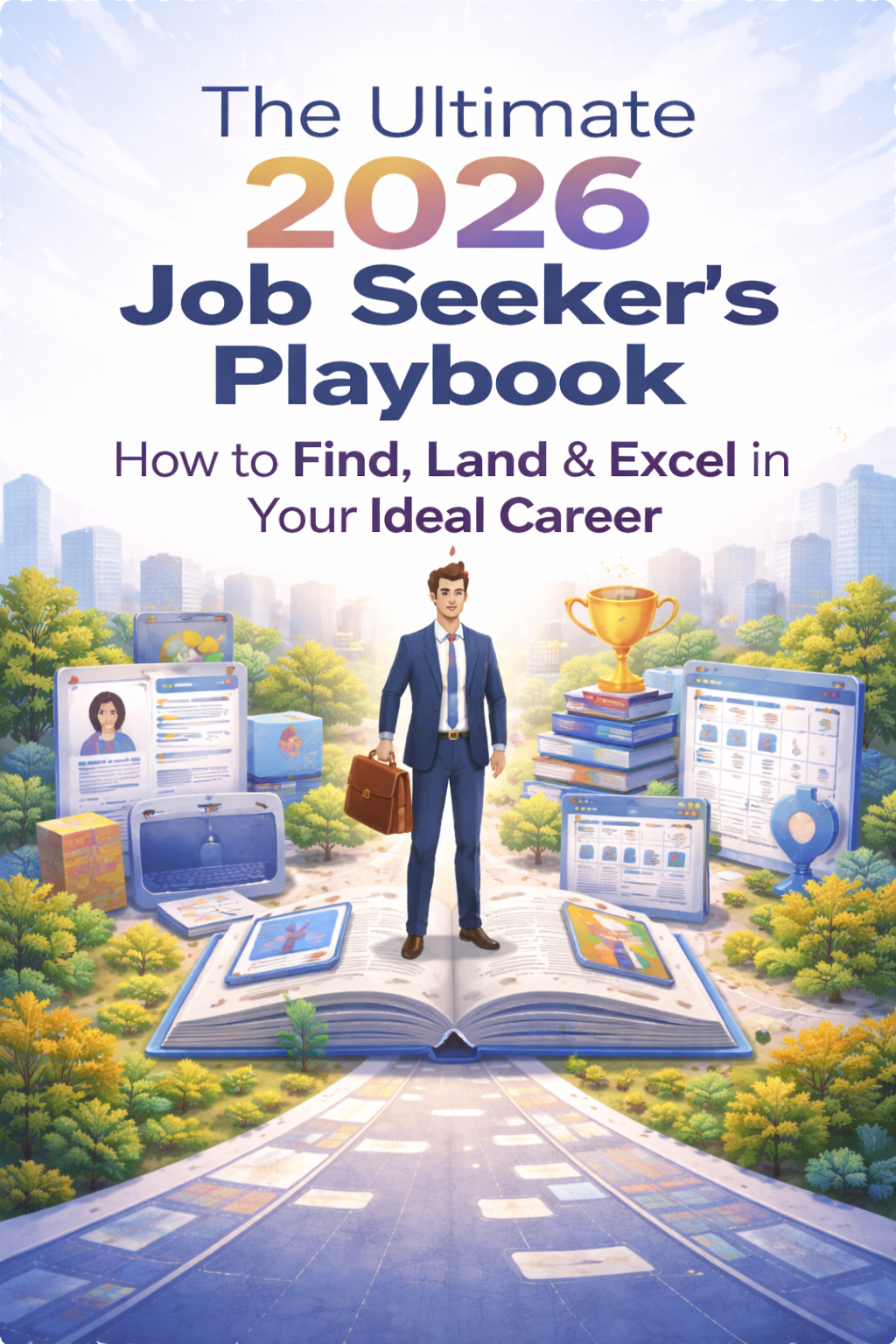
Title: The Ultimate 2026 Job Seeker’s Playbook: How to Find, Land & Excel in Your Ideal Career
Meta Description: Discover a complete guide for job seekers in 2026 — including job search strategies, resume tips, interview mastery, remote work success, and long‑term career growth.
Focus Keywords: job search guide 2026, career success roadmap, resume and interview tips, remote job strategies, professional development