
Introduction: Why Career Stability No Longer Exists
The job market in 2026 is no longer defined by long-term stability in a single role. Instead, it is shaped by constant change, driven by automation, artificial intelligence, remote work expansion, and global talent competition. Traditional career paths are being replaced by dynamic, skill-based trajectories.
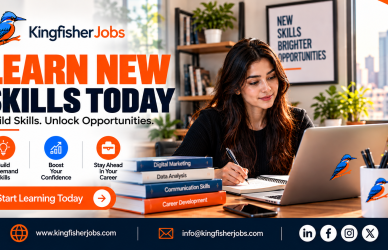
For job seekers and professionals alike, the central challenge is no longer simply “getting a job” but staying relevant across evolving industries. Employers are prioritizing adaptability over experience, and skills over degrees.
In this environment, career success depends on one core principle: continuous evolution.
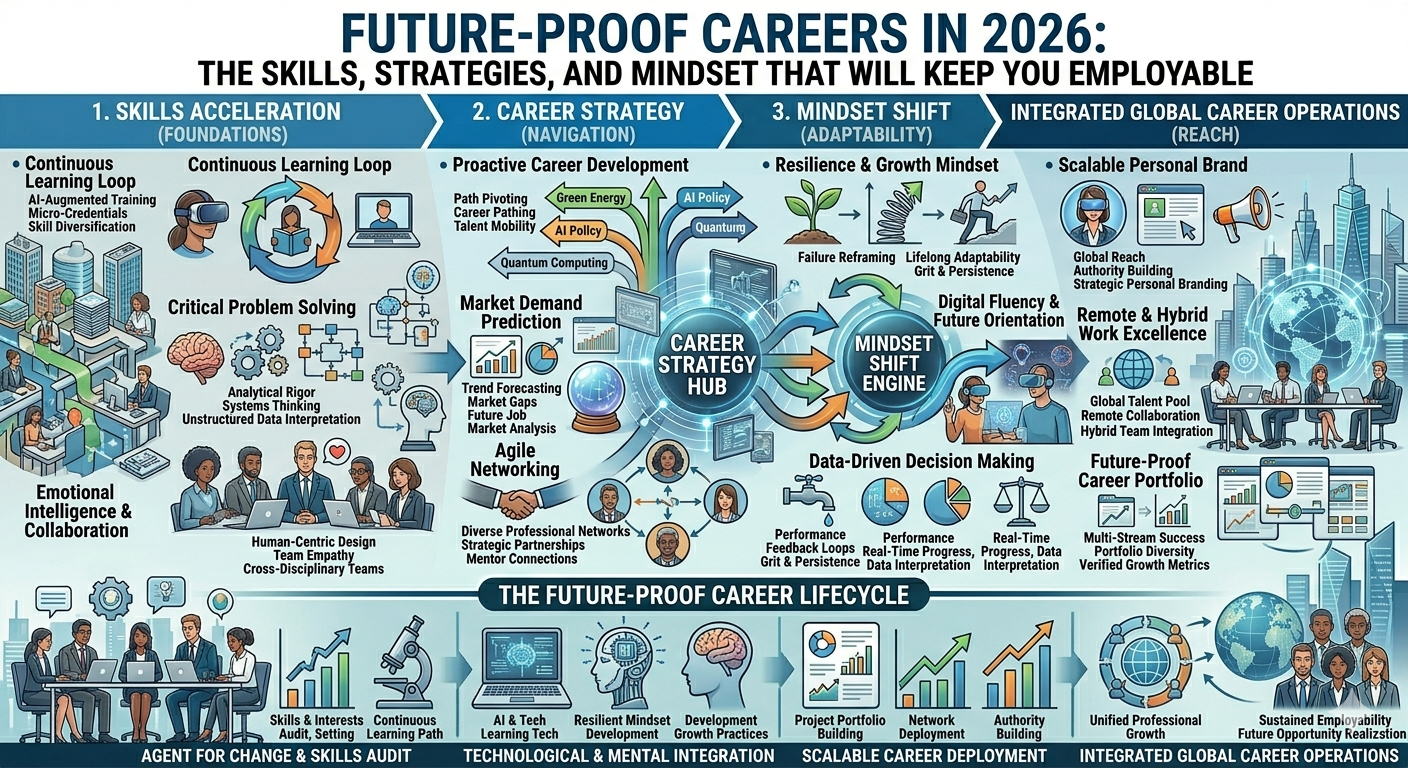
This article breaks down the most important strategies, skills, and mindset shifts required to future-proof your career in 2026 and beyond.
1. The Modern Job Market: What Has Fundamentally Changed
The job market has undergone structural transformation over the past decade. Understanding these shifts is essential before planning a career strategy.
1.1 Automation is Reshaping Work
Tasks that are repetitive, predictable, and rule-based are increasingly being handled by automation systems and AI tools. This includes roles in:
- Data entry
- Basic accounting
- Customer support (tier-1)
- Administrative coordination
This does not mean job loss alone—it means job redesign. Many roles now require humans to supervise, interpret, or enhance AI outputs rather than perform manual tasks.
1.2 Remote Work Has Become Permanent
Remote work is no longer a temporary trend. Organizations now hire globally, meaning:
- Local job markets compete with international talent
- Salary benchmarks are more globalized
- Communication and self-management skills are essential
Candidates who cannot operate in distributed environments are at a disadvantage.
1.3 Skills Have Replaced Degrees as Primary Filters
While degrees still matter in regulated professions, many industries now prioritize:
- Practical skills
- Portfolio/work samples
- Certifications
- Problem-solving ability
Recruiters often evaluate candidates within seconds based on demonstrable capability rather than academic background.
2. High-Demand Skills for 2026
To stay competitive, professionals must focus on skills that align with future workforce demand.
2.1 Digital Literacy and AI Fluency
Digital literacy is no longer optional. In 2026, it includes:
- Understanding AI tools (ChatGPT-style systems, automation platforms)
- Using productivity software efficiently
- Basic data interpretation
AI fluency means knowing how to:
- Prompt AI systems effectively
- Validate AI-generated outputs
- Integrate AI into daily workflows
Professionals who master this will outperform traditional workers significantly.
2.2 Data Interpretation and Analytical Thinking
Data-driven decision-making is now standard in almost every industry.
You don’t need to be a data scientist, but you must understand:
- Basic charts and KPIs
- Performance metrics
- Trend analysis
- Business dashboards
Even HR, marketing, and sales roles now rely heavily on data interpretation.
2.3 Communication in Hybrid Environments
Strong communication is critical in remote and hybrid teams.
Key abilities include:
- Writing clear emails and reports
- Virtual presentation skills
- Cross-cultural communication
- Asynchronous collaboration (Slack, email, project tools)
Poor communication is now one of the top reasons for job underperformance in remote setups.
2.4 Problem-Solving and Critical Thinking
Employers increasingly value people who can:
- Identify problems independently
- Break complex tasks into structured steps
- Propose solutions rather than wait for instructions
This skill is often what differentiates mid-level professionals from leadership roles.
3. Industries Offering the Strongest Growth in 2026
While every industry is evolving, some sectors show consistently higher demand for talent.
3.1 Technology and AI Services
The tech sector continues to expand into:
- AI development and integration
- Cybersecurity
- Cloud infrastructure
- SaaS platforms
Even non-technical roles in tech companies are growing rapidly.
3.2 Digital Marketing and E-Commerce
Businesses are shifting to online-first models. High-demand roles include:
- Performance marketing specialists
- SEO strategists
- Content marketers
- E-commerce managers
Growth is driven by global competition in online visibility.
3.3 Healthcare and Biotechnology
Healthcare remains stable and expanding due to:
- Aging populations
- Biotech innovations
- Telemedicine growth
Roles in research, diagnostics, and health tech are especially strong.
3.4 Logistics and Supply Chain
Global trade recovery and e-commerce demand have increased hiring in:
- Supply chain coordination
- Logistics optimization
- Warehouse automation systems
4. How to Build a Future-Proof Career Strategy
Future-proofing is not about predicting the future—it is about building flexibility.
4.1 Adopt a Skill-First Approach
Instead of focusing on job titles, focus on skills:
- Identify transferable skills
- Learn adjacent capabilities
- Build a “skill stack” rather than a single expertise
Example:
Marketing + Data Analysis + AI tools = high-value hybrid profile
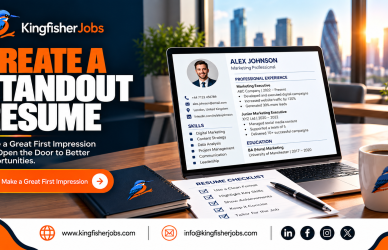
4.2 Build a Portfolio, Not Just a CV
Modern hiring increasingly relies on proof of work.
A strong portfolio includes:
- Projects (even personal or freelance)
- Case studies
- Measurable results
- GitHub or digital profiles (for technical roles)
4.3 Learn Continuously (Micro-Learning Model)
Long degree programs are no longer the only path. Instead:
- Short courses (4–12 weeks)
- Certifications
- Online skill platforms
- Industry-specific workshops
Consistency matters more than intensity.
4.4 Develop Personal Branding
In 2026, visibility is a career asset.
A strong personal brand includes:
- LinkedIn presence
- Thought leadership posts
- Portfolio website
- Industry engagement
Recruiters often discover candidates before candidates apply.
5. Common Career Mistakes to Avoid in 2026
Many professionals fail not because of lack of talent, but due to outdated strategies.
5.1 Relying Only on Job Boards
Applying blindly to job listings without networking reduces success rates significantly.
5.2 Ignoring Skill Gaps
Many candidates apply without upgrading their capabilities, leading to rejection despite experience.
5.3 Lack of Career Direction
Switching roles without strategy leads to fragmented career growth.
6. The Role of Platforms Like KingfisherJobs
Modern job platforms are no longer just listing boards—they are ecosystem connectors.
Platforms like KingfisherJobs help:
- Match candidates with relevant roles
- Reduce hiring time for employers
- Provide structured job discovery
- Improve transparency in job markets
The future of recruitment is data-driven matching, not manual searching.
7. Final Thoughts: Building a Career That Survives Change
The most important realization for professionals in 2026 is simple:
Job security is no longer guaranteed—skill security is.
A future-proof career is built on:
- Continuous learning
- Adaptability
- Digital fluency
- Strong communication
- Strategic career planning
Those who treat their career as a constantly evolving system—not a fixed path—will remain competitive regardless of industry disruption.
Conclusion
The job market will continue to evolve rapidly over the next decade. However, this evolution creates opportunity for those who prepare strategically.
Whether you are a student, a job seeker, or a working professional, the goal is not to resist change—but to align with it.
The future belongs to individuals who can learn faster than the market changes.