
Introduction: A New Hiring Reality
The global job market is no longer defined by traditional career paths, fixed roles, or long-term organizational loyalty. Instead, it is shaped by rapid technological change, shifting employer expectations, and a growing demand for adaptability.
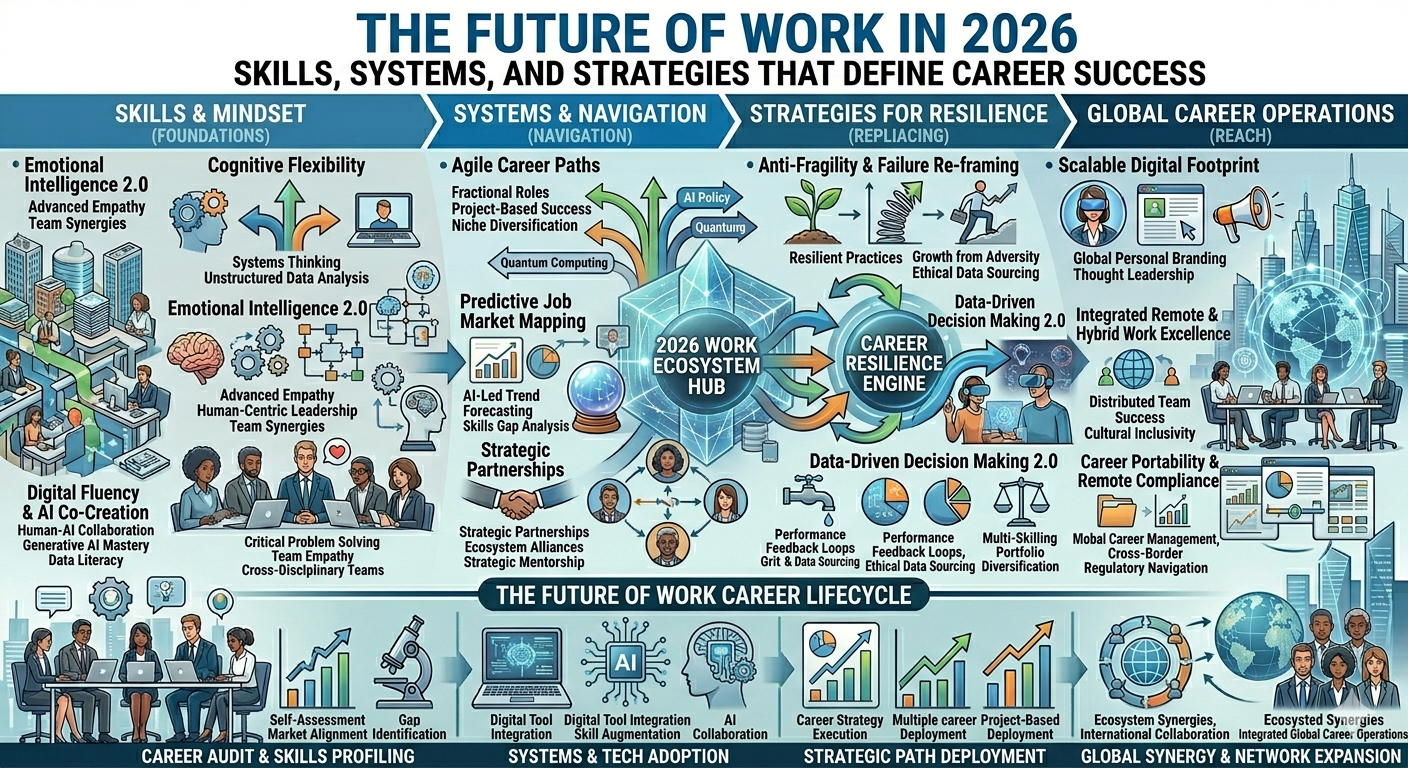
In 2026, success in the job market is not determined only by qualifications. It depends on how well individuals and organizations adapt to a continuously evolving ecosystem where skills, tools, and roles change faster than ever before.
For job seekers, this means rethinking how careers are built. For employers, it means rethinking how talent is identified, evaluated, and retained.
This article explores the key forces shaping the future of work and provides practical strategies for both sides of the hiring equation.
1. The Shift from Jobs to Skill-Based Work
One of the most important transformations in modern employment is the shift from job titles to skill-based hiring.
Traditionally, companies hired based on degrees and job titles. Today, the focus has moved toward:
- Demonstrated ability
- Practical experience
- Problem-solving capability
- Digital proficiency
This shift is accelerating because roles are becoming more fluid. A “Marketing Executive” today may need skills in analytics, content creation, and automation tools, all within a single role.
What this means for job seekers:
You are no longer competing only for job titles. You are competing for skill relevance.
What this means for employers:
Job descriptions must evolve from rigid requirements into flexible skill frameworks.
2. Technology Is Redefining Entry-Level Work
Artificial intelligence, automation tools, and digital platforms are reshaping entry-level opportunities.
Tasks that were once considered beginner-friendly—such as data entry, basic reporting, and simple content creation—are increasingly automated.
However, this does not reduce opportunities. Instead, it shifts the definition of entry-level work toward:
- Analytical thinking
- Tool-based execution (AI tools, CRM systems, automation software)
- Communication and coordination roles
- Customer-facing digital roles
The entry-level workforce of 2026 is expected to be more tech-enabled than ever before.
3. Remote Work Is Now Structural, Not Temporary
Remote and hybrid work models are no longer experimental. They are now a permanent part of global hiring systems.
Companies increasingly value:
- Output over physical presence
- Asynchronous communication skills
- Digital collaboration tools proficiency
- Self-management ability
This has created a global talent market where geographic location is less relevant than skill quality.
For job seekers in regions like South Asia, this creates significant opportunities to access international roles without relocation.
4. The Rise of Portfolio-Based Hiring
Employers are increasingly moving away from CV-based screening toward portfolio-based evaluation.
Instead of asking:
- “Where did you study?”
- “Where did you work?”
Companies now ask:
- “What have you built?”
- “What results have you delivered?”
- “Can we see proof of your work?”
This applies especially in fields like:
- Software development
- Digital marketing
- Content writing
- UI/UX design
- Data analysis
A strong portfolio now carries more weight than a traditional resume.
5. Soft Skills Are Becoming Hard Requirements
While technical skills are essential, soft skills are now equally critical.
The most in-demand soft skills in 2026 include:
- Critical thinking
- Communication clarity
- Adaptability
- Time management
- Team collaboration
- Emotional intelligence
The reason is simple: tools can perform tasks, but humans still manage decisions, relationships, and ambiguity.
6. Employers Are Competing for Talent, Not Just Hiring It
The modern job market is no longer employer-dominated. Skilled professionals now have multiple opportunities at once, which shifts the balance of power.
Companies must now:
- Build strong employer branding
- Offer flexible working structures
- Provide learning and development opportunities
- Ensure clear career progression paths
Without these factors, talent retention becomes difficult.
7. Continuous Learning Is No Longer Optional
Career stability is now directly linked to learning frequency.
In fast-changing industries, skills can become outdated within 2–5 years. This means professionals must adopt a continuous learning mindset.
Effective learning strategies include:
- Short online certifications
- Practical project-based learning
- Industry-specific tools training
- Peer learning communities
The key idea is simple: learning is now part of the job, not separate from it.
8. The Role of Job Platforms in the Modern Ecosystem
Modern job platforms are no longer just listing websites. They are evolving into:
- Talent ecosystems
- Skill verification systems
- Employer branding platforms
- Career development hubs
Platforms like KingfisherJobs are part of this shift, connecting candidates with employers while also providing structured career insights and market visibility.
9. Practical Strategy for Job Seekers in 2026
To remain competitive, job seekers should follow a structured approach:
Step 1: Identify Core Skills
Focus on 2–3 high-value skills relevant to your field.
Step 2: Build Proof of Work
Create real projects instead of only theoretical knowledge.
Step 3: Optimize Online Presence
Maintain updated profiles on job platforms and professional networks.
Step 4: Apply Strategically
Avoid mass applications; focus on targeted roles.
Step 5: Keep Learning Continuously
Update skills every 6–12 months.
10. Practical Strategy for Employers
Organizations that want to stay competitive must adapt their hiring systems:
- Move toward skill-based job descriptions
- Use structured interview frameworks
- Evaluate candidates through tasks and simulations
- Invest in employee development programs
- Build long-term retention strategies
Hiring is no longer just recruitment—it is workforce design.
Conclusion: Adaptation Defines Success
The future of work is not about predicting a single trend. It is about adapting continuously to changing conditions.
Individuals who develop relevant skills, stay flexible, and embrace continuous learning will remain employable in any environment.
Organizations that redesign their hiring and retention strategies around skills rather than static roles will outperform competitors.
In 2026 and beyond, success belongs to those who adapt faster than the change itself.